Fire damage
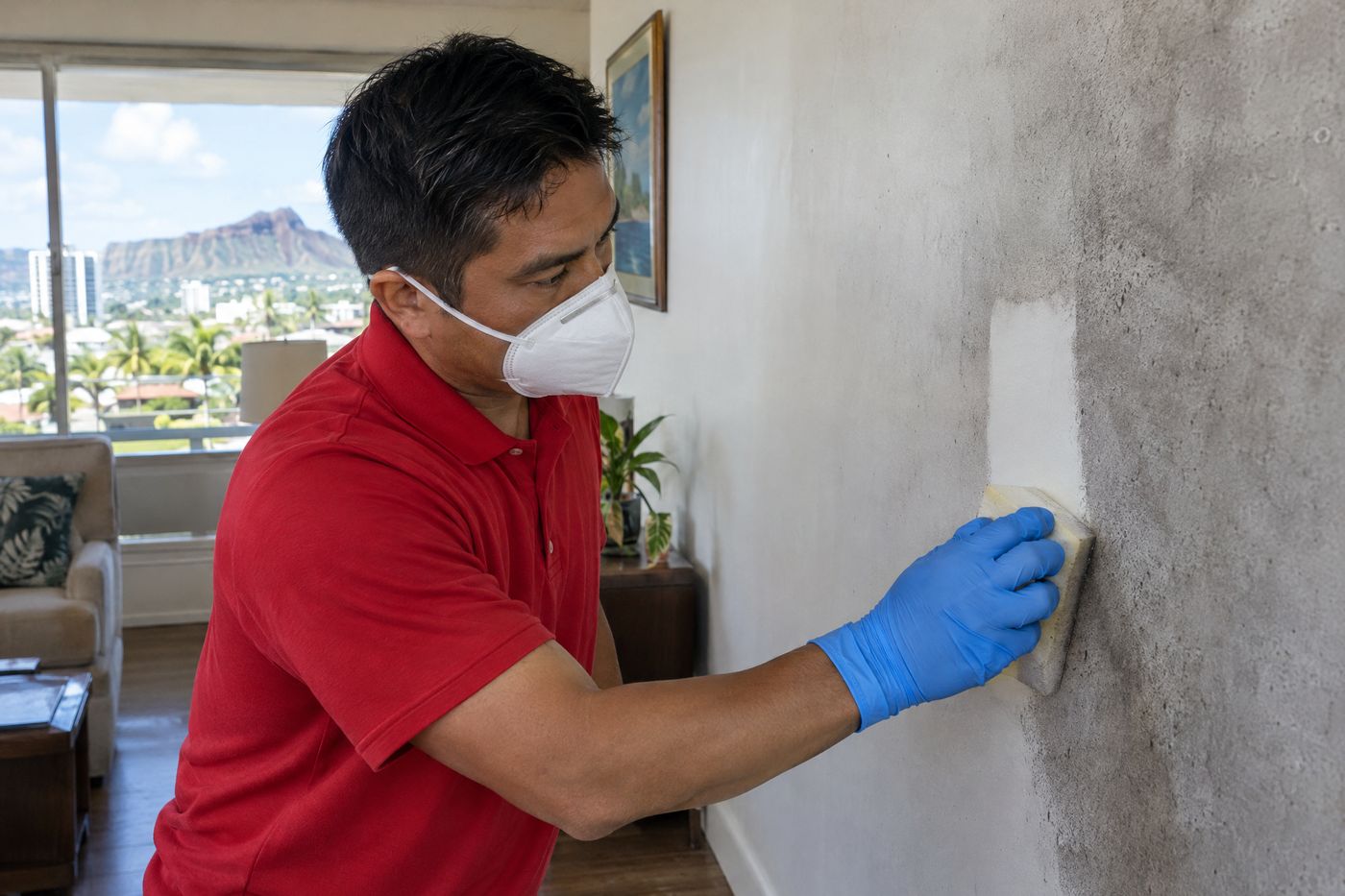
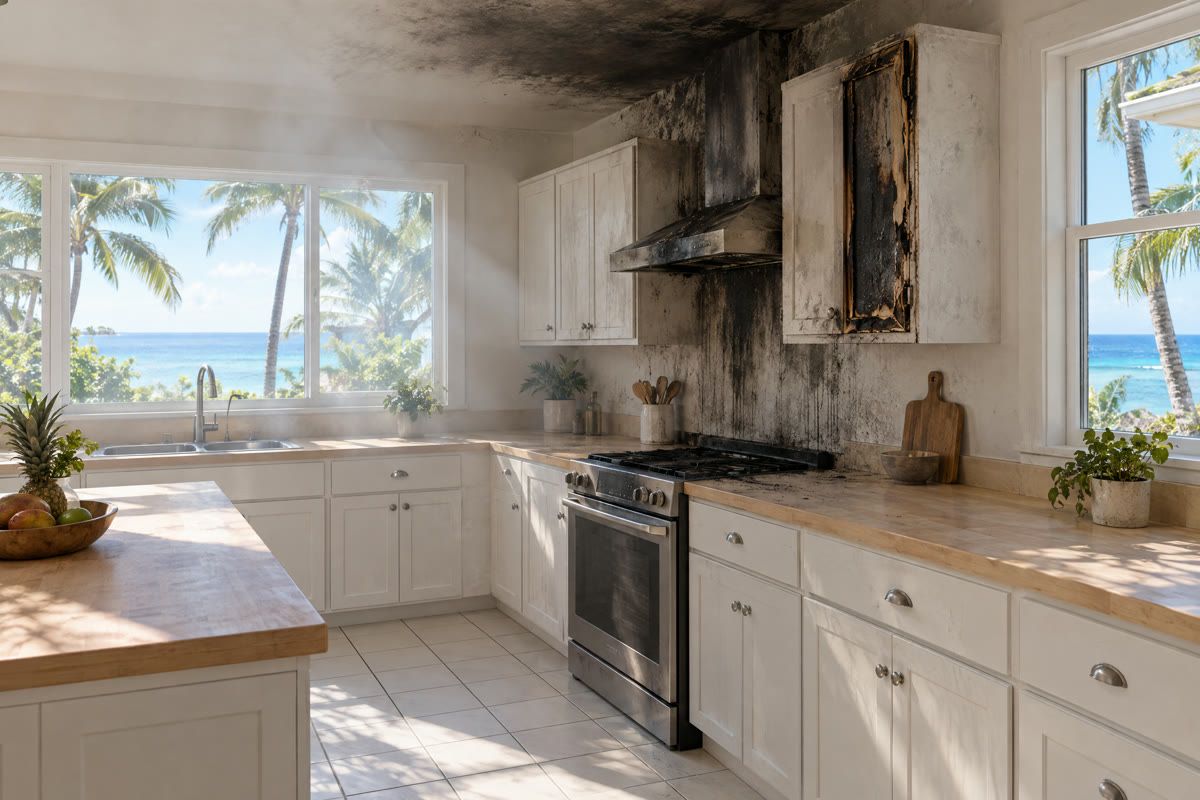
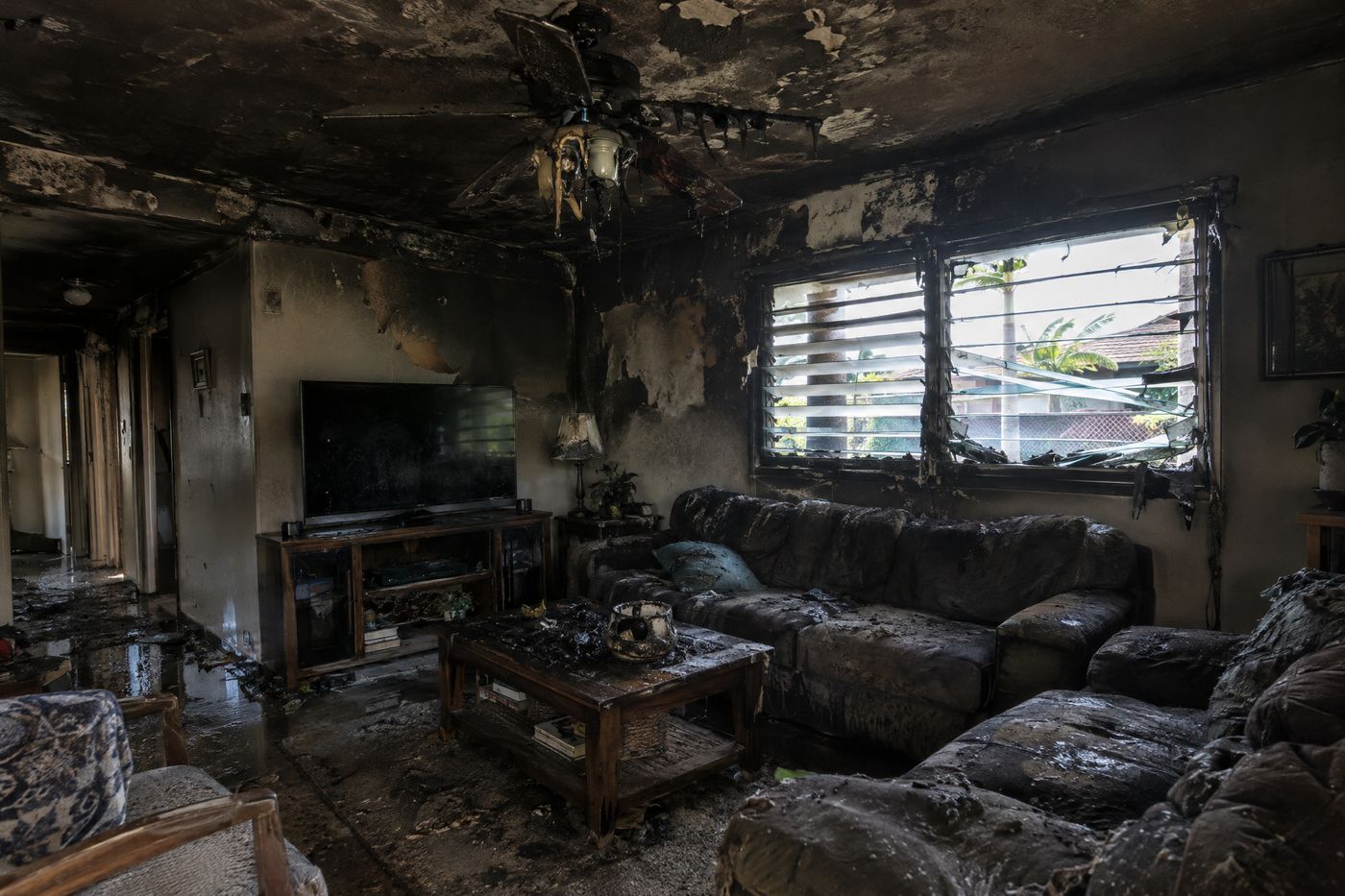
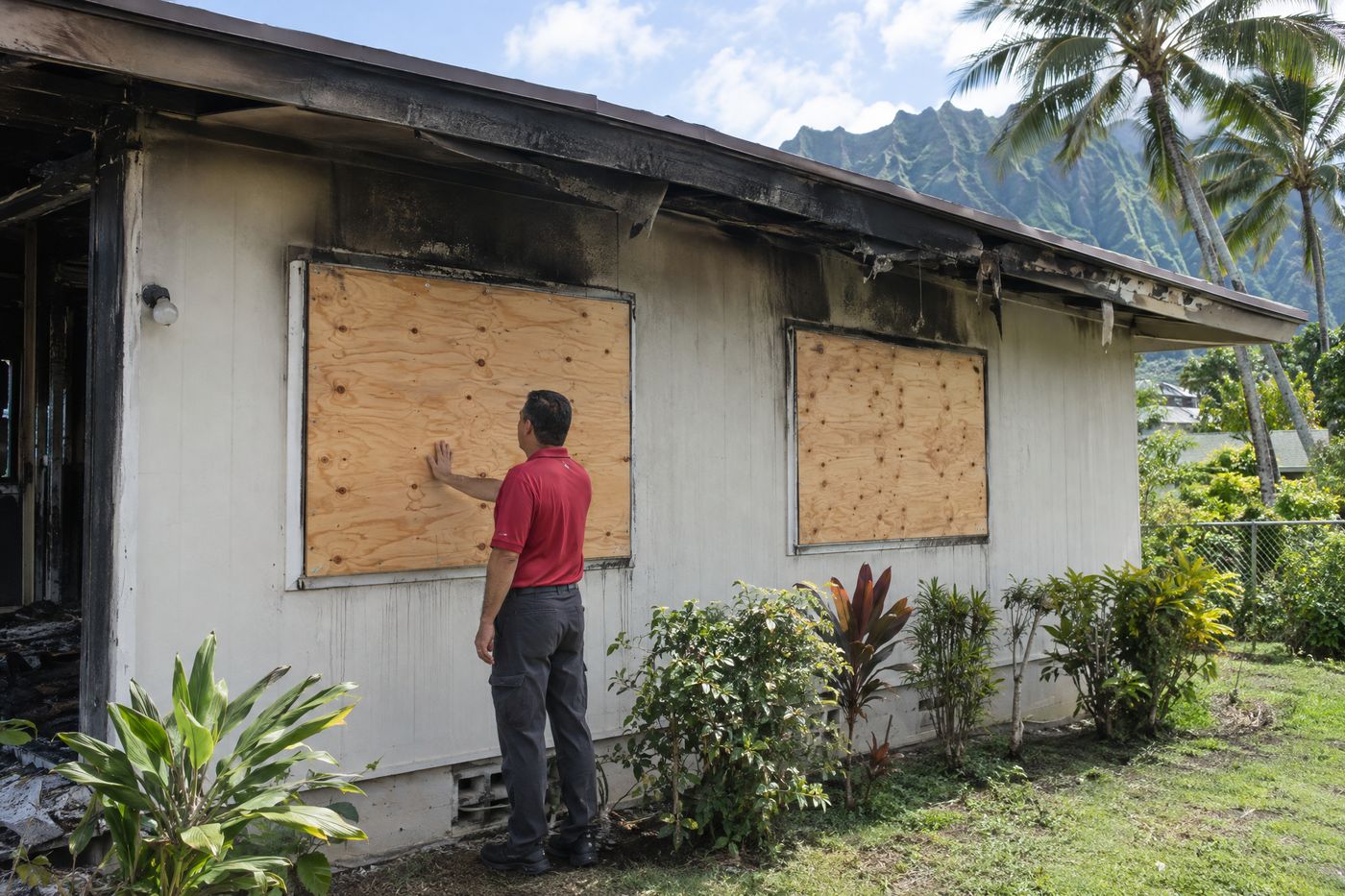
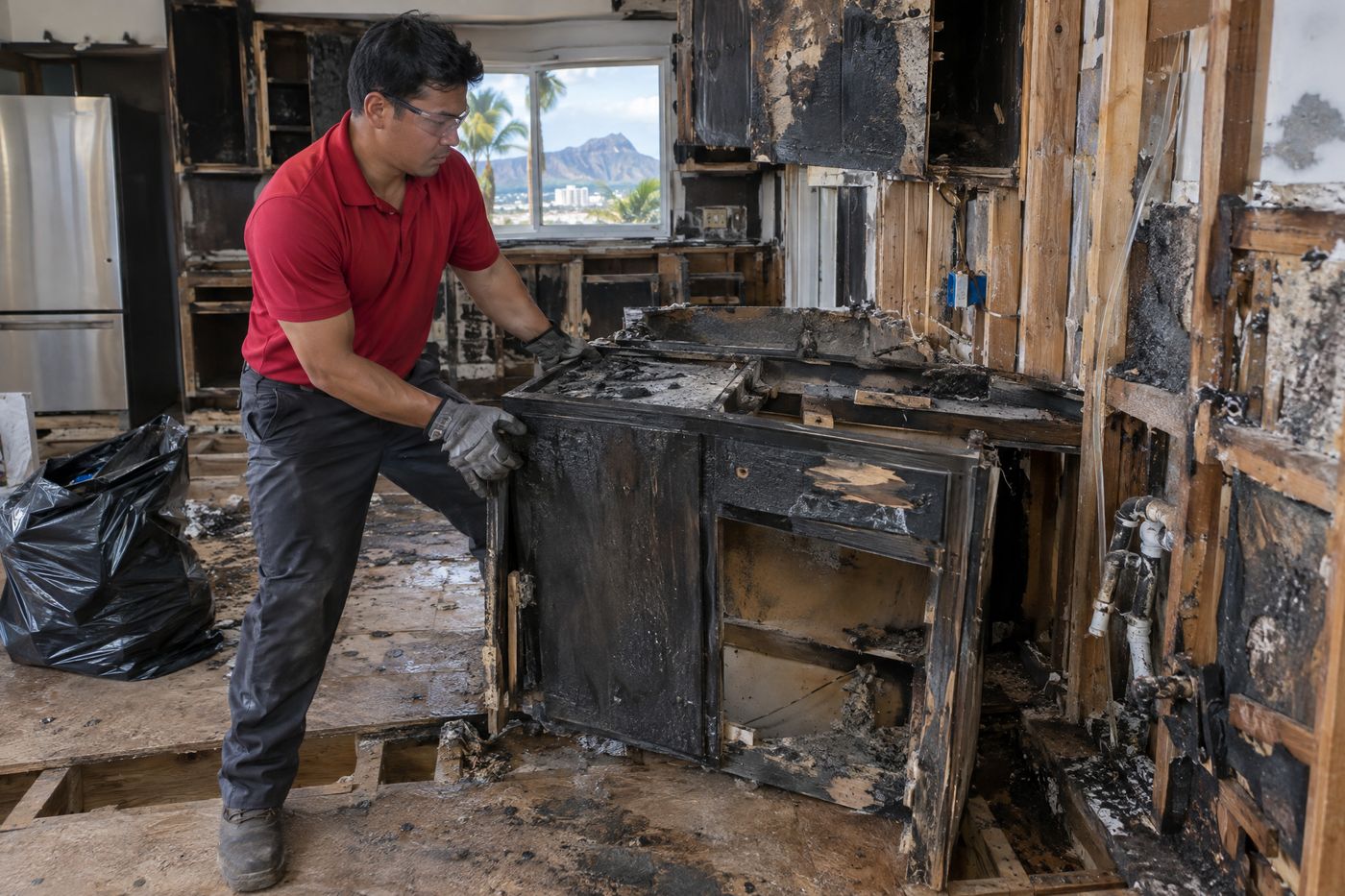
There is a grey-black film across the walls, a smear where somebody’s hand went to steady a door, and a fine dark powder on the counters that seems to relocate to a new surface every time anyone walks through the room. After a fire on Oahu, this is usually what people are looking at when they call us. Not flames, not water — residue that appears to be spreading through a house nobody has even moved back into.
Rescue One Restoration has cleaned fire residue on this island since 2018. We are IICRC certified and Hawaii licensed under contractor license BC-38891, our line is answered around the clock, and we handle the documentation side of the claim directly with your carrier. The crews who do the work are our own people, not a team subcontracted after your call.
What follows is the residue half of a fire loss: what soot physically is, why the kind of fire that produced it decides how it has to be cleaned, how the correct method changes from one surface to the next, and why the acidic component of soot gives you days rather than months before glass, chrome, stone and grout take damage that cleaning can no longer reverse. The smell is a separate problem with a separate method, and it has its own page.
Soot is the solid part of a fire loss. It is what remains when combustion is incomplete — carbon, carrying the chemical signature of whatever actually burned, deposited as a film on every surface the smoke reached. That last detail matters more than it sounds, because smoke travels well past the room that burned. Soot routinely coats parts of a house the fire never entered. Odor is the other half of the same event and behaves nothing like this: odor lives inside porous materials and has to be treated in place, while soot sits on surfaces and has to be lifted off them. The smell is covered in full on our page on smoke damage restoration and odor removal in Honolulu. This page is the residue.
What makes soot resist a simple wipe is that it is not dust. The particles are oily, chemically active and very small — a large share of them sit in the size range the EPA classifies as fine particulate matter. They cling electrostatically rather than settling loose, they carry acids that start working on the material underneath them, and they respond to cleaning agents differently depending on what produced them. A damp cloth and a household spray, applied to the wrong type of soot, drive it into the paint and convert a cleanable film into a permanent stain. A meaningful share of the irreversible damage we are called out to assess was not done by the fire.
Our sequence therefore begins with identification, not cleaning. We work the property room by room, determine which residue types are present — one fire commonly leaves two or three of them in different rooms — and record the surface materials each has landed on. The property is then contained so cleaning does not push residue into unaffected rooms, HEPA filtration captures what goes airborne while we work, and acid-sensitive surfaces are scheduled first because those are the ones on a clock. Cleaning proceeds in the order that avoids redoing work: dry methods before wet, walls and ceilings before finished floors, contents separately from the structure.
The insurance side runs alongside the physical work. Soot claims are argued over salvageability more than any other point — whether an item or surface is cleanable or has to be replaced — so we record that determination as we make it, while the evidence is still in front of us rather than in a skip. Our guidance on insurance coverage for damage restoration in Hawaii sets out how these claims usually proceed.
Fire damage
What Soot Actually Is, and Why It Will Not Just Wipe Off
Combustion is never complete in a structure fire. The fuel is mixed — framing, foam cushions, vinyl flooring, electronics, food — and whatever does not fully burn leaves as suspended solids. Those solids are soot, and their size, oiliness and chemistry depend on what burned and how hot and fast, which is why two rooms in the same house can need two different methods.
Three properties separate soot from ordinary dirt. It is electrostatically charged, so it bonds to surfaces and is drawn to cool spots and to the framing behind drywall — the dark banding people notice on ceilings. It is frequently oily, so pressure and moisture spread it instead of lifting it. And it is acidic, so from the moment it lands it is working chemically on the material beneath. Cleaning it means removing it in the direction it will come off, once, without grinding it in on the way.
Fire damage
Dry, Wet, Protein and Fuel-Oil Soot: Why the Type Decides the Method
Identifying residue type is a trained judgement made on site, and it sits at the centre of the IICRC Fire and Smoke Restoration Technician discipline. Getting it wrong does not mean a slower clean. It means the wrong first pass sets the residue.
Dry Soot
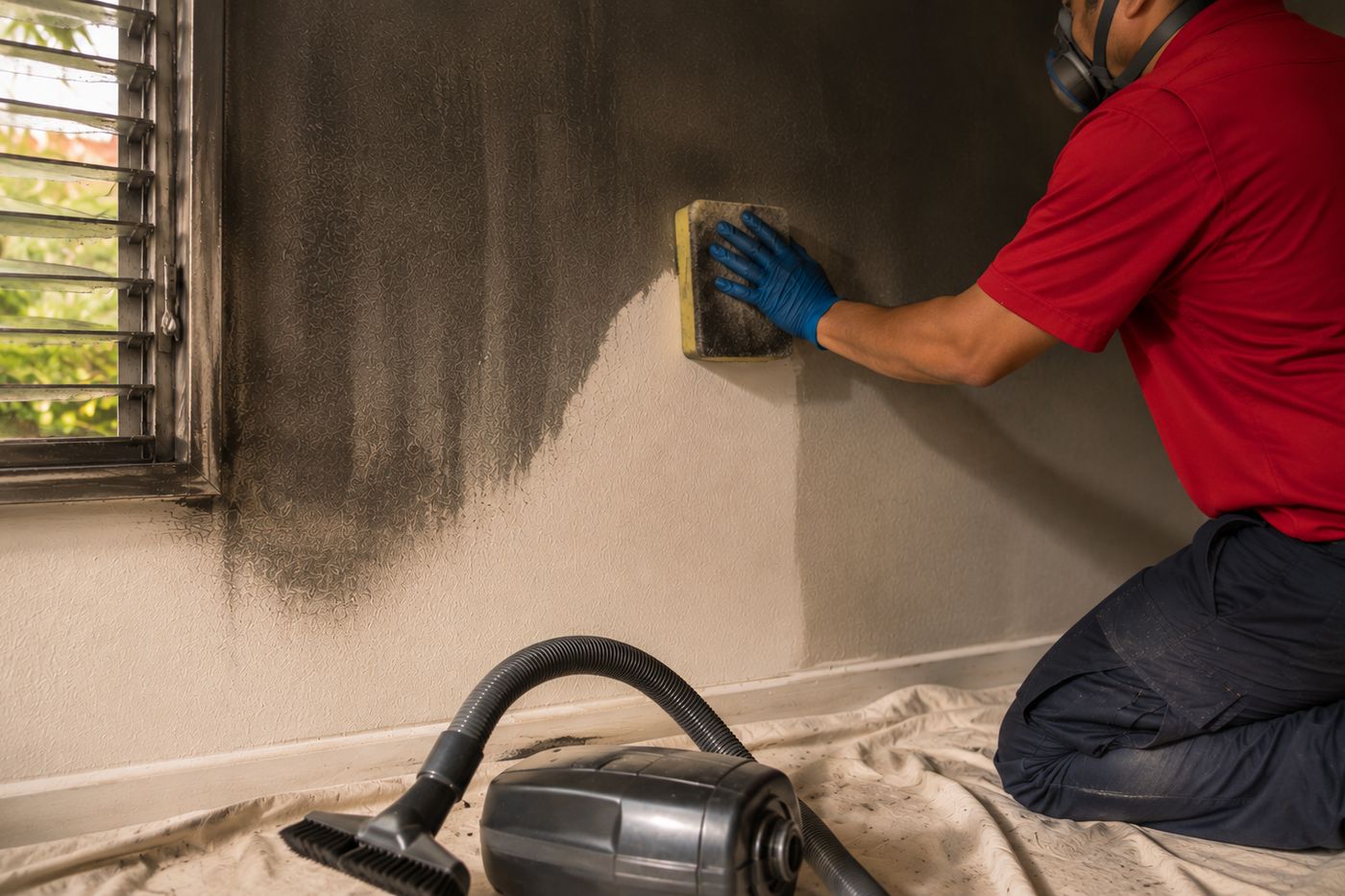
From a fast, hot, well-oxygenated fire burning mostly paper and wood. The deposit is fine, powdery and relatively loose. It is cleaned dry: HEPA vacuuming with a soft brush head held just off the surface so the bristles never rub, then chemical-free dry-cleaning sponges in overlapping single-direction passes, turning to a clean face rather than re-wiping with a loaded one. Water or spray cleaner before the dry pass turns powder into a slurry that penetrates paint. This is the type most often ruined by a well-intentioned first attempt.
Wet Soot
From a slow, smouldering, oxygen-starved fire, typically involving plastics, rubber and synthetic upholstery. The deposit is sticky, dense and dark, and it smears under almost any pressure. Dry sponges accomplish nothing here. Wet soot needs solvent-based agents with real dwell time, agitation matched to the substrate, then a rinse and a controlled dry. It is the slowest residue per square foot and the most likely to need several passes on porous finishes.
Protein Residue
From kitchen fires and food left on a burner — evaporated animal fat recondensing across the room. It is the residue people miss, because it is close to invisible: a thin amber varnish that dulls paint and yellows white surfaces, carrying an odor out of all proportion to how little there is to see. It comes off with alkaline degreasing agents and agitation, and it has to come off every surface in the space, including ceilings, the tops of door casings and the insides of cabinets. Painted over, it bleeds through within weeks.
Fuel-Oil and Heavy Petroleum Soot
On the mainland this is the classic furnace puff-back. Oil-fired heating is effectively absent on Oahu, so when we meet this residue here it has come from a generator, a vehicle fire in an attached carport or garage, or fuel-driven equipment stored indoors. It is heavy, greasy and strongly odorous, it moves through an HVAC system readily, and it demands specialised solvents and a higher proportion of removed-and-replaced porous material than any other type.
Fire damage
Surface by Surface: Cleaning Soot Without Setting the Stain
Residue type sets the chemistry; the substrate sets the technique. The same wet soot is handled one way on a painted wall and another way on unglazed tile.
- Painted walls and ceilings — dry pass first, every time, working upward so a streak runs onto uncleaned surface. Textured and acoustic "popcorn" ceilings, common in Oahu housing stock, cannot take sponging at all; they are vacuumed and assessed for removal.
- Glass, mirrors and shower enclosures — cleaned early, never with an abrasive. Acidic film left in place hazes glass permanently, and grit in the residue scratches it under pressure.
- Metal fixtures and hardware — chrome taps, stainless appliance faces, brass and aluminium jalousie frames, hinges. Cleaned, neutralised and coated, because bare cleaned metal in this environment re-tarnishes.
- Natural stone, tile and grout — acid attacks marble, limestone and travertine directly, and grout wicks residue and holds it. Neither tolerates a general-purpose cleaner.
- Electronics and appliances — do not switch them on. Soot is conductive and acidic, and powering a soot-laden device is how a survivable unit becomes a dead one.
- Textiles, upholstery and clothing — HEPA vacuumed before any wet process. Laundering first drives soot into the weave, which is why the shirt washed on day one is usually the one that cannot be recovered.
- Unfinished wood, particleboard and exposed drywall paper — porous and absorbent, and frequently the honest replace call rather than a cleaning problem.
Fire damage
Acidic Soot, Salt Air, and Why Hard Surfaces Are on a Clock
Soot from synthetic materials carries chlorides and sulfur compounds, and those deposits are hygroscopic: they pull moisture out of the surrounding air, and once wet they sit on the surface as a dilute acid. This is the part of soot damage that does not wait.
Oahu makes it faster. Humidity here stays high year-round, so a hygroscopic deposit never gets a chance to dry out, and coastal air adds salt aerosol to the film already on the metal — an electrolyte on every unprotected metal surface in the house. Pitted chrome, tarnished brass, hazed glass, etched marble and permanently discoloured grout are days-and-weeks damage in these conditions rather than months-and-years, and properties within reach of the spray sit at the fast end of that range. That changes the running order of the job rather than adding a step: acid-sensitive materials are cleaned and neutralised in the first working phase, and metals are coated rather than left bare between phases.
Fire damage
Settled Soot and the Air in the House
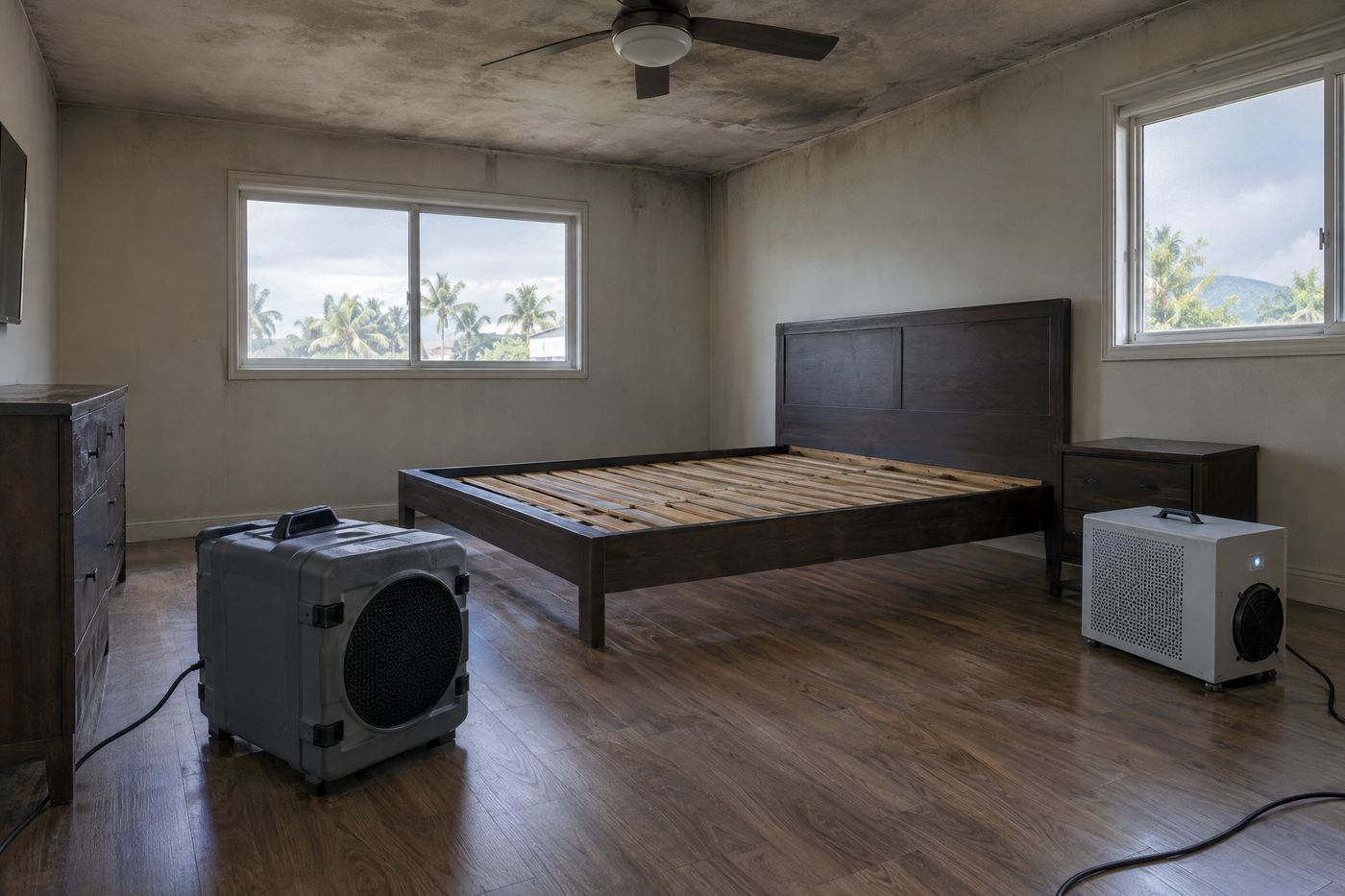
Soot that has settled has not finished moving. The particles are fine enough that ordinary activity puts them back into the air — walking across a room, running the air conditioning, dry-dusting a shelf — so a house that looks static is trading residue between its surfaces and its air every time somebody moves through it. That is why containment and HEPA filtration run during the cleaning rather than only at the end, and why we ask people to stay out of affected rooms until the residue is off the surfaces. The EPA’s summary of the health effects of fine particulate covers the exposure question; anything specific to a household member belongs with their doctor rather than with us. What we can act on is the source.
Fire damage
Documenting What Can Be Cleaned and What Has to Be Replaced
Adjusters rarely dispute a line item for cleaning. What they dispute is a replacement, and after a fire almost every contested item is one somebody recorded as unsalvageable — so that evidence has to be built while the item is still in front of us.
We record residue type by room, the substrate each deposit landed on, the cleaning method attempted and the result it produced, and photographs of each item before and after. Contents are inventoried individually with a disposition and the reason — cleaned, cleaned with residual damage noted, or beyond recovery and why. Where a surface is partly recoverable but will not return to pre-loss condition, we say so in those terms rather than rounding it either way. That record decides whether a replacement line survives review, and it cannot be reconstructed once the item has left the property.
Why Rescue One
Why Homeowners Trust Rescue One Restoration
- 01
We Identify the Residue Before Anyone Touches It
A soot job goes wrong in the first ten minutes or not at all. The single decision that determines whether a surface is recoverable is which residue type is on it, and that is a judgement made on site by someone trained to make it — under the IICRC’s fire and smoke restoration discipline, residue identification comes before any cleaning method is selected.
We walk the property room by room and record what is present before a cloth or a sponge comes out of the van. One fire regularly produces two or three different residue types in different rooms, and treating them as one problem is how a cleanable film becomes a permanent stain.
- 02
Cleaning Equipment Matched to Each Residue Type
Dry soot, wet soot and protein residue need three different kits, and a company carrying one of them will use it on all three. We carry HEPA-filtered vacuums with sealed filtration paths, chemical-free dry-cleaning sponges, solvent systems with the agitation tooling that goes with them, and alkaline degreasers for protein work.
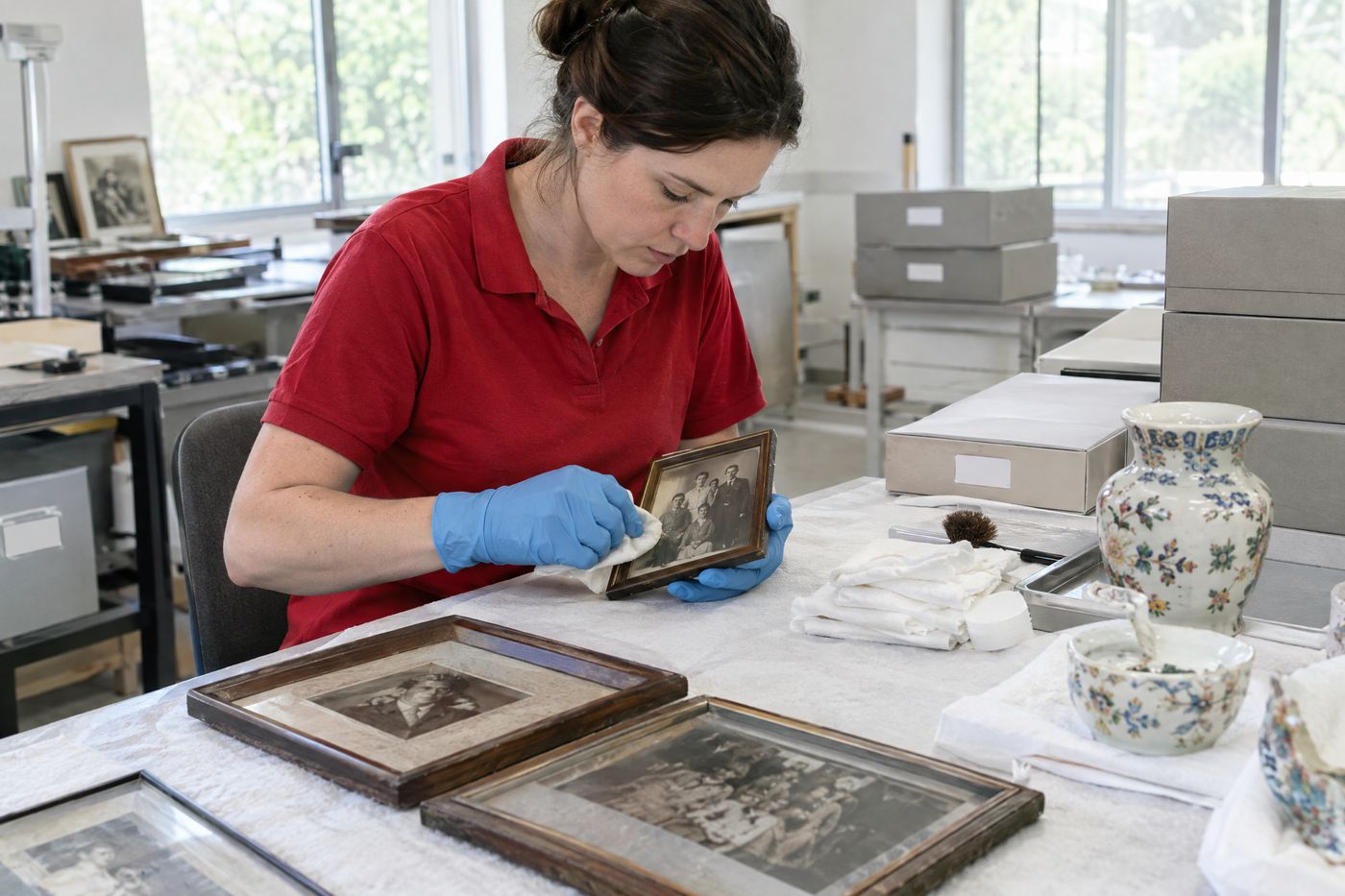
Contents cleaning is handled separately from structural cleaning, because the methods that work on a wall are wrong for a lamp, a photograph or a circuit board.
- 03
Acid-Sensitive Surfaces Are Scheduled First, Not Last
Most of a fire cleanup can wait a few days without consequence. Glass, chrome, brass, marble and grout cannot, because the acid in soot is working on them the entire time and Oahu’s humidity keeps that reaction going.
So we sequence those surfaces into the first working phase and neutralise and coat the metals rather than leaving them cleaned but bare between visits. It is a scheduling decision rather than an extra service, and it is the difference between a chrome fixture that polishes back and one that stays pitted.
- 04
Salvage Decisions Recorded Item by Item, With the Reason
The contested part of a soot claim is almost always a replacement line. An adjuster reviewing the file months later cannot inspect an item that has already gone to the landfill, so the record we build on site is what the decision rests on.
Every item gets a disposition and the reason behind it, with before-and-after photographs and a note of the cleaning method attempted and what it achieved. Where something is partially recoverable we write it that way. Overstating a loss damages a claim as reliably as understating one.
- 05
An Oahu Crew That Accounts for Salt Air and Island Housing Stock
Rescue One Restoration has been locally owned and operated here since 2018, and the island changes this work in specific ways. Salt aerosol accelerates the corrosion soot starts, so coastal properties run on a shorter clock than the general guidance suggests.
Single-wall construction gives residue paths between rooms that a mainland-trained crew does not go looking for. Textured and acoustic ceilings, jalousie window frames and unsealed lava rock all appear far more often in Oahu homes than in the manuals, and each one has a wrong method that is easy to reach for.
One call starts it. We answer 24/7, anywhere on Oahu.
Reviews
What Our Customers Are Saying
When we had urgent moisture remediation service need Rescue One Restoration came to the rescue! I can’t say enough positive things about the company’s professionalism, especially from the team lead, Aaron.
When I first reached out, on a weekend, Aaron adjusted his personal schedule to come out and take a look at the issue that same day. Once work began, their work was high-quality and every team member was very professional, which was especially important to us as we are a school that had students and staff present on campus at times. Aaron did a wonderful job of being on-site daily, overseeing the project from start to finish, and keeping our administrative team updated every step of the way. Highly recommend!
We have worked extensively with Rescue One on many of the projects we manage and they are our "Go To". Paul is awesome on his communication, response and knowledge of how insurance works.
5 Stars.
Had the basement in our office flooded because of the storm, but these guys were such a HUGE HELP especially shout out to Amen and Chozyn for helping to get all the water out of the basement carefully and diligently as well as being warm, courteous and professional young adults!
During the March storms, our house took a beating. I called other places but they were all busy.
I was very lucky to have Rescue One come out to the home very quickly and leave machines to dry out the house. JJ was on top of it.
Excellent and timely service – would definitely use them again! Paul was very responsive and assisted us in our time of need.
Mahalo!
Paul and his team were professional, communicated well, worked with other contractors under strict time constraints. They were helpful & efficient in both the assessment and repair of damage.
Highly recommend.
Frequently asked questions
Frequently Asked Questions
Don’t see your question? Call us anytime.
01Can soot be cleaned off, or does everything it touched have to be replaced?
Most of it can be cleaned. Hard, non-porous surfaces — glass, sealed tile, metal, finished wood, sound painted drywall — are usually recoverable if the correct method is used and the acidic residue has not sat long enough to etch them. What tends to be genuinely unsalvageable is porous and absorbent: exposed drywall paper, particleboard, insulation, some textiles. We make that call surface by surface and document the reason for each one.
02We wiped some of it and it smeared and looks worse now. Did we ruin it?
Not necessarily, and it is the most common thing homeowners tell us. Smearing usually means the residue was oily wet soot or protein residue, and a dry or damp wipe spread it instead of lifting it — on a sound painted or sealed surface, solvent cleaning will often still recover it. What is harder to reverse is residue pressed into an unsealed or porous surface. Stop cleaning, leave it as it is, and let us look before anything else is attempted.
03Is settled soot dangerous to breathe while we are still in the house?
Settled soot does not stay settled — walking through a room, running the air conditioning or dusting a shelf puts fine particles back into the air. The EPA’s material on the health effects of fine particulate covers the exposure side, and specific health questions belong with your doctor. Our practical advice is to stay out of affected rooms until the residue is off the surfaces, and to leave the HVAC system off so it is not moving residue through the rest of the house.
04Does homeowners insurance cover soot cleanup?
A standard Hawaii HO-3 policy covers fire damage, and soot cleanup is part of that loss rather than a separate category. Where claims run into difficulty is on the salvageable-versus-replace question and on contents, which is why the documentation matters so much. We work directly with carriers and adjusters, and we build the file as we work rather than assembling it afterwards.
05How quickly do we need to act before the damage becomes permanent?
For hard, acid-sensitive surfaces the practical window is days rather than weeks. Soot deposits pull moisture from the air, and in Oahu’s humidity — with salt aerosol added near the coast — the acidic film begins hazing glass and pitting metal quickly. Porous materials are less time-critical but absorb residue deeper the longer it sits. There is no benefit in waiting for the claim to settle before the residue is addressed.
06Do we need soot cleanup and smoke odor removal, or just one of them?
It depends on what the fire left behind, and the two are scoped separately because the work is different. A small, contained fire on hard surfaces can be a residue job alone. A fire that ran hot, involved synthetics, or burned long enough for smoke to reach porous materials leaves odor embedded in the structure that surface cleaning will not resolve — that is covered on our smoke damage restoration and odor removal page. We assess both at the inspection and say plainly if you only need one.
07Can soot-covered electronics and belongings be saved?
Often, provided nothing has been switched on. Soot is conductive and acidic, so powering up a soot-laden device is the most reliable way to turn a recoverable item into a dead one. Leave electronics unplugged and untouched. Contents cleaning is a separate discipline from structural cleaning, and photographs, documents and textiles each need their own method.
08Why does soot keep reappearing after we have cleaned a room?
Two usual causes. The first is the HVAC system, which will have drawn residue into the ductwork and will redistribute it every time it runs — cleaning a room while the system is circulating soot is a losing exercise. The second is protein residue, which is close to invisible when freshly deposited and becomes noticeable as it ages and yellows, so it reads as new soot appearing rather than old residue that was never removed.
24/7 emergency response
Let’s bring your home back.
Soot is one of the few parts of a fire loss where the outcome still depends on what happens next. The film is removable and most of the surfaces underneath it can be saved — but on acid-sensitive materials that holds for a window measured in days, and only if the first cleaning attempt is the right one for the residue actually present. Waiting for the claim to settle costs surfaces that were recoverable when the fire was put out.
Call us on (808) 745-1608. Our line is answered 24/7, we work across Oahu, and we identify what residue you are dealing with before anyone puts a cloth on it. Once the Honolulu Fire Department has released the property back to you, the residue work can begin.
If the smell is the part you are most worried about, our page on smoke damage restoration and odor removal covers the odor side, and our fire damage restoration service covers the whole loss from emergency response through reconstruction. We work directly with your insurer throughout.
24/7 emergencyAll of OahuIICRC certifiedLic. BC-38891Locally owned & operated