
When a pipe lets go at 2 a.m. or a Kona storm pushes water across your living room floor, your first thought is how to stop it. Almost immediately, a second worry sets in: will insurance actually pay for any of this? For most Oahu homeowners, that question is just as stressful as the damage itself — the policy language is confusing, the deductible is unclear, and the fear of a denied claim is real.
We are Rescue One Restoration, a locally owned, IICRC-certified restoration company that has worked alongside Oahu homeowners and their insurers since 2018. Because we document and bill insurance carriers on nearly every job, we spend as much time speaking the language of claims as we do running drying equipment. That experience is what this guide is built on.
Below, we break down what standard homeowner’s policies in Hawaii typically cover, where island coverage gets complicated — flood, hurricane, and yes, volcano — whether mold is included, how to file a claim the right way, and why the restoration company you choose can directly affect what your insurer pays.
What Standard Homeowner’s Insurance Covers in Hawaii
Most Oahu homeowners carry an HO-3 policy, the standard form that insures your dwelling against all perils except those it specifically excludes. In practice, that means damage from sudden events — a burst supply line, a roof torn open in a windstorm, a kitchen fire, an overflowing water heater — is generally covered. Even so, every policy is written differently, so the only reliable answer to “am I covered?” lives in your own declarations page and the exclusions that follow it.
Sudden and Accidental vs. Gradual Damage
The single most important distinction in any homeowner’s policy is sudden and accidental damage versus gradual damage. A pipe that ruptures without warning is the textbook example of a covered, sudden loss. By contrast, a fitting that has been weeping behind a vanity for eight months — slowly rotting the subfloor — is usually treated as a maintenance issue and denied. This is why acting quickly matters for more than just preventing further damage: the faster you report and document a loss, the easier it is to show that it was sudden rather than something that built up over time.
What Standard Policies Usually Exclude
Beyond gradual deterioration, standard Hawaii policies commonly carve out several categories that surprise homeowners after a loss. Among the most common exclusions are flood from rising surface water, earth movement, sewer or drain backups without a specific endorsement, and damage tied to deferred maintenance. Coverage for mold is frequently limited or capped as well, which we cover in detail further down. None of this means your claim is doomed — it means knowing your exclusions before disaster strikes is the difference between an informed homeowner and a blindsided one.
Where Hawaii Coverage Gets Complicated
Hawaii’s climate and geography create coverage questions that mainland policies rarely raise. Three in particular trip up Oahu homeowners: flooding, hurricanes, and the one almost everyone asks about — volcanoes.
Flood Damage and the NFIP
Here is the gap that catches the most people: a standard homeowner’s policy does not cover flood damage from rising surface water. When heavy rain overwhelms a storm drain in Kaneohe or a stream jumps its banks in Manoa, the resulting flood loss falls outside your HO-3. Instead, flood coverage comes through a separate policy under the National Flood Insurance Program (NFIP), administered by FEMA. If your property sits in a flood-prone area — and much of windward and low-lying Oahu does — a dedicated flood policy is worth serious consideration. For more on storm response, see our guide on what to do after Oahu flood damage, or learn about our flood damage restoration services.
Hurricane Deductibles
Many Hawaii policies apply a separate hurricane deductible that works differently from your standard deductible. Rather than a flat dollar figure, a hurricane deductible is often a percentage of your dwelling coverage — commonly one to two percent — which can translate into thousands of dollars out of pocket on a high-value Oahu home. Reviewing this number before storm season, not after, is one of the simplest ways to avoid an unwelcome surprise during an active claim.
Volcano and Lava Damage in Hawaii
One of the most searched insurance questions in the islands is whether there is such a thing as volcano insurance in Hawaii. The short answer: no standalone “volcano” or “lava” policy exists. Instead, volcanic eruption is generally a covered peril under standard homeowner’s policies, because it is not specifically excluded in most standard forms. According to the Insurance Information Institute, that coverage typically extends to damage from the eruption’s blast, airborne ash and dust, and fire caused by lava. What is usually excluded is earth movement — landslides, tremors, and the ground shifting beneath a structure — even when an eruption set it in motion.
For our Oahu clients, there is important context. The active lava-flow hazard zones in Hawaii sit on the Big Island, not Oahu, whose volcanoes are long dormant. That means lava flow is not a practical risk for Honolulu-area homeowners, though ash and vog drifting across the islands can still raise air-quality and cleanup questions. If you own property on the Big Island as well, the high-risk zones can be difficult to insure privately, and the state-backed Hawaii Property Insurance Association exists as a last-resort option. Wherever your property sits, the rule holds: read your exclusions and ask your agent before you assume.
Does Homeowner’s Insurance Cover Mold in Hawaii?
Few questions weigh on Oahu homeowners more than mold, and for good reason. In our humidity, a water loss that sits untreated can begin growing mold within a day or two, long before anyone notices the smell. Whether your policy pays for remediation depends almost entirely on what caused the mold in the first place.
When Mold Is Covered — and When It Isn’t
As a general rule, mold is covered when it results directly from a sudden, covered loss — for example, mold that grows after a burst pipe floods your bathroom. Mold that grows from a long-ignored leak, chronic humidity, or poor ventilation is usually treated as a maintenance problem and denied. Many Hawaii policies also cap mold coverage at a set dollar amount, so even a covered claim may not pay the full cost of remediation. The U.S. Environmental Protection Agency stresses that controlling moisture is the only durable way to control mold — a principle that drives how we approach every water loss.
How to Protect a Mold Claim in a Humid Climate
Because the covered-versus-excluded line turns on the cause and the timeline, documentation is everything. From the moment a loss occurs, photograph the source, note the date you discovered it, and report it promptly. When we are called in quickly, our drying logs and moisture readings help establish that mold followed a sudden event rather than months of neglect. If you would like to understand the broader stakes, our article on the hidden dangers of home water damage explains how quickly small problems escalate. Our ultimate guide to water damage restoration in Hawaii covers the process in depth. For active growth, our mold removal and remediation services follow containment and air-quality protocols designed to satisfy both your health needs and your insurer.
How to File a Property Damage Insurance Claim
When damage strikes, the steps you take in the first hours shape the entire claim. A calm, methodical approach protects both your home and your reimbursement.
The First Hours: Document and Mitigate
First, make sure everyone is safe and, if needed, shut off the water or power at the source. Next, document everything before you move or remove anything — wide shots of each affected room, close-ups of the damage, and short videos all help. From there, your policy actually requires you to mitigate further damage, so reasonable emergency steps such as tarping a roof or extracting standing water are expected. Keep every receipt; those costs are typically reimbursable. This is also the point at which calling a professional restoration team pays off, because emergency mitigation done correctly strengthens your claim rather than complicating it.
Working With Your Adjuster
After you report the loss, your insurer will assign an adjuster to assess the damage. Cooperate fully, share your documentation, and keep a written log of every conversation, including names and dates. Most importantly, you are not obligated to accept the first figure offered. If you believe a claim has been underpaid or wrongly denied, the Hawaii Insurance Division regulates carriers in the state and can explain your rights as a policyholder. Detailed, professional documentation from your restoration contractor is often what turns a disputed estimate into a fair settlement.
Why Your Choice of Restoration Company Affects Your Claim
Homeowners are sometimes surprised to learn that the contractor they hire can influence how much their insurer ultimately pays. The reason comes down to documentation and the language adjusters recognize.
Documentation Adjusters Accept
When we follow IICRC industry standards on your job, the records we generate — moisture maps, daily drying logs, thermal imaging, and itemized scopes of work — are exactly the kind of evidence adjusters are trained to accept. That matters in Hawaii, where ambient humidity makes proper drying verification essential rather than optional. Thorough documentation does more than satisfy a file; it protects you from a claim being disputed months later over damage no one can still see.
We Bill Your Insurer Directly
Because we work directly with insurance carriers, we can communicate with your adjuster, provide the documentation they need, and bill the insurer for covered work — so you are not floating the full cost while paperwork moves. We have handled this process for homeowners across the island, from Kailua to Hawaii Kai. Whether the loss involves water damage restoration, fire damage restoration, or full reconstruction, our role is to make the insurance side feel manageable instead of overwhelming. We serve homeowners across the island through our Honolulu property damage restoration services.
Protect Your Coverage Before You Need It
Understanding your coverage before a loss is the best protection you have. Familiarize yourself with your policy’s exclusions, confirm whether you carry separate flood and hurricane coverage, and know that in Hawaii’s climate, every hour a water loss sits untreated raises the risk of mold. Acting quickly protects your home, your health, and your claim.
When damage does strike, you do not have to navigate the insurance maze alone. Our team answers the phone around the clock, every day of the year. Call us at (808) 745-1608 and we will respond, begin emergency mitigation, and work directly with your insurer from the first conversation.
From documentation to direct billing, we handle the parts of a claim that overwhelm most homeowners — so you can focus on getting your home, and your life, back to normal.
Frequently Asked Questions
Does homeowner's insurance cover water damage in Hawaii?
Most standard HO-3 policies cover sudden and accidental water damage, such as a burst pipe or a failed water heater. Gradual leaks and rising-water flooding are generally excluded. Because the cause and timeline determine coverage, documenting the loss quickly is essential to a successful claim.
Is there volcano insurance in Hawaii?
No standalone volcano or lava insurance policy exists. Volcanic eruption is generally a covered peril under standard Hawaii homeowner’s policies because it is not specifically excluded. For Oahu homeowners this is largely theoretical, since the active lava-flow hazard zones are on the Big Island, not Oahu.
Does insurance cover lava or volcanic eruption damage?
Generally yes for the eruption itself — blast damage, ash and dust, and fire caused by lava are typically covered. Earth movement such as landslides and tremors is usually excluded, even when an eruption triggers it. The Insurance Information Institute offers a clear overview, and your declarations page is the final word.
Will my insurance cover flood damage on Oahu?
Not under a standard homeowner’s policy. Flooding from rising surface water requires separate coverage through the National Flood Insurance Program. Given how quickly storm runoff floods low-lying and windward Oahu neighborhoods, a dedicated flood policy is worth considering if your property is at risk.
Does insurance cover mold remediation in Hawaii?
Mold is usually covered when it results from a sudden, covered loss like a burst pipe, but denied when it stems from a chronic leak or humidity. Many Hawaii policies also cap mold coverage at a set amount. Fast reporting and strong documentation give your mold claim the best chance.
How long do I have to file a property damage claim?
Most policies require prompt notice, and waiting can both weaken your claim and worsen the damage. There is no benefit to delay in Hawaii’s climate — report the loss as soon as it is safe to do so, then begin documenting and mitigating right away.
Can I choose my own restoration company?
Yes. While an insurer may suggest a preferred vendor, the choice of contractor is yours as the homeowner. Selecting a local, IICRC-certified company that documents to industry standards helps ensure your claim is supported by evidence your adjuster will accept.
What if my claim is denied or underpaid?
A denial is not always the end. Detailed documentation, a clear scope of work, and a professional estimate can support a reconsideration. The Hawaii Insurance Division can also explain your rights, and our reports are built to give an honest, defensible picture of the loss.
Do you bill my insurance company directly?
Yes. We communicate with your adjuster, supply the documentation they need, and bill the carrier for covered work so you are not fronting the full cost. Call us at (808) 745-1608 and we will coordinate with your insurer from the start.
Learn more about our damage restoration services and how Rescue One Restoration can serve you here.
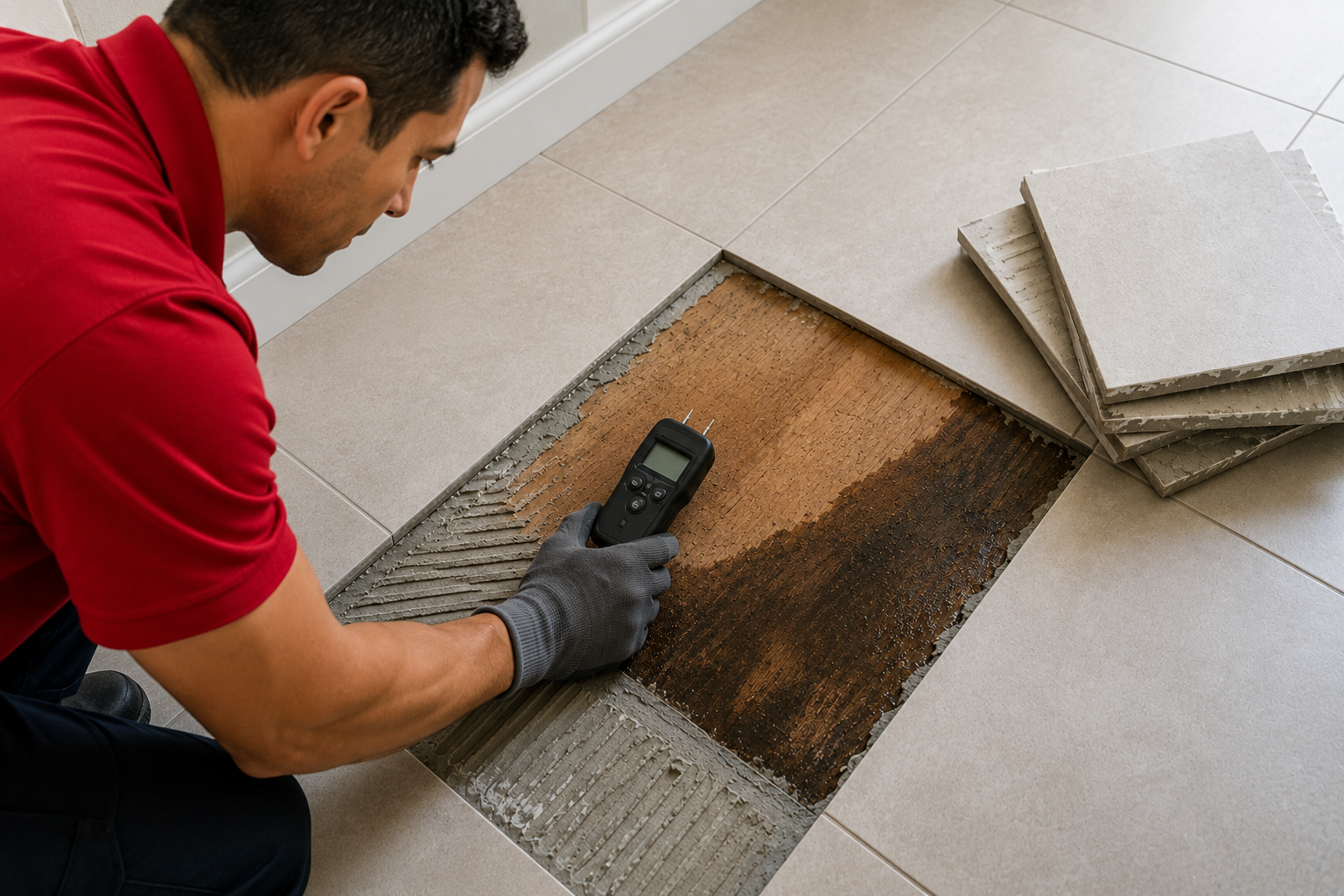
Two homes on the same street take on the same amount of water from the same storm. One is dry and back to normal in a few days with no materials removed. The other loses its flooring, the bottom two feet of drywall, and its kitchen cabinetry. The difference usually
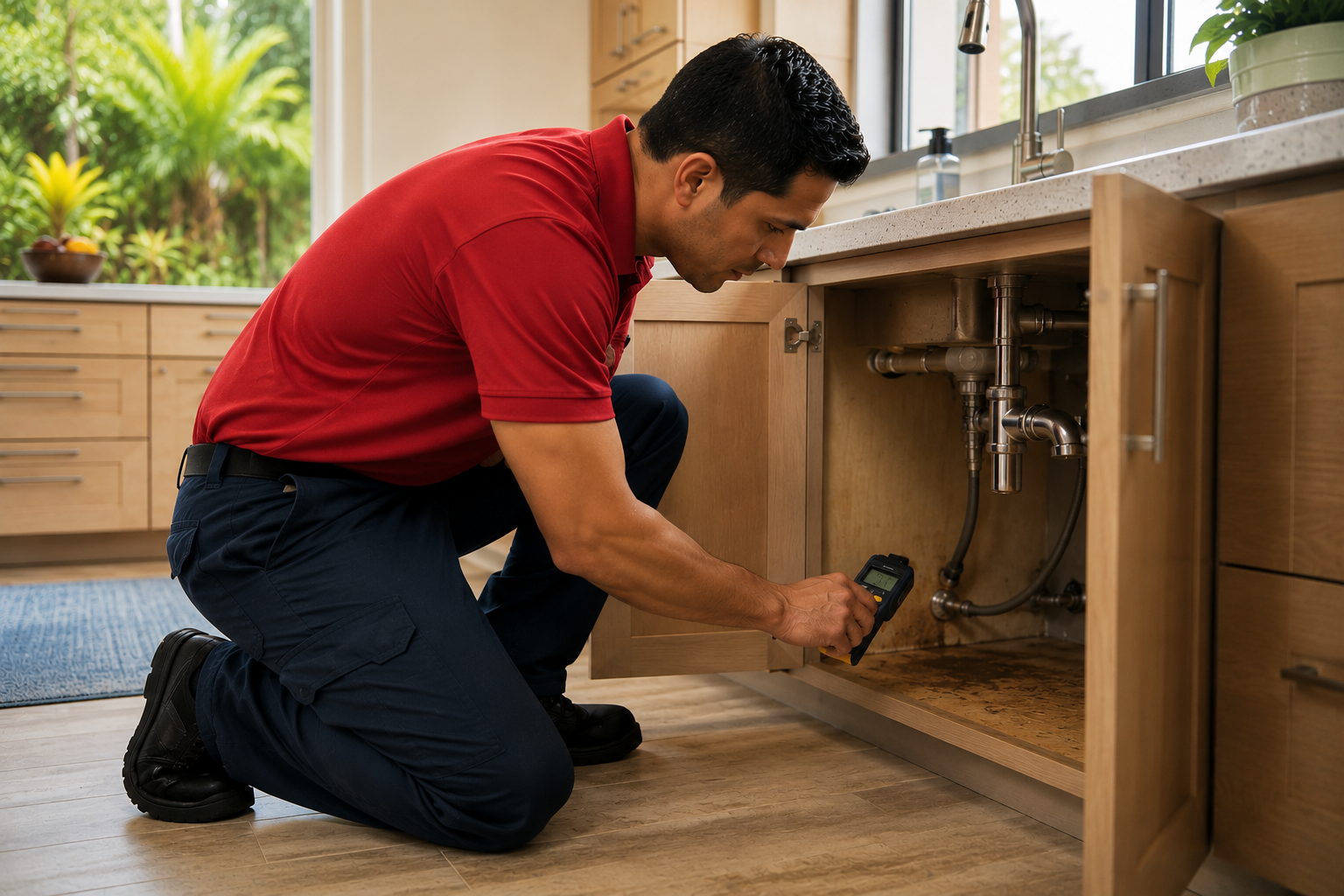
Most of the water damage we restore on Oahu did not start as an emergency. It started as something small and quiet that nobody noticed — a supply line weeping behind a dishwasher, a hairline crack in shower grout, a downspout discharging against a foundation for two rainy seasons. The
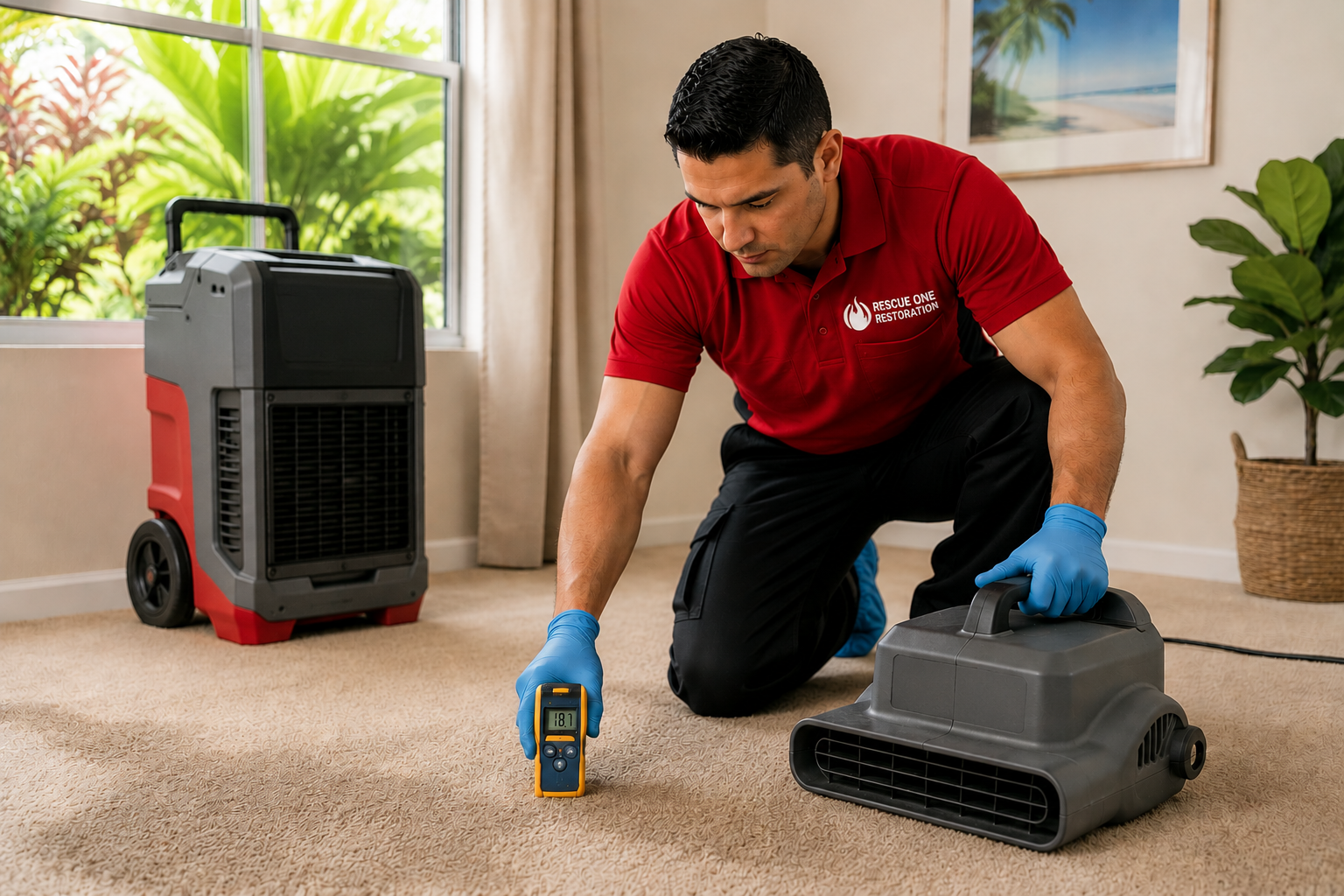
Few things unsettle a homeowner like the squish of a soaked carpet underfoot. Maybe a supply line let go overnight and you woke to a dark stain spreading across the bedroom. Maybe a slow-moving low-pressure system pushed rain across the lanai and into the living room while you slept. Either
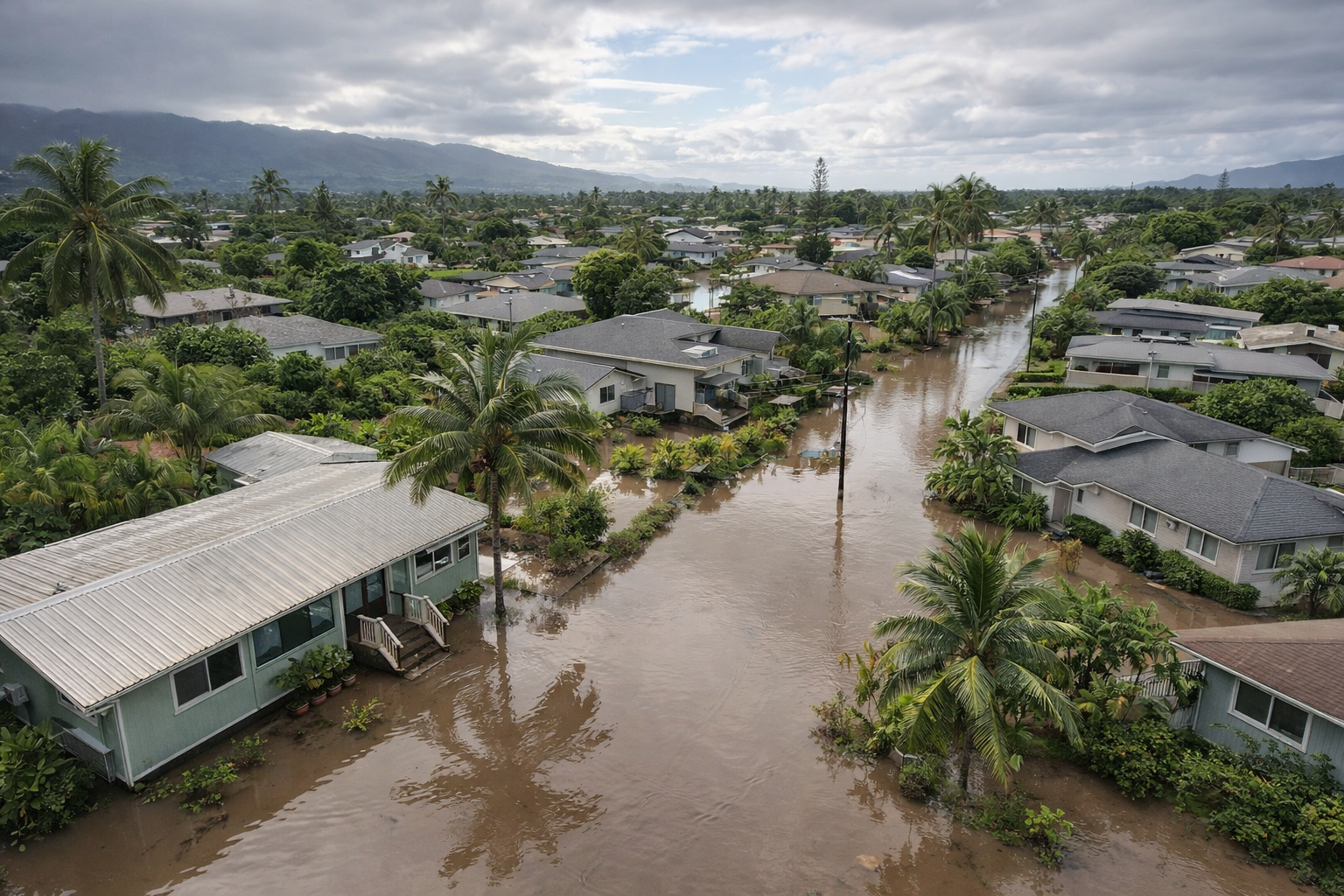
Oahu Homeowners: What to Do Right Now After the March 2026 Storm & Flooding A Step-by-Step Guide from Your Local Oahu Restoration Team The call came in just after midnight on March 20th. A homeowner in Waialua. Water in the hallway. Water in the living room. Water pressing up through
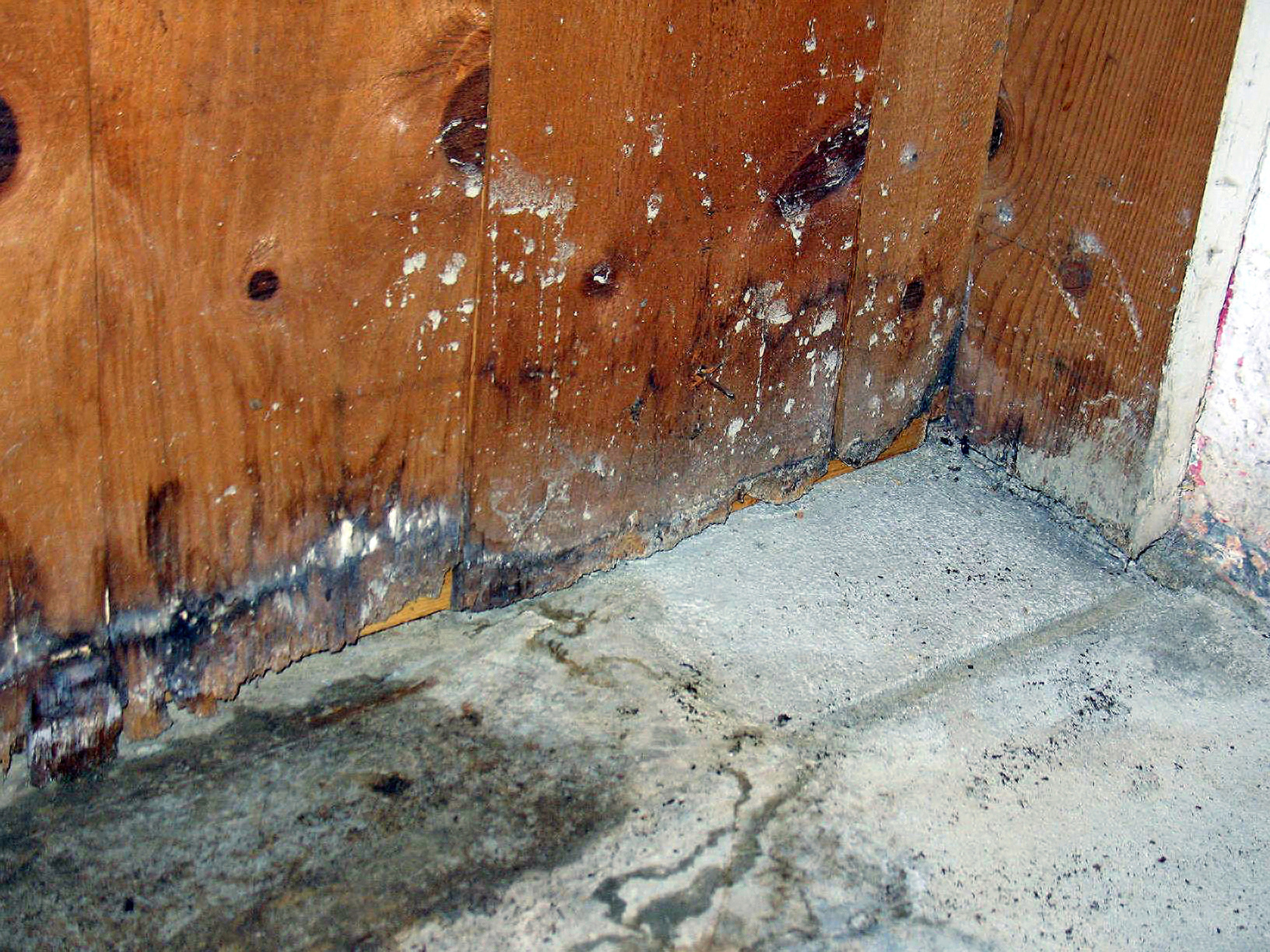
Discovering water damage in your home is unsettling — the wet stain you didn’t see yesterday, the unfamiliar musty smell, the floorboard that suddenly feels soft. What you’re seeing on the surface is usually a small fraction of what’s actually happening behind drywall, beneath flooring, and inside wall cavities. In