Water Damage Isn’t One Problem: How Material and Property Type Change Everything
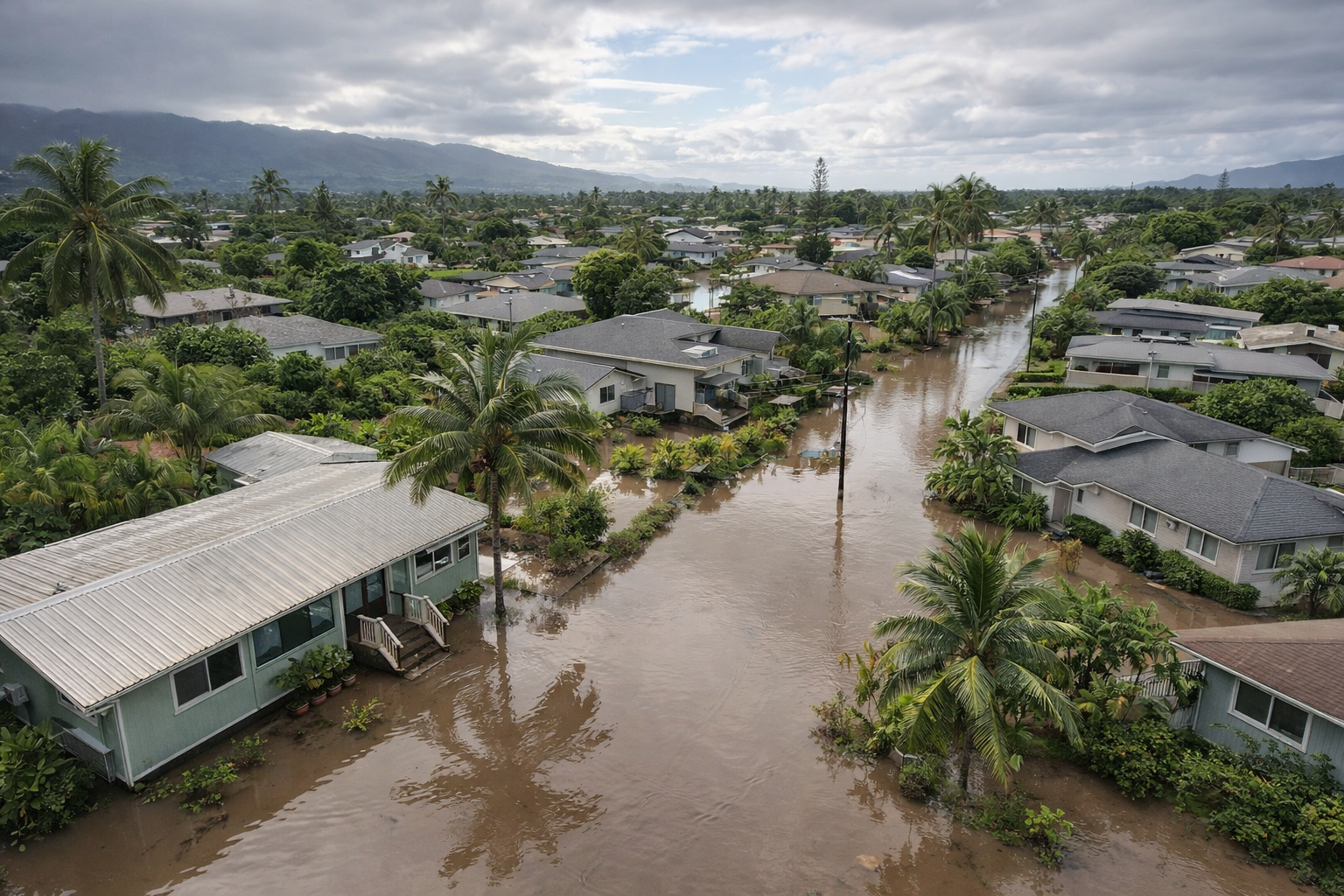
Two homes on the same street take on the same amount of water from the same storm. One is dry and back to normal in a few days with no materials removed. The other loses its flooring, the bottom two feet of drywall, and its kitchen cabinetry.
The difference usually isn’t the volume of water. It’s what the water landed on, and who is responsible for dealing with it.
Most water damage advice treats a home as a single undifferentiated thing that gets wet. It isn’t. Materials absorb, release, and fail in very different ways, and the right decision for hardwood is the wrong decision for tile. And if the property is a rental, an entire second layer of questions applies before anyone touches anything.
Part One: How Water Behaves in Different Materials
Tile — the material people most often get wrong
Tile is the one we get asked about most, and the assumption is nearly always the same: tile is waterproof, so tile is fine.
The tile is fine. The tile is ceramic or porcelain and water does essentially nothing to it. That is exactly the problem.
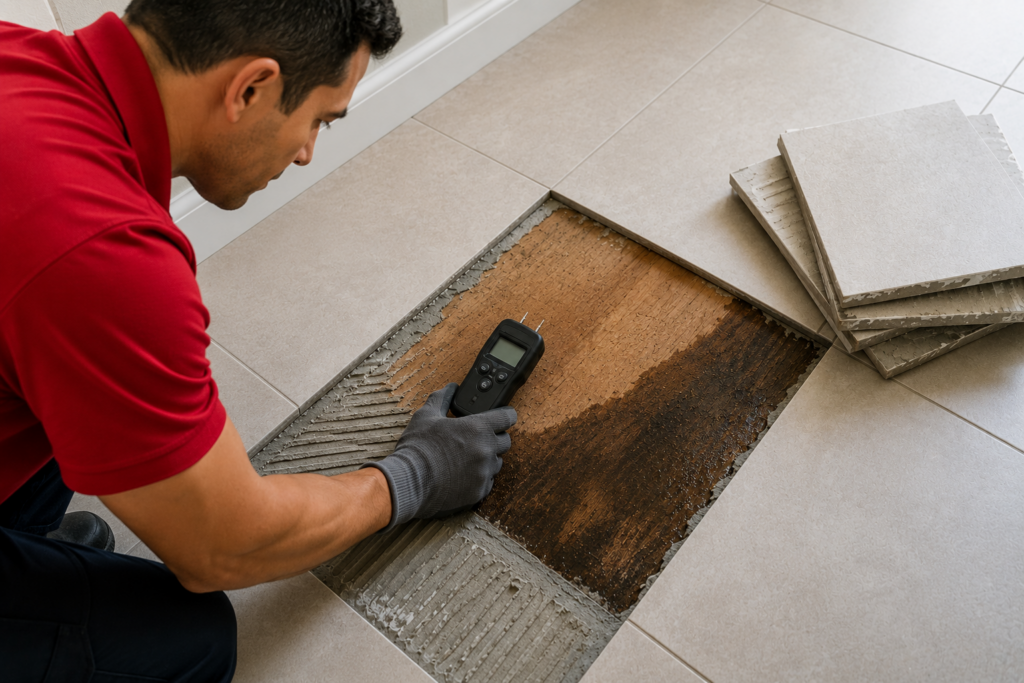
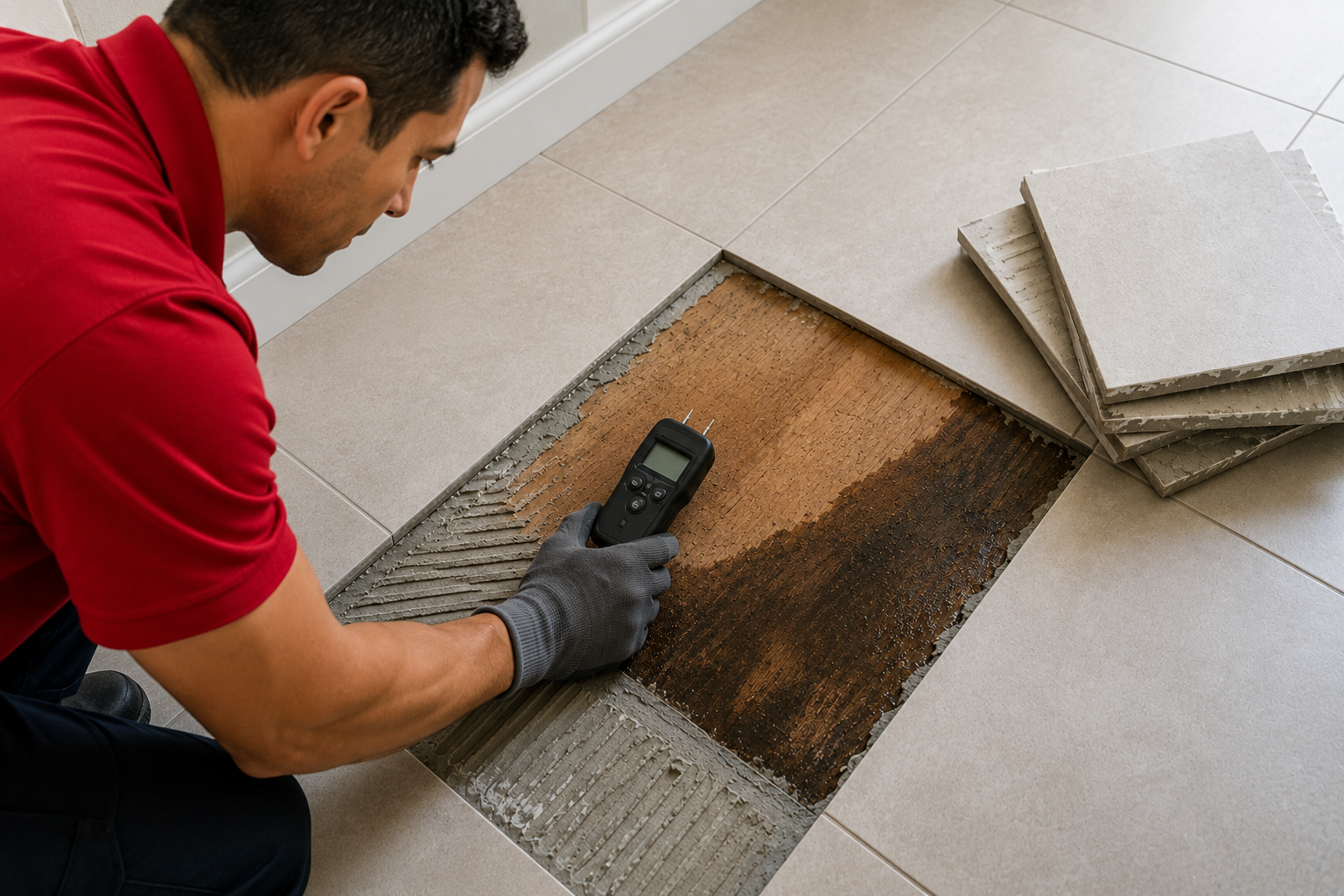
Water doesn’t damage tile. It goes past tile and damages what’s underneath. Grout is porous unless it has been sealed and the sealer is still intact, which after a few years it generally is not. Water passes through grout lines, through cracked or missing caulk at the perimeter, and reaches the mortar bed, the backer board, and the subfloor. Then it sits there, under an impermeable ceramic lid that prevents it from evaporating.
This is why tile floors are among the more deceptive materials we deal with. The floor looks perfect. The room appears undamaged. Meanwhile the subfloor beneath is saturated and mold is establishing in a dark, warm, enclosed space with no airflow — close to ideal growing conditions.
Whether a saturated subfloor needs replacing comes down to how long it stayed wet and whether it held its structure: caught early, we can usually dry it in place, but once the layers have swollen, delaminated, or lost strength — or mold has set into the assembly — that section comes out and is replaced.
What actually tells you there’s a problem under tile:
- Individual tiles that sound hollow when tapped, when neighbouring tiles sound solid — the bond to the substrate has failed
- Tiles that have loosened or begun to rock
- Grout lines cracking in a line rather than in isolated spots, which suggests movement in the substrate rather than normal wear
- A musty smell in a tiled room with no visible source
- Any softness or flex underfoot
- Staining on the ceiling of the room below — because tile blocks evaporation upward, water in the assembly frequently travels down and announces itself one floor beneath. An unexplained ceiling stain with a bathroom, kitchen, or laundry room directly above it is a tile-floor problem until proven otherwise.
How it gets dried: you generally cannot dry a tiled floor from above, because the tile blocks evaporation. Drying usually means accessing the cavity from below where a crawl space or the room beneath permits, or removing a section of tile to reach the substrate. Directing air movers across the surface of a tile floor for three days accomplishes very little beyond running up an electricity bill.
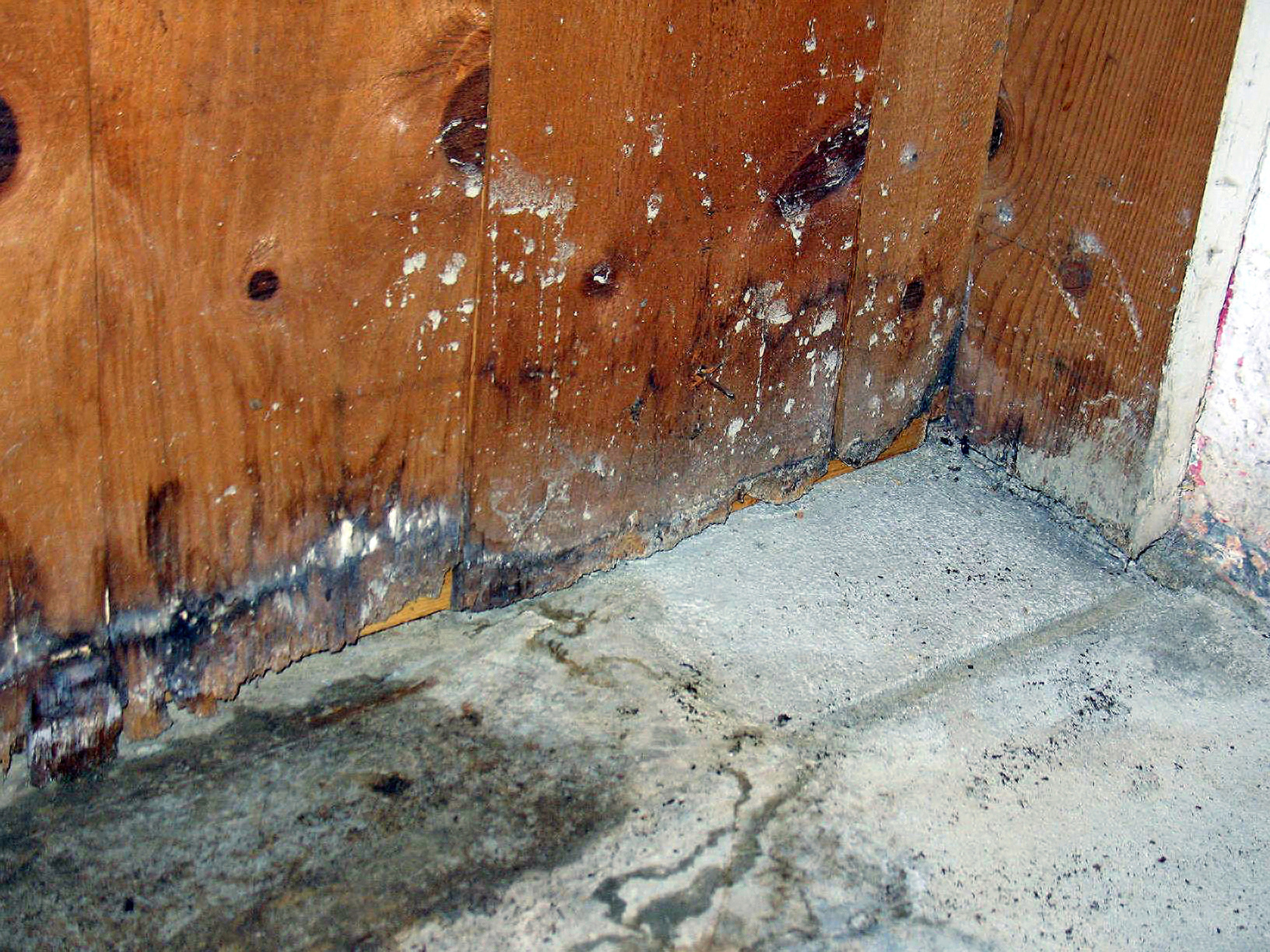
The related point, since it comes up constantly: yes, mold grows under tile. The tile itself won’t support growth, but the mortar bed, backer board, subfloor, and any organic debris in the assembly will.
If you are replacing the floor, the choice matters less than people expect and the grout matters more. Porcelain is the least porous of the common options and comes closest to being genuinely waterproof; ceramic is slightly more absorbent but performs well; natural stone such as granite is more porous still and depends on its sealer being maintained. But all three sit in grout, and grout is the actual path water takes in nearly every case we see. Resealing grout periodically — every few years, and sooner in a shower — does more for a tile floor than the tile specification does. Where we are handling the rebuild after a loss, we will tell you which parts of that assembly are worth upgrading and which are not.
Hardwood and bamboo
Wood absorbs and then moves. Boards cup — edges rising above the centre — as the underside takes on moisture faster than the sealed top face. With sustained saturation you get crowning, buckling, and boards lifting off the subfloor entirely.
Timing is close to everything here. Caught early and dried with equipment capable of pulling moisture out of the material itself, hardwood frequently recovers, sometimes with sanding and refinishing. Left to sit, it becomes a replacement. Bamboo, popular across Oahu and used widely in island homes, is similarly recoverable when addressed quickly.
Wood also needs to come down slowly. Drying it too aggressively causes checking and splitting. There is a correct rate, and it is not “as fast as possible.”
Carpet and padding
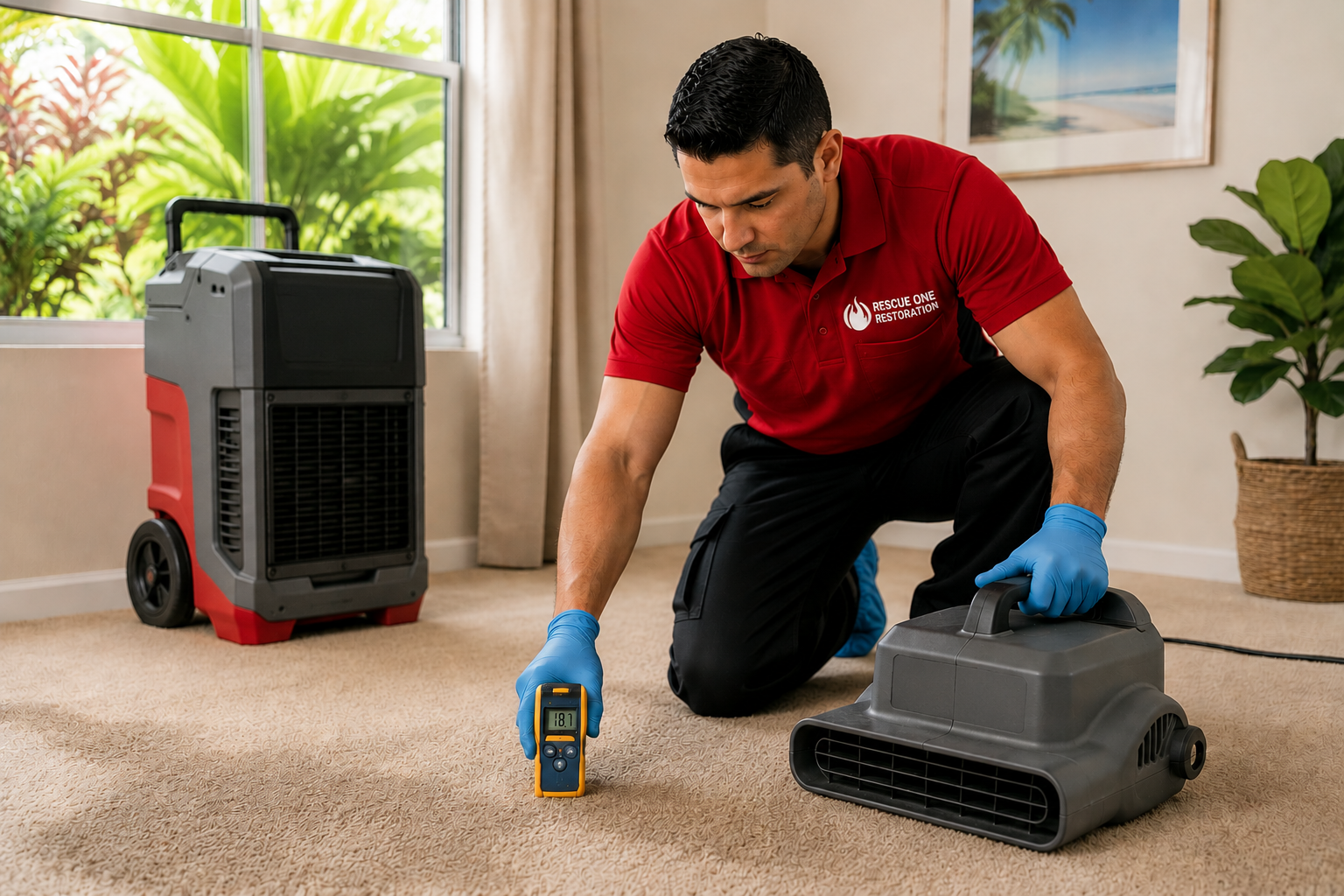
Usually the most straightforward call in the house. Carpet can often be saved; the pad underneath usually cannot. Pad is designed to absorb and it holds water like a sponge, so in most clean-water losses it is removed and replaced while the carpet is extracted, cleaned, and dried in place.
If the water was contaminated rather than clean, both carpet and pad come out. That distinction is not negotiable.
Drywall
Drywall wicks moisture upward, well above the visible water line — gypsum draws water up through the material by capillary action. This is why we cut to the moisture reading rather than to the stain, and why a homeowner who cuts to the visible line almost always leaves wet material in the wall.
Whether drywall can be dried in place depends on how long it was wet, how saturated it is, and whether the water was clean. Insulation behind it is a different question: wet fibreglass loses its insulating value and cellulose insulation is generally not salvageable at all.
Concrete, slab, and concrete block
Concrete is one of the few things that will not rot or grow mold on its own. But it is porous, it absorbs a substantial amount of water, and it releases it slowly — which means a slab can appear dry on the surface while still holding significant moisture.
This matters enormously in Hawaii, where slab-on-grade and concrete block construction are common. Install new flooring over a slab that still holds moisture and you have created a sealed environment for moisture to accumulate under the new floor. Adhesive fails, flooring lifts, and mold establishes in the assembly. We meter slabs before anything goes back down, every time.
Cabinetry and built-ins
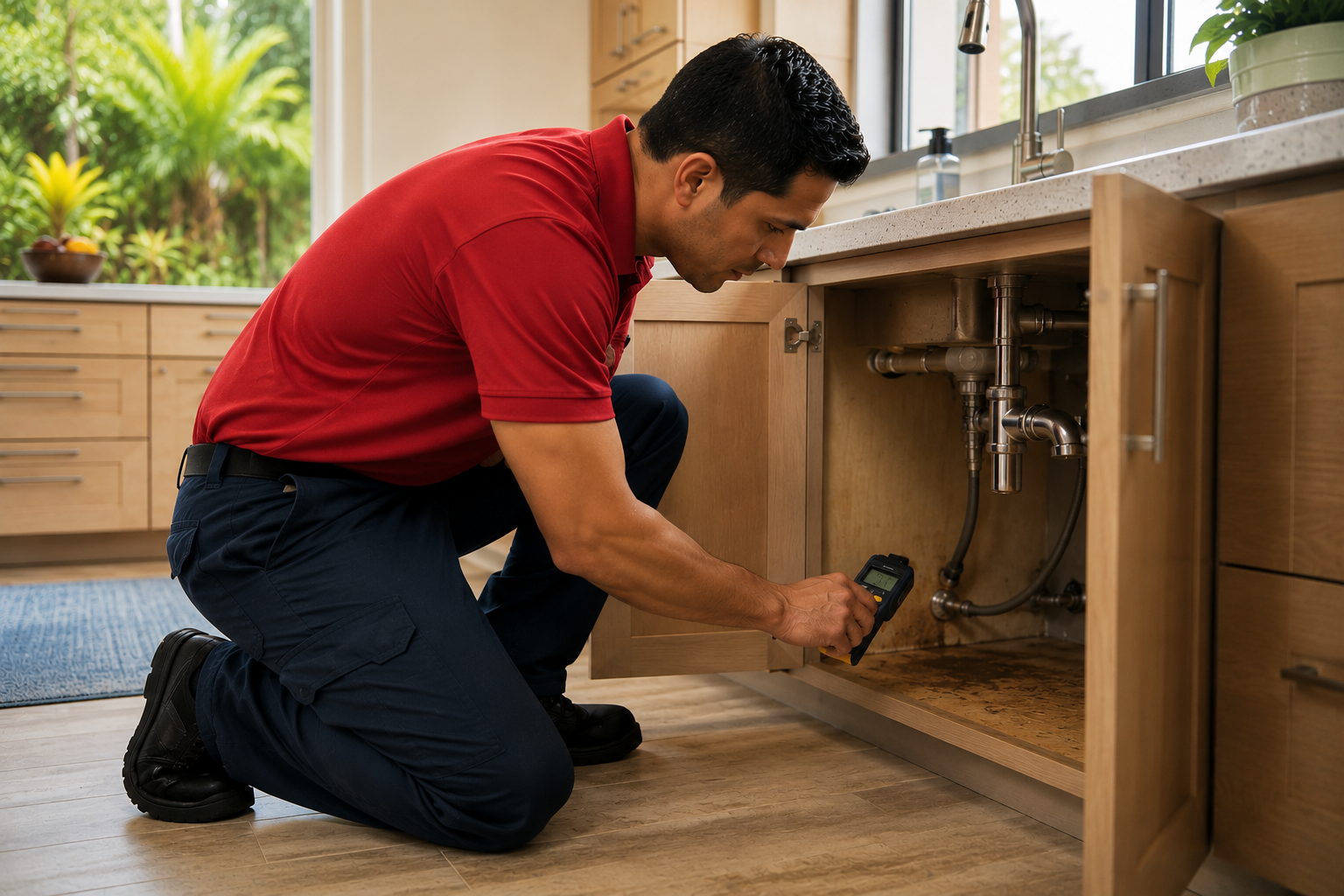
Most kitchen and bathroom cabinetry is particleboard or MDF, which absorbs water quickly, swells, and loses structural integrity. Once a cabinet base has swollen, it does not return to shape when dried.
Cabinets also sit directly on the subfloor with a toe-kick void underneath where water collects and no air moves. Drying a kitchen properly usually means removing toe-kicks and drilling cabinet bases for airflow — which is why kitchen jobs look more invasive than homeowners expect.
Part Two: When the Property Is a Rental
Everything above still applies. But in a tenanted property, the technical questions arrive alongside a set of questions about who does what, and getting that wrong costs more than the water did.
A general note before anything else: what follows is a description of how these situations generally work in practice, not legal advice. Hawaii landlord-tenant law sets out specific obligations and notice requirements, and if there is a dispute or a habitability question you should get advice from a Hawaii attorney rather than from a restoration company. We are restorers. We are not your lawyer.
The single biggest failure is delay caused by uncertainty
The pattern we see repeatedly: a tenant reports water. The landlord wants to understand whether they are liable before committing to spend. The property manager waits for the owner’s authorization. The insurer wants an adjuster to inspect. Meanwhile the water sits, and in Hawaii’s humidity, days matter.
Mitigation and liability are separate questions, and they do not have to be resolved in that order. Nearly every homeowners and landlord policy obliges the insured to take reasonable steps to prevent further damage — failing to mitigate can itself reduce a claim. Sorting out fault while the property deteriorates is usually the most expensive available option.
Our practical advice to owners and managers: authorize emergency mitigation immediately, document exhaustively, and settle responsibility afterwards using that documentation.
If you own or manage the property
- Respond quickly and in writing. Acknowledge the report, log the date and time, and record what you did. A documented timeline is the single most useful thing you can have later, whether the dispute is with an insurer or a tenant.
- Habitability is a real threshold. Significant water damage or mold can render a unit uninhabitable, which has consequences for rent and for your obligations. This is the point at which professional advice is worth its cost.
- Your policy is not your tenant’s policy. Landlord policies generally cover the structure. A tenant’s damaged belongings are typically a matter for the tenant’s renters insurance, if they carry any.
- Notice matters. You generally cannot enter a tenanted unit whenever you like, including for restoration work, without providing the required notice — except in genuine emergencies. Coordinate access rather than assuming it.
- Keep the tenant informed. Most tenant disputes we see downstream are about communication, not about the work itself.
- Make sure your tenants know where the main water shutoff is — before they need it. In an owner-occupied home the person who can stop the water is usually the person who knows the building. In a rental they are not the same person, and a tenant hunting for a valve during an active leak is losing the minutes that matter most. Show them at move-in, confirm the valve actually turns, and put its location in writing with the tenancy documents alongside the breaker panel and, where applicable, the gas shutoff.
- Know whether the property sits in a flood zone. FEMA publishes flood hazard mapping through its Flood Map Service Center, and the answer determines whether standard coverage will respond to a flood event at all — standard policies do not cover flood, which requires separate NFIP or private flood coverage. Worth confirming before a storm rather than during a claim.
If you rent the property
- Report it immediately and in writing. Text or email, not a phone call, so there is a record. Photograph what you can see.
- Take reasonable steps to limit damage — move belongings out of the affected area, put down containers under an active drip. You are not expected to perform restoration.
- Photograph your belongings, not just the structure. Your claim for personal property is separate from the owner’s claim for the building.
- Renters insurance covers what the landlord’s policy doesn’t. It is inexpensive and it is the difference between replacing your possessions and absorbing the loss.
- Don’t accept a cosmetic repair. If the wall was painted over and nothing was dried, the problem is still there. You are entitled to ask what was done to the structure.
Multi-unit buildings and condominiums
Water does not respect unit boundaries. A supply line failure on an upper floor can affect several units below, and responsibility then divides between individual owners, their insurers, and the association — with the association’s governing documents typically determining where the boundary sits between unit and common element. Notify the association immediately alongside your own insurer, because in these losses the documentation of where the water originated becomes the central question.
The Common Thread
Whether the question is a material or a property type, the answer turns on the same thing: finding out what is actually wet, rather than what looks wet. Tile hides it. Concrete holds it. Drywall carries it upward. And in a rental, the delay while everyone works out who pays is often what turns a manageable loss into an expensive one.
That is what meters and thermal imaging are for, and it is why the assessment matters more than the equipment. Our site assessment carries a fee, credited toward your job total if you proceed with us — and it produces documentation that serves you whether you are filing a claim, negotiating with an association, or establishing a record with a tenant.
We are IICRC certified, Hawaii licensed (BC-38891), locally owned, and have worked on Oahu properties since 2018 — owner-occupied homes, rentals, and multi-unit buildings alike.
Call (808) 745-1608 or reach us through our contact page. See also our water damage restoration and mold removal and remediation services.
Two homes on the same street take on the same amount of water from the same storm. One is dry and back to normal in
Most of the water damage we restore on Oahu did not start as an emergency. It started as something small and quiet that nobody noticed
Few things unsettle a homeowner like the squish of a soaked carpet underfoot. Maybe a supply line let go overnight and you woke to a
Oahu Homeowners: What to Do Right Now After the March 2026 Storm & Flooding A Step-by-Step Guide from Your Local Oahu Restoration Team The call
Discovering water damage in your home is unsettling — the wet stain you didn’t see yesterday, the unfamiliar musty smell, the floorboard that suddenly feels

When a pipe lets go at 2 a.m. or a Kona storm pushes water across your living room floor, your first thought is how to