Water-Damaged Carpet in Hawaii: When to Save It, When to Replace It, and How to Care for It
Few things unsettle a homeowner like the squish of a soaked carpet underfoot. Maybe a supply line let go overnight and you woke to a dark stain spreading across the bedroom. Maybe a slow-moving low-pressure system pushed rain across the lanai and into the living room while you slept. Either way, the carpet is wet, and the question forming in your mind is a fair one: can this be saved, or is it already ruined?
Here on Oahu, that question carries a little more weight than it would almost anywhere on the mainland. Our humidity rarely takes a day off, and a wet carpet is a clock that starts running the moment the water arrives. We’re Rescue One Restoration — IICRC-certified, Hawaii-licensed (BC-38891), locally owned, and available around the clock. We’ve spent years drying out island homes, and the carpet question is one we field constantly.
This guide covers what actually matters: what to do in the first hours, how we decide whether a carpet can be restored or has to go, what professional restoration involves, and how to keep a carpet fresh once it’s dry again.
The First 24–48 Hours: Why Speed Matters More in Hawaii
When carpet gets wet, the first day or two decide most of what follows. The faster the water comes out and the air starts moving, the better your odds of keeping the carpet you already have.
What to Do in the First Hour
- Stop the source if you safely can. Shut off the water supply. If outlets or cords are anywhere near the water, cut power to that area first.
- Lift what you can off the floor. Move furniture legs, area rugs, and anything holding moisture against the carpet or bleeding color onto it.
- Pull up standing water. Blot with towels or use a wet/dry vac. A household vacuum is not built for water and can be dangerous.
- Get air moving. Open windows if the outside air is drier, run fans, and start a dehumidifier if you have one.
- Photograph everything before you move too much. Those images matter for your insurance claim.
If the water is more than a small clean spill, or you’re not sure where it came from, that’s the point to call us.
The 48-Hour Mold Window — and Why Our Climate Shrinks It
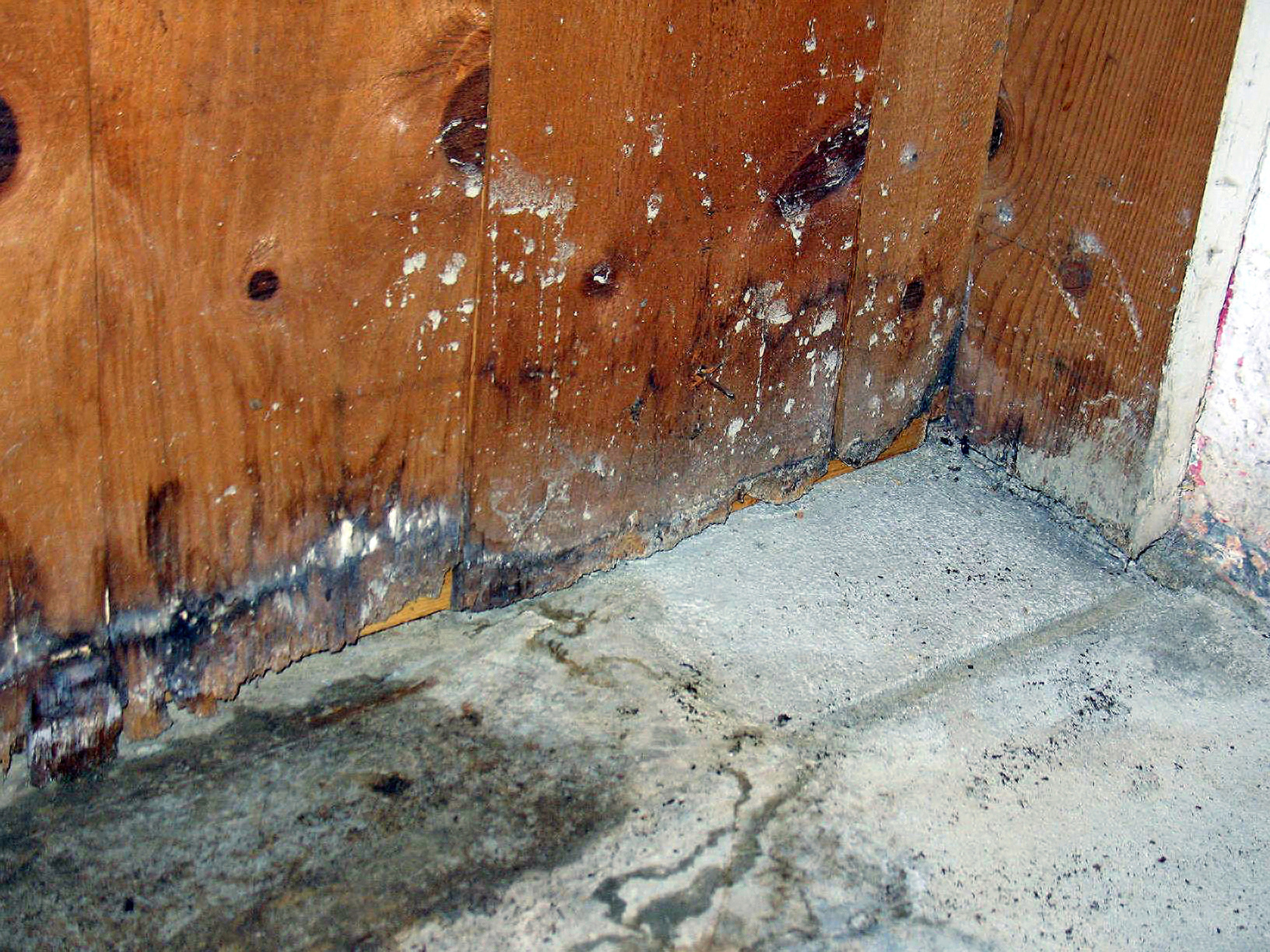
The widely cited guidance from the EPA is that wet materials should be dried within 24 to 48 hours to keep mold from taking hold. On paper, that window is the same everywhere. In practice, Oahu’s warm, damp air works against you — high humidity slows evaporation, so a carpet that might air-dry in a drier climate can stay wet here long enough for mold to start. That’s why we treat wet carpet as time-sensitive, and why our professional water extraction and structural drying is built around beating that clock rather than just meeting it.
Save or Replace? The Honest Decision
Water-damaged carpet can often be saved when three things line up: the water was clean (a supply line or rainwater, not sewage or floodwater), the carpet dried within roughly 24 to 48 hours, and the padding underneath can be replaced. Once the source is contaminated or the carpet has stayed wet past that window — especially in Hawaii’s humidity — replacement is usually the safer call.
No one wants to tear out a good carpet, and we don’t recommend it lightly. But a handful of factors decide the answer, and being straight about them up front saves you money and protects your family’s health.
It Starts With the Water: Clean, Grey, or Black
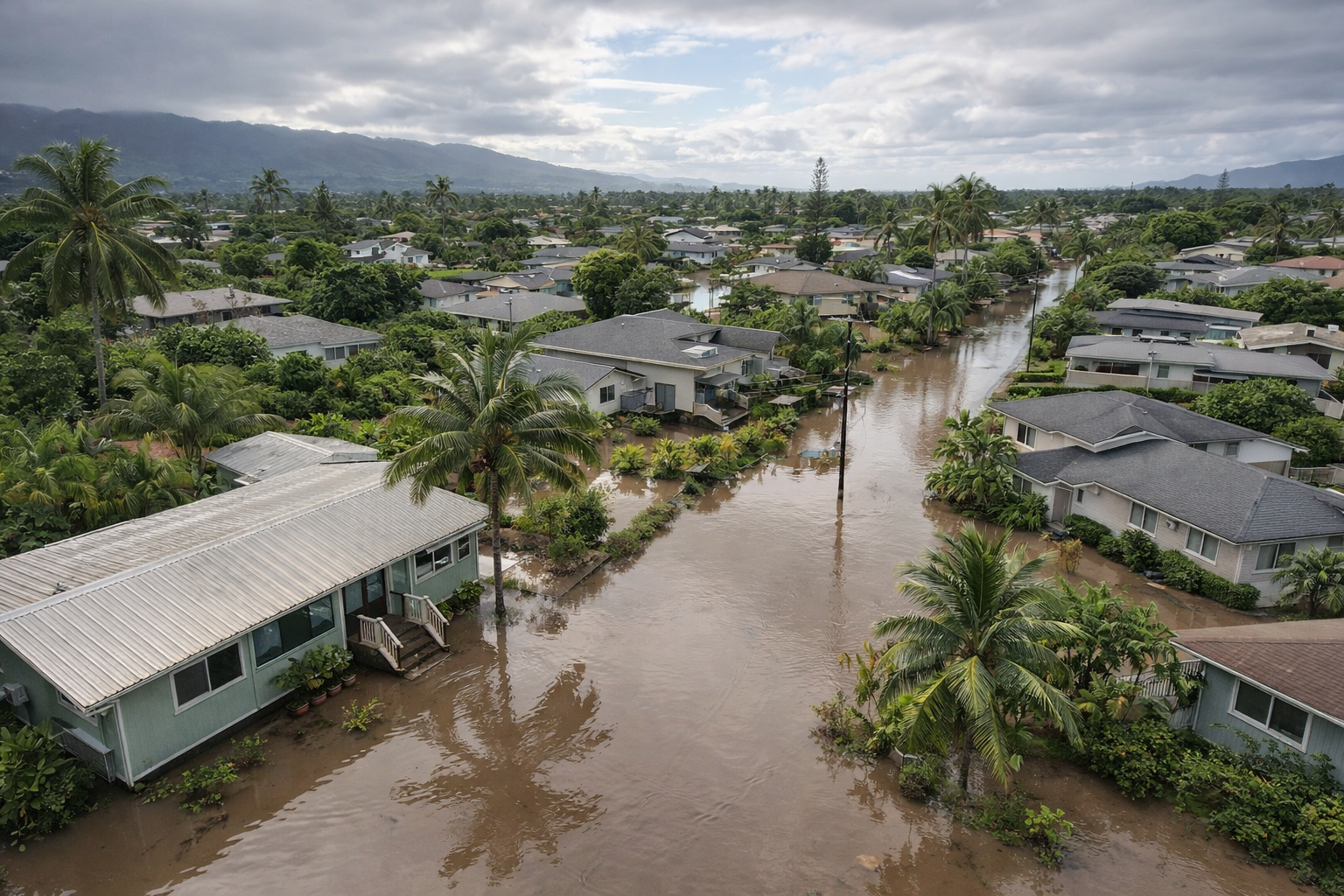
The restoration industry sorts water into three categories, and the source matters more than the amount. Category 1 is clean water — a broken supply line, or rain that hasn’t touched contaminants. Category 2, grey water, is contaminated enough to make you sick: a washing-machine overflow, a dishwasher discharge. Category 3, black water, is the worst — sewage, toilet backflow, or floodwater that ran across the ground into your home. Clean water gives a carpet a fighting chance. Grey water usually means the pad goes but the carpet may survive. Black water isn’t worth the health risk; that carpet and pad come out.
How Long Was It Wet? The Timeline That Decides
Even clean water becomes a problem if it sits. Past roughly 24 to 48 hours, Category 1 water starts to degrade and mold moves from possible to likely. In our climate, that timeline runs on the short end. A carpet dried quickly by professionals has a real shot; one that stayed soaked through a long weekend usually doesn’t.
The Padding Problem (and Why It Usually Goes)
Here’s the part homeowners rarely expect: even when we save the carpet, the padding underneath almost always gets replaced. Pad is a sponge — it holds water against the subfloor, dries slowly and unevenly, and is cheap enough that replacing it beats gambling on it. Saving the carpet and swapping the pad is a common, sensible outcome.
Age, Fiber, and What the Carpet Is Worth to You
Then there’s the carpet itself. Synthetic fibers like nylon and polyester survive a soaking better than natural fibers such as wool. Older or delicate carpet may not hold up to the drying and cleaning process — and sometimes pulling it up to dry the floor damages it beyond reuse. Part of the decision is simply whether this carpet is worth the cost and effort of saving.
| Factor | Lean Toward Saving | Lean Toward Replacing |
|---|---|---|
| Water source | Clean (supply line, rain) | Grey or black (sewage, floodwater) |
| Time wet | Under ~24–48 hours | Longer than 48 hours |
| Padding | Replaceable (it usually is) | Saturated and fused to the subfloor |
| Carpet age / fiber | Newer, synthetic | Old, delicate, or natural fiber |
| Odor after drying | None | Musty smell that lingers |
| Subfloor | Dry and sound | Soft, warped, or contaminated |
What Professional Restoration Actually Involves
A shop vac and a box fan can handle a small clean-water spill. Beyond that, the gap between doing it yourself and professional drying is wider than it looks — and most of it is out of sight.
Finding the Water You Can’t See
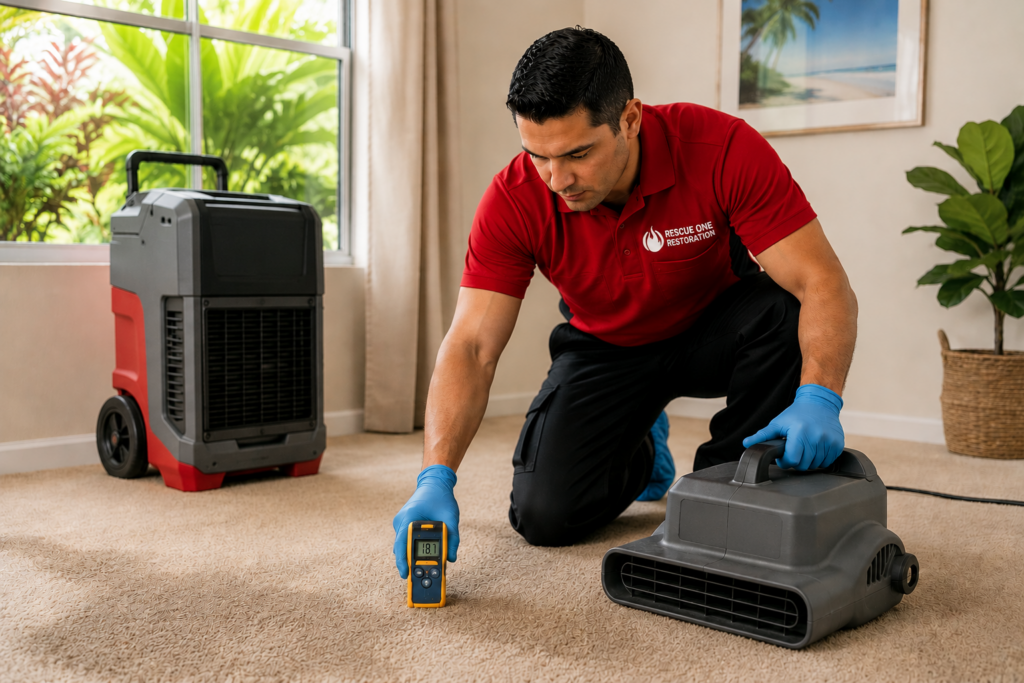
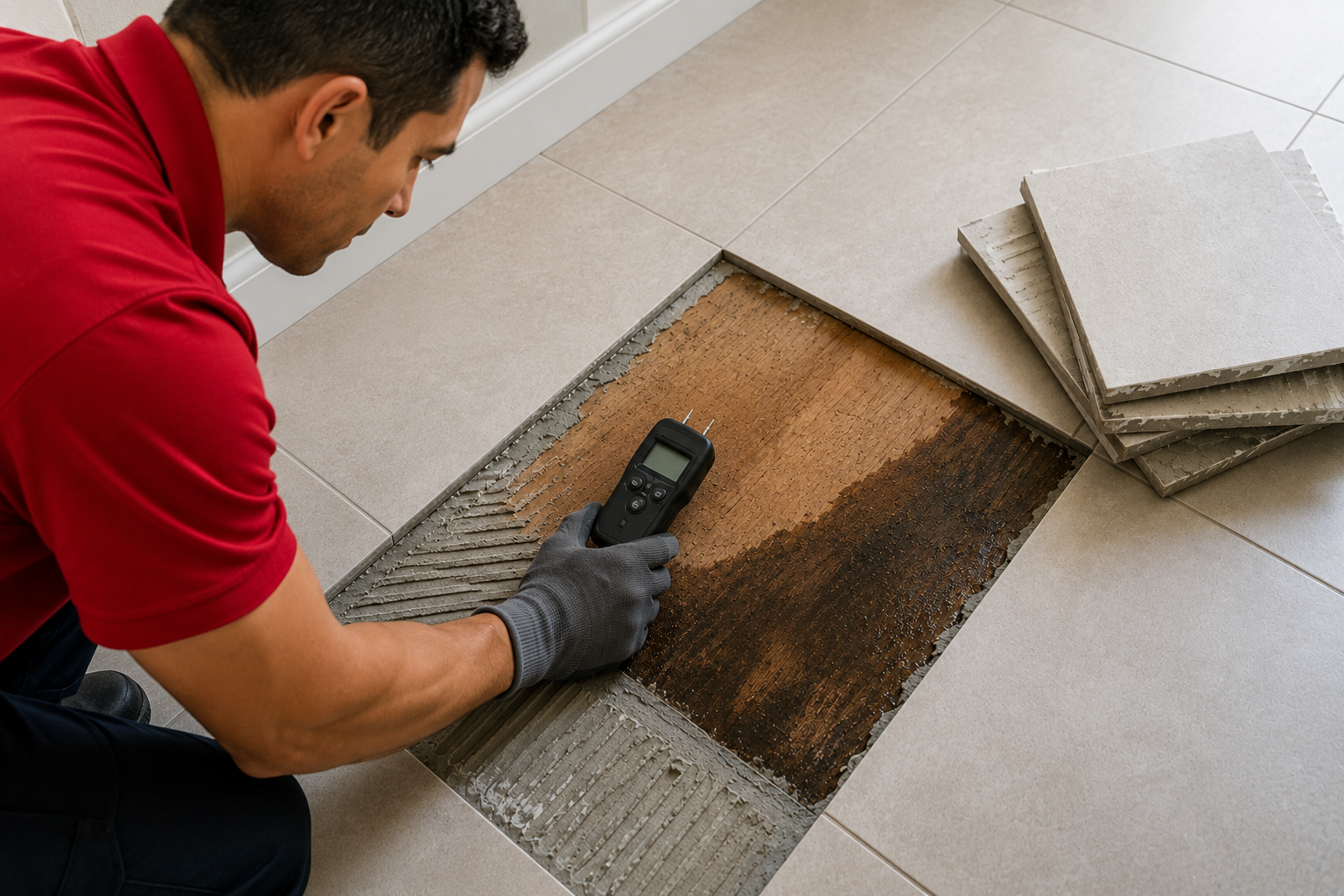
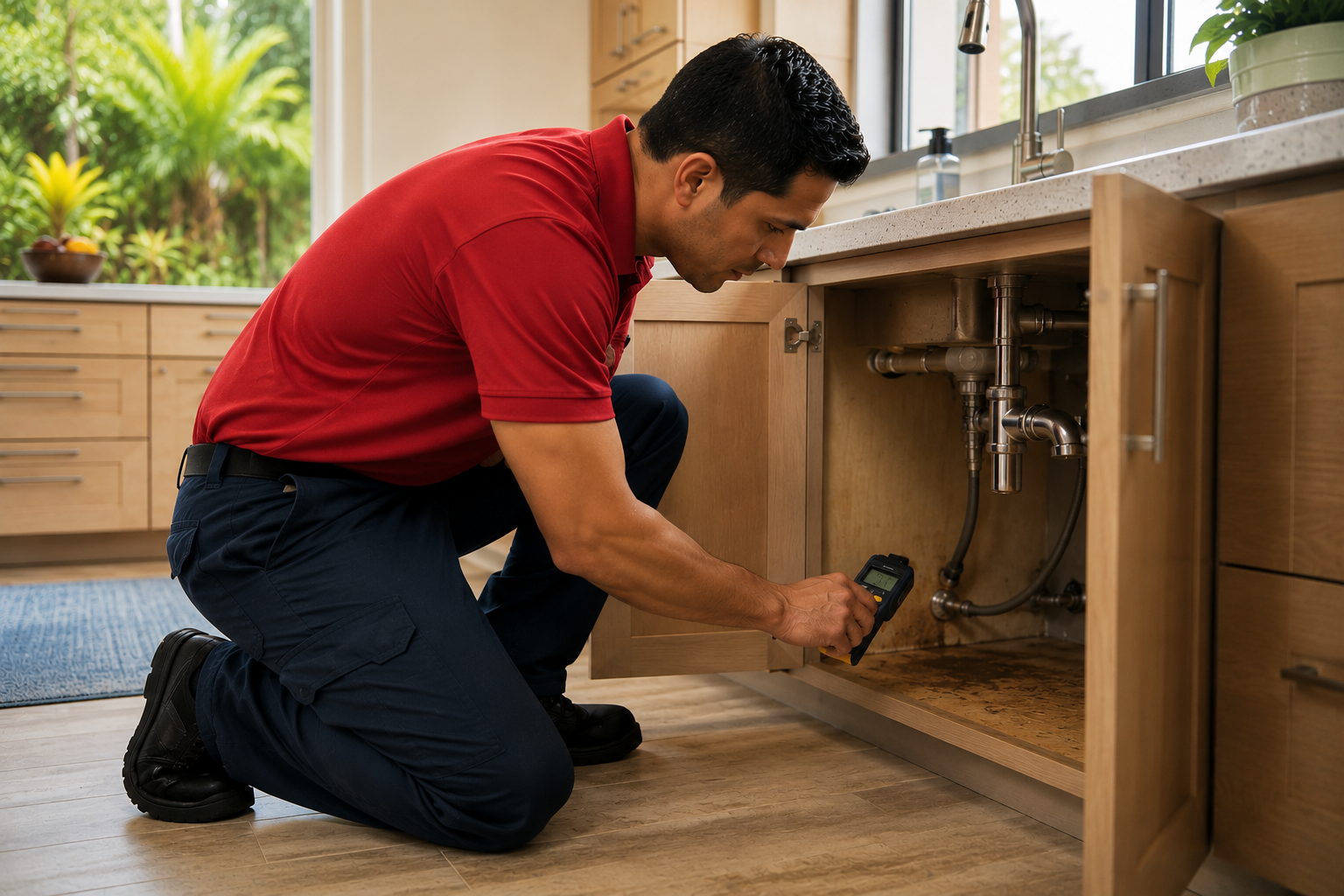
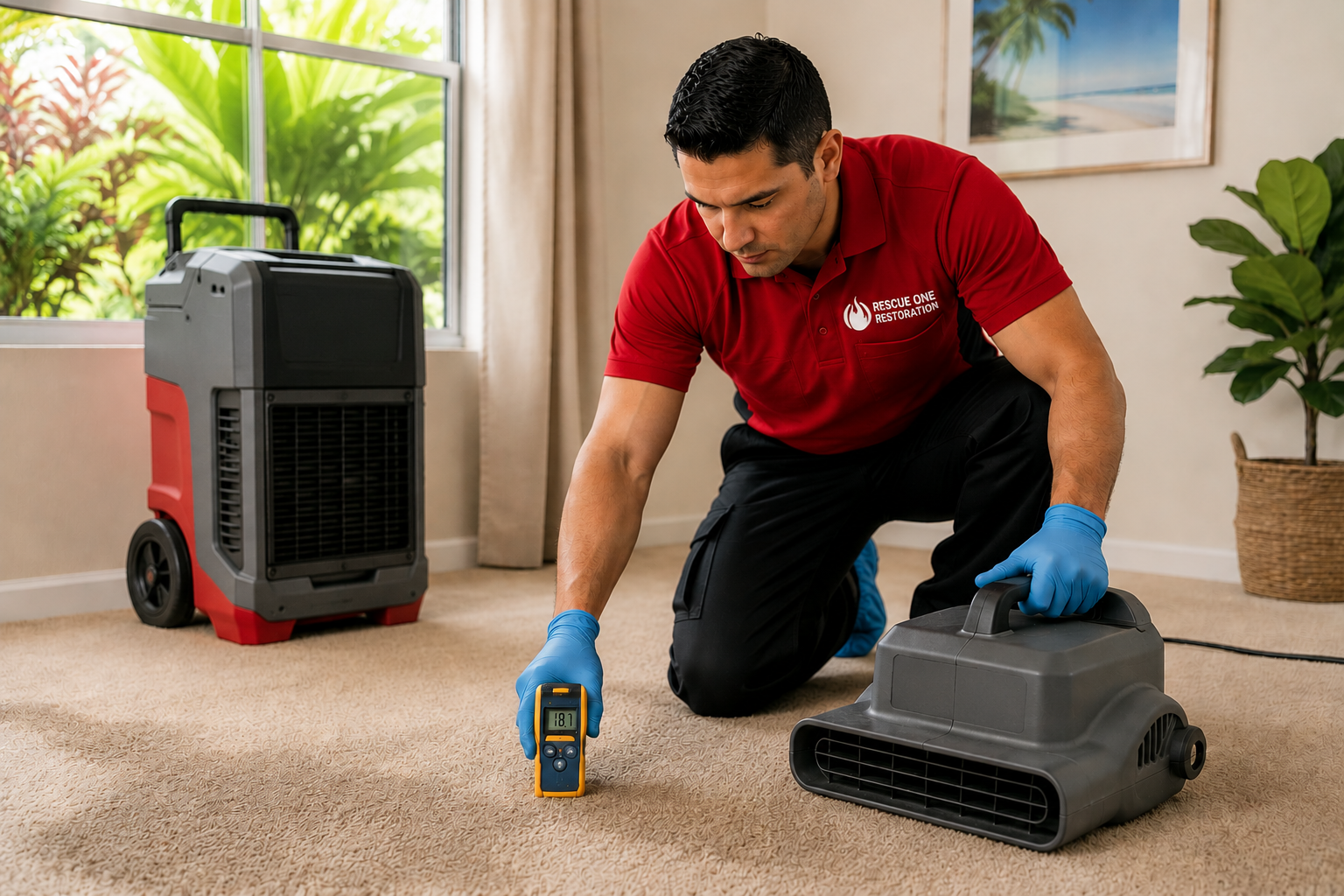
Water travels. It wicks up baseboards, slips under flooring, and soaks into the subfloor while the surface feels nearly dry. We use moisture meters and thermal imaging to map where the water actually went — because drying what you can see while missing what you can’t is how a mold problem shows up weeks later.
Drying to a Number, Not a Guess
Professional drying isn’t “looks dry to me.” We place air movers and dehumidifiers, then track moisture readings until the carpet, the pad area, and the subfloor reach a documented dry standard. That work follows the IICRC S500 standard, the framework the restoration industry and insurers recognize for water damage. Drying to a number rather than a hunch is what keeps a saved carpet from becoming next month’s mold call. If mold has already taken hold, the job shifts into mold remediation, which follows its own protocols.
Working With Your Insurance
Most Oahu homeowners carry a standard HO-3 policy, which typically covers sudden, accidental water damage — a burst pipe, a failed appliance. Flooding from outside usually falls under separate NFIP flood coverage. Either way, the moisture readings and drying logs we generate are the documentation adjusters look for, and we work directly with your insurer so the claim reflects the full loss.
After Restoration: Keeping Your Restored Carpet Fresh
Once a carpet has been dried, cleaned, and cleared, keeping it that way is refreshingly simple — and in our climate, it mostly comes down to managing moisture.
Everyday Upkeep in a Humid Climate
Vacuum regularly to pull out the grit that grinds down fibers. Deal with spills quickly so they don’t soak in. Run a dehumidifier or your AC through the dampest stretches of the year to hold indoor humidity down. Small habits like these do more for a carpet’s life than any single deep clean.
A Low-Moisture Option for Routine Freshening
Once your carpet has been fully dried, cleaned, and cleared, ongoing care is simple — and in Hawaii’s humidity, the less moisture you add day to day, the better. For routine freshening between professional cleanings, we point homeowners toward a dry, low-moisture carpet cleaning powder — you sprinkle it on, brush it in, and vacuum it out, with no soaking and no drying time. Just remember this is everyday maintenance for a carpet that’s already healthy and dry. Anything involving water damage, a damp carpet, or a musty smell that won’t quit isn’t a job for a powder — that’s when you call us.
When the Carpet Is Wet, Time Is the Deciding Factor
When a carpet gets wet, the difference between saving it and losing it usually comes down to how fast the right help arrives. Clean water, caught early and dried properly, often means you keep the carpet you have. Wait too long — or overlook where the water came from — and the safer, healthier choice becomes replacement.
If you’re standing on a wet carpet right now, don’t wait to see what happens. Call us at (808) 745-1608, any hour, any day. We’ll assess what can be saved, handle the drying to standard, and work directly with your insurance so you’re not sorting through the claim alone.
Your home deserves to feel like itself again — dry, sound, and safe for everyone under its roof.
Frequently Asked Questions About Water-Damaged Carpet in Hawaii
Can water-damaged carpet always be saved?
No. It depends on three things: the source of the water, how long it stayed wet, and whether the padding and subfloor underneath are still sound. Clean water dried within a day or two often means the carpet survives. Sewage, floodwater, or a carpet that sat wet for days usually has to be replaced for health and structural reasons.
How long before wet carpet has to be replaced?
The general guideline is 24 to 48 hours — the window in which prompt drying can prevent mold. In Oahu’s humidity that window runs short, because damp air slows drying. Past 48 hours, the odds of hidden mold climb, and replacement often becomes the safer option regardless of the source.
Does homeowners insurance cover water-damaged carpet in Hawaii?
Most standard HO-3 policies cover sudden, accidental water damage, such as a burst pipe or a failed appliance. Outside flooding typically requires separate NFIP flood coverage. We work directly with your insurer and document the loss with moisture readings and drying logs so your claim reflects the full scope.
Why does the carpet padding usually get replaced even if the carpet is saved?
Padding acts like a sponge. It holds water against the subfloor, dries slowly and unevenly, and is inexpensive to replace. Gambling on a pad that may still be damp invites mold and odor later, so replacing it while saving the carpet is the standard approach.
Is a musty smell after drying a problem?
Yes. A musty odor that lingers after a carpet is supposedly dry often signals moisture or mold left behind, sometimes in the pad or subfloor. The CDC notes that damp, moldy environments can affect health, especially for people with asthma, allergies, or weakened immune systems. If the smell won’t quit, have it checked rather than masking it.
Can I just use a carpet powder to fix a wet or smelly carpet?
No. A dry carpet powder is for routine freshening of a carpet that’s already clean and dry — it’s not a fix for water damage, a damp carpet, or mold. If your carpet is wet or smells musty, that points to a moisture problem underneath that needs a professional assessment, not a surface product. Call us and we’ll find the source.
Learn more about our water damage restoration services or call us any hour at (808) 745-1608.
Two homes on the same street take on the same amount of water from the same storm. One is dry and back to normal in
Most of the water damage we restore on Oahu did not start as an emergency. It started as something small and quiet that nobody noticed
Few things unsettle a homeowner like the squish of a soaked carpet underfoot. Maybe a supply line let go overnight and you woke to a
Oahu Homeowners: What to Do Right Now After the March 2026 Storm & Flooding A Step-by-Step Guide from Your Local Oahu Restoration Team The call
Discovering water damage in your home is unsettling — the wet stain you didn’t see yesterday, the unfamiliar musty smell, the floorboard that suddenly feels

When a pipe lets go at 2 a.m. or a Kona storm pushes water across your living room floor, your first thought is how to