Fire damage
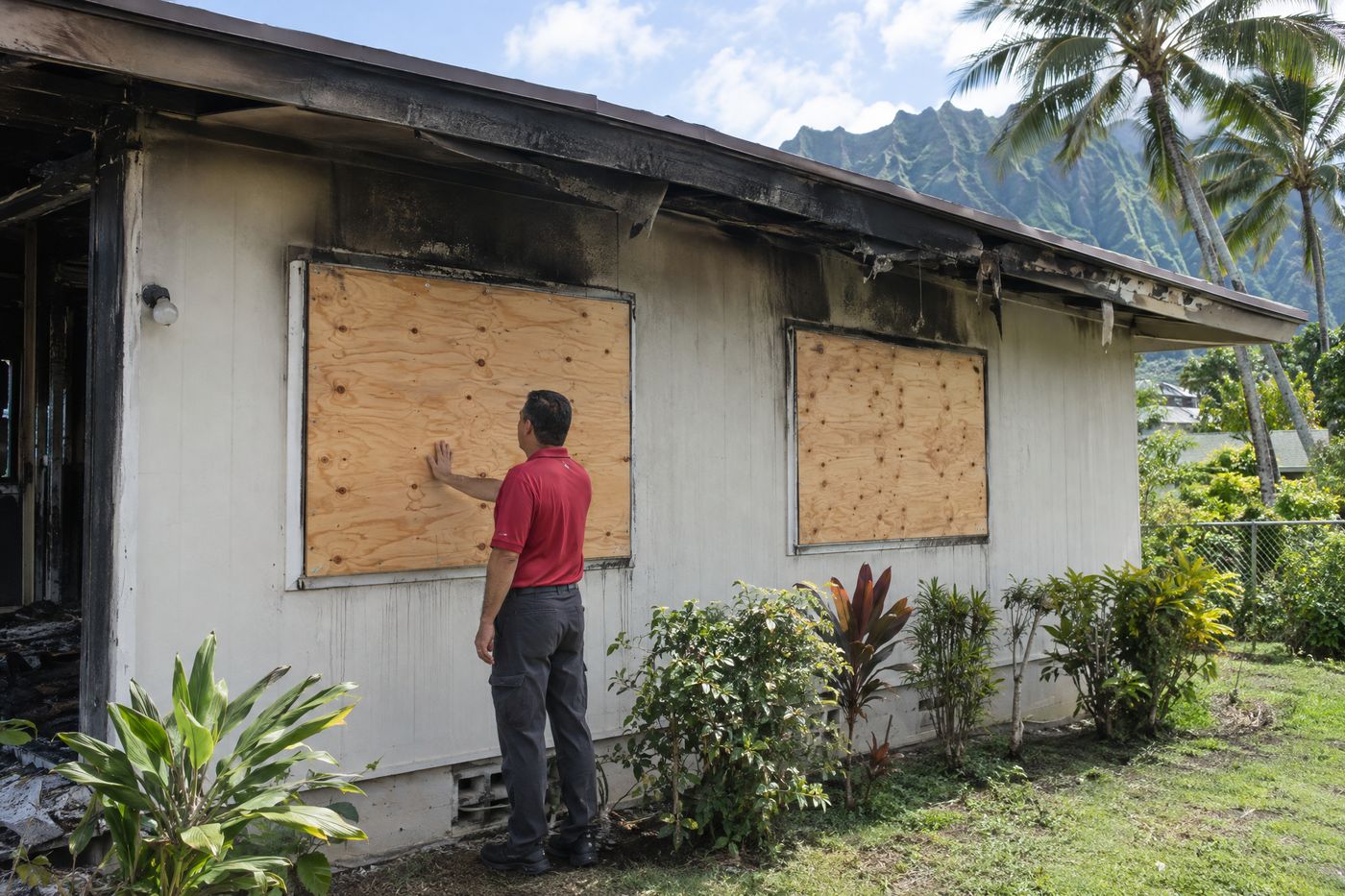
The fire is out, or the wind has finally dropped, and what is left is a building with holes in it. A front window gone, a door frame burned through, part of the roof lying in the yard. Rain is in the forecast, the street has gone quiet again, and the opening is still there for anyone walking past to see straight through. Closing the building up is the work that happens before restoration starts — not because it is the dramatic part, but because everything after it depends on the building being shut.
Rescue One Restoration has boarded and tarped properties in Honolulu and across Oahu since 2018. We are IICRC certified and Hawaii licensed under contractor license BC-38891, our line is answered around the clock at (808) 745-1608, and the crew that shows up is our own. We photograph the opening and the securing as we go, because that record is what your carrier asks for later, when somebody has to establish what was there before the temporary work went on.
This page covers the securing step by itself: why it comes first after a fire and after a storm, what boarding an opening involves, when a roof needs a tarp instead, what your policy means when it asks you to protect the property from further damage, and how long a temporary closure is meant to stay up.
Emergency securing is temporary work that closes a damaged building: sheet goods over broken windows and missing doors, framed panels across larger holes in walls, and reinforced tarps over roof sections that have lost their covering. None of it is a repair. All of it exists to hold the structure weather-tight and lockable until the actual restoration — fire damage restoration, storm and flooding restoration, or full reconstruction — can be scoped, approved by the carrier and scheduled.
Three reasons put it ahead of everything else, and none of them depend on how the loss started. Weather comes first. An open building in Honolulu does not take rain vertically; it takes it sideways on the trade winds, through the opening and into the wall cavity behind it, and every hour of that adds saturated framing, sheetrock and insulation to a loss that started as something else entirely. Security comes second, because an opening in a facade is a public notice that a house is empty. The third reason is written into the policy: property insurance almost always asks the insured to take reasonable steps to prevent further loss after the event.
On the job the sequence is short. We walk the property with you, identify every breach in the envelope — windows, doors, wall openings, skylights, roof — and decide one opening at a time whether it needs board, tarp or temporary shoring. Panels get measured and cut on site rather than fitted from stock, because a panel that does not sit flush leaves a gap that wind finds. Openings that still need to function, like the door the adjuster will use, get secured so they can be re-opened rather than sealed shut.
The insurance side runs in parallel. Emergency board-up and temporary roof tarping are commonly treated as mitigation rather than as part of the repair estimate, which is why they are usually authorized early and separately from the rest of the claim. We invoice that work as its own line and hand your adjuster the photographs, measurements and materials list behind it. For the broader picture before you call your carrier, we have written up how damage restoration coverage works in Hawaii. What we will not do is tell you what your policy covers — that is your adjuster’s call.
Fire damage
Why Securing Comes First, After a Fire and After a Storm
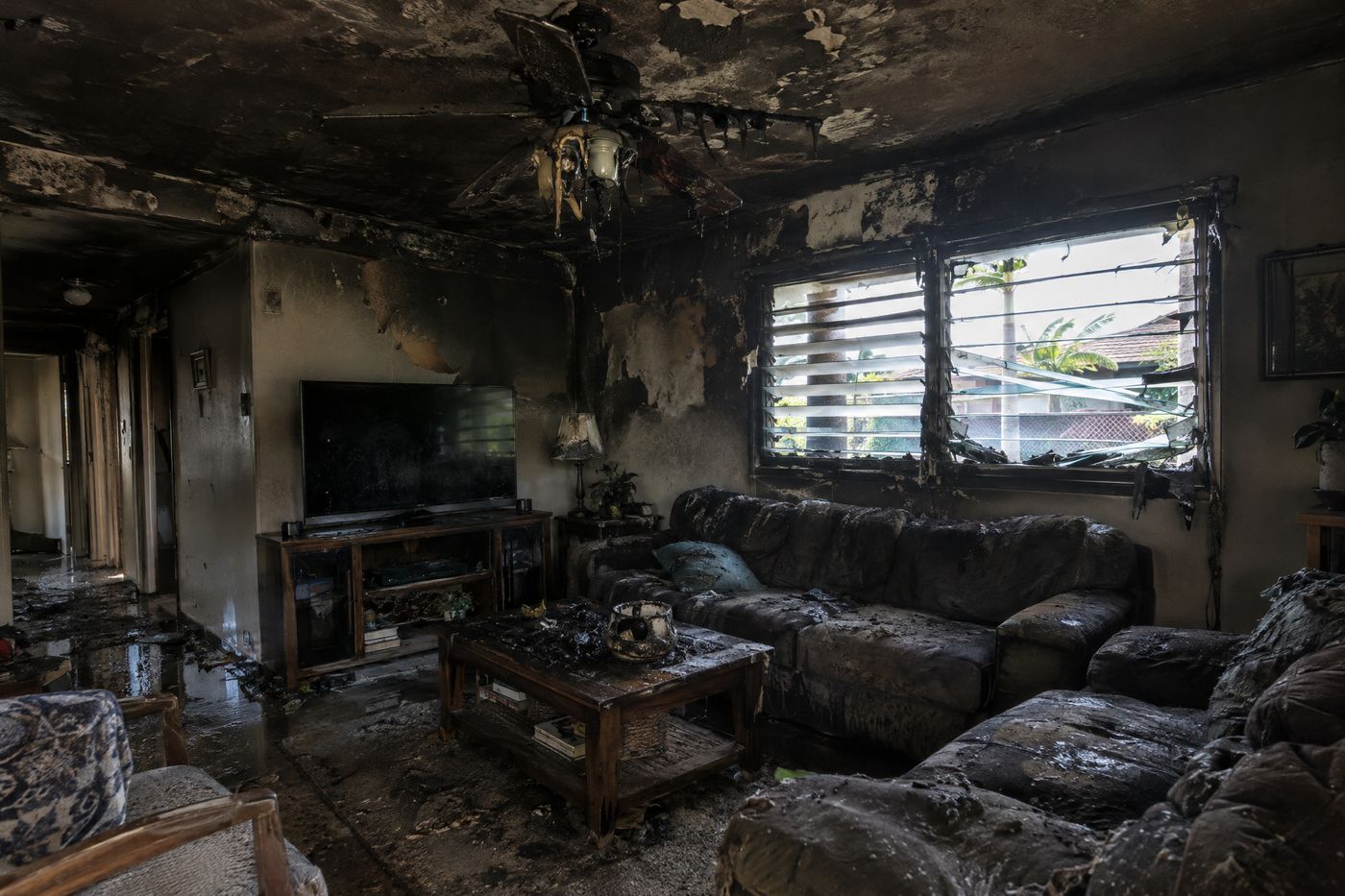
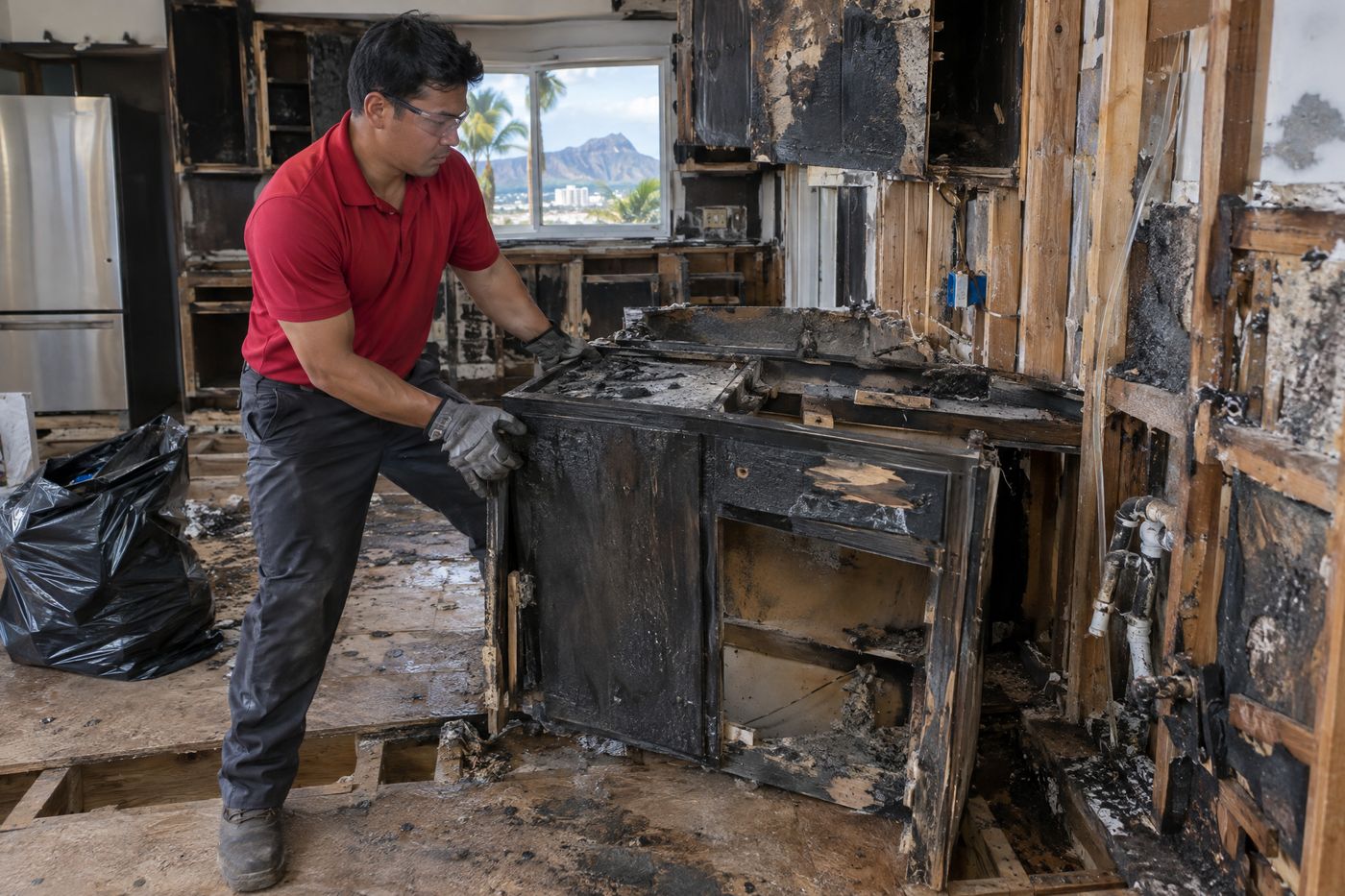
A fire loss and a wind loss arrive at the same place from opposite directions. Fire opens a building from the inside: the fire department ventilates the roof, takes out windows to clear smoke, and forces doors to get in. That damage is deliberate and correct, and it leaves the structure open when the trucks pull away. A storm opens it from the outside — a branch through a window, lifted roofing, a garage door folded inward. Either way the next rain band treats the inside like the outside. That is why emergency board-up in Honolulu sits at the front of both our fire and our storm and flood work rather than belonging to one of them.
Fire damage
What Board-Up Involves
Boarding an opening well is mostly about what you do not damage. Plywood screwed straight through a window frame into finished trim turns a glass replacement into a glass and millwork replacement, and the owner pays the difference somewhere in the claim. We fasten to structure rather than to finish surfaces wherever the framing allows, brace wide openings across the inside face instead of adding fasteners through the jamb, and back panels off painted and stone surfaces.
The Openings We Close Most Often
Window units and sliders first — broken by heat, by the fire department, or by debris. Then entry and lanai doors, which usually need to stay usable rather than be sealed. Then the larger holes: burned-through wall sections, collapsed lanai enclosures, and garage openings — wide, structurally awkward, and the most common way somebody gets into a property everyone assumed was shut. Skylights and roof vents get closed from above rather than boarded from below, since a panel underneath still lets water into the assembly.
Fire damage
Tarp-Over for Roof and Envelope Damage
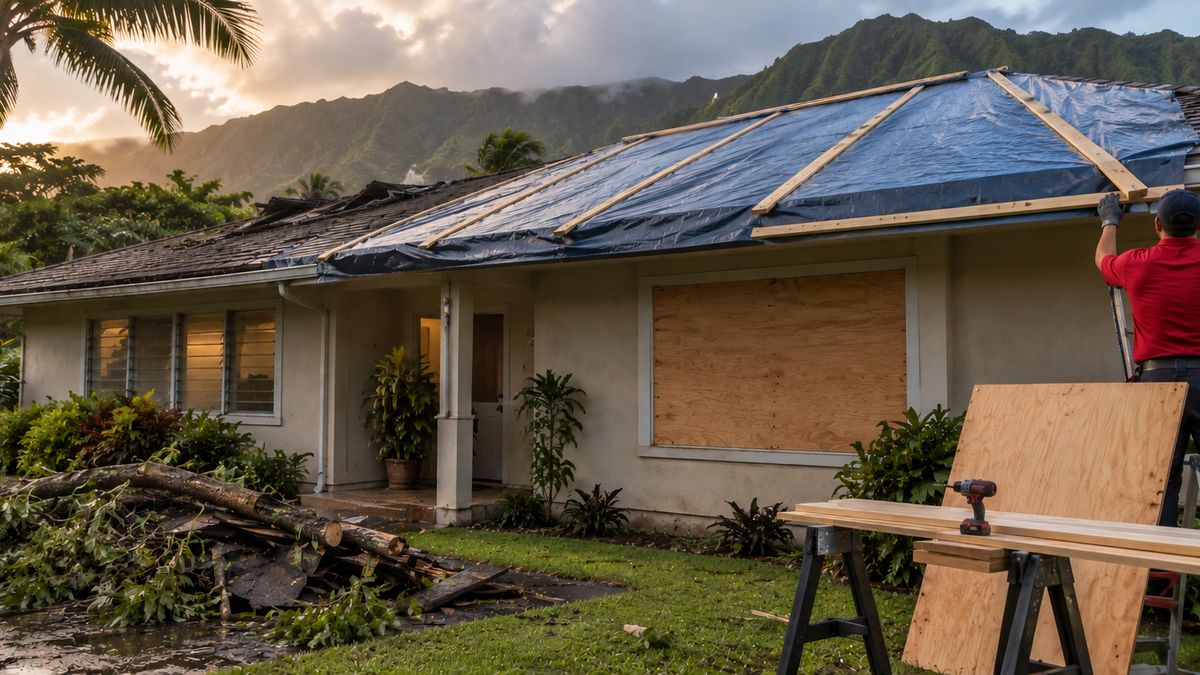
A tarp goes on when the roof covering is gone or compromised and the deck underneath is still sound enough to work from. Done properly it is not a sheet thrown over a hole: it is a reinforced tarp lapped so water runs over the seams rather than into them, carried well past the damage in every direction, and secured along battens rather than by weight or spot fasteners. That last detail is the Oahu-specific one. A tarp that would sit quietly for a month in a calm climate spends its nights here being worked by trade winds, and one flapping at a corner is off the roof by morning — usually during the same weather that made it necessary.
Stopping the Water-to-Mold Cascade
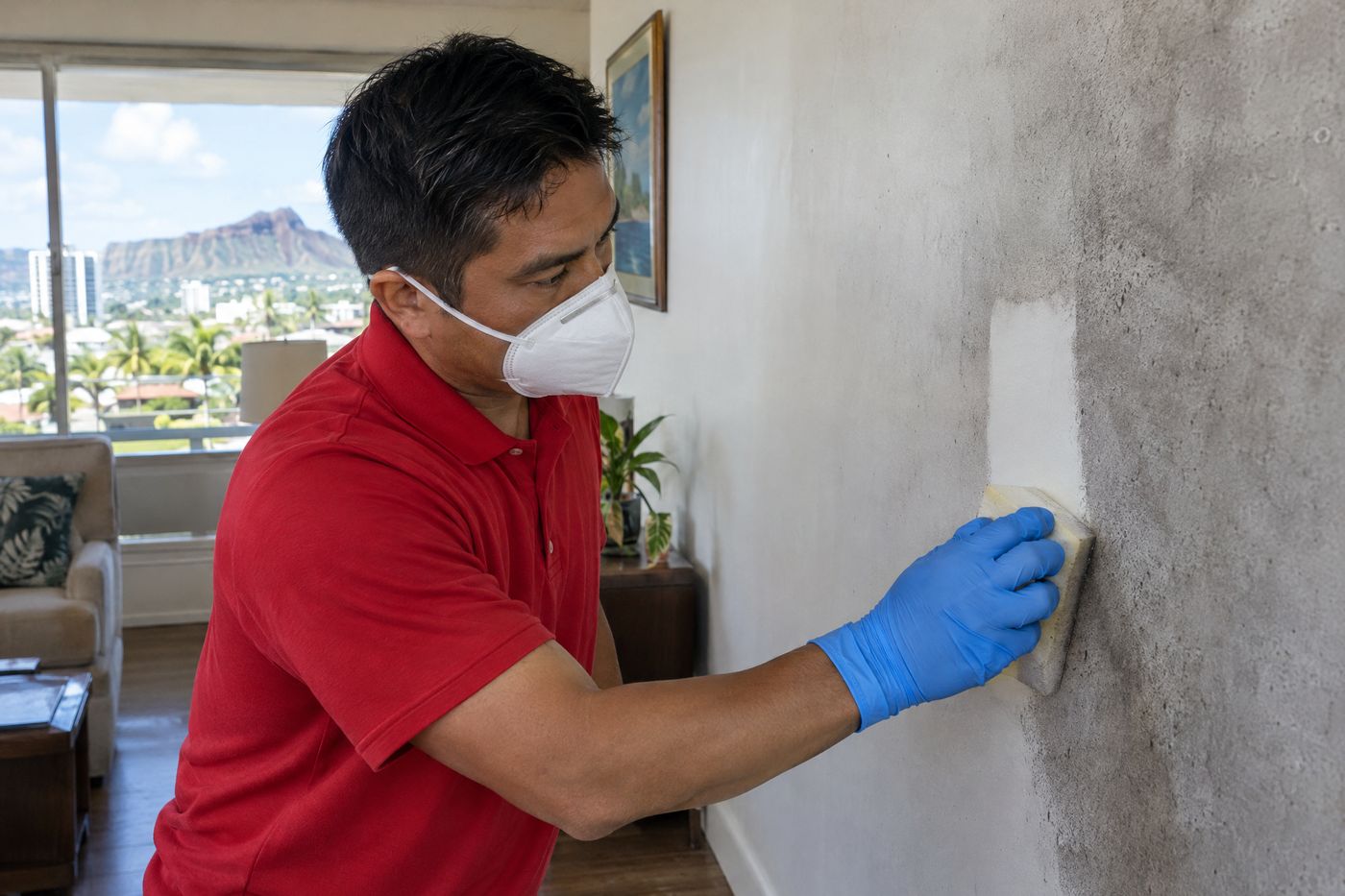
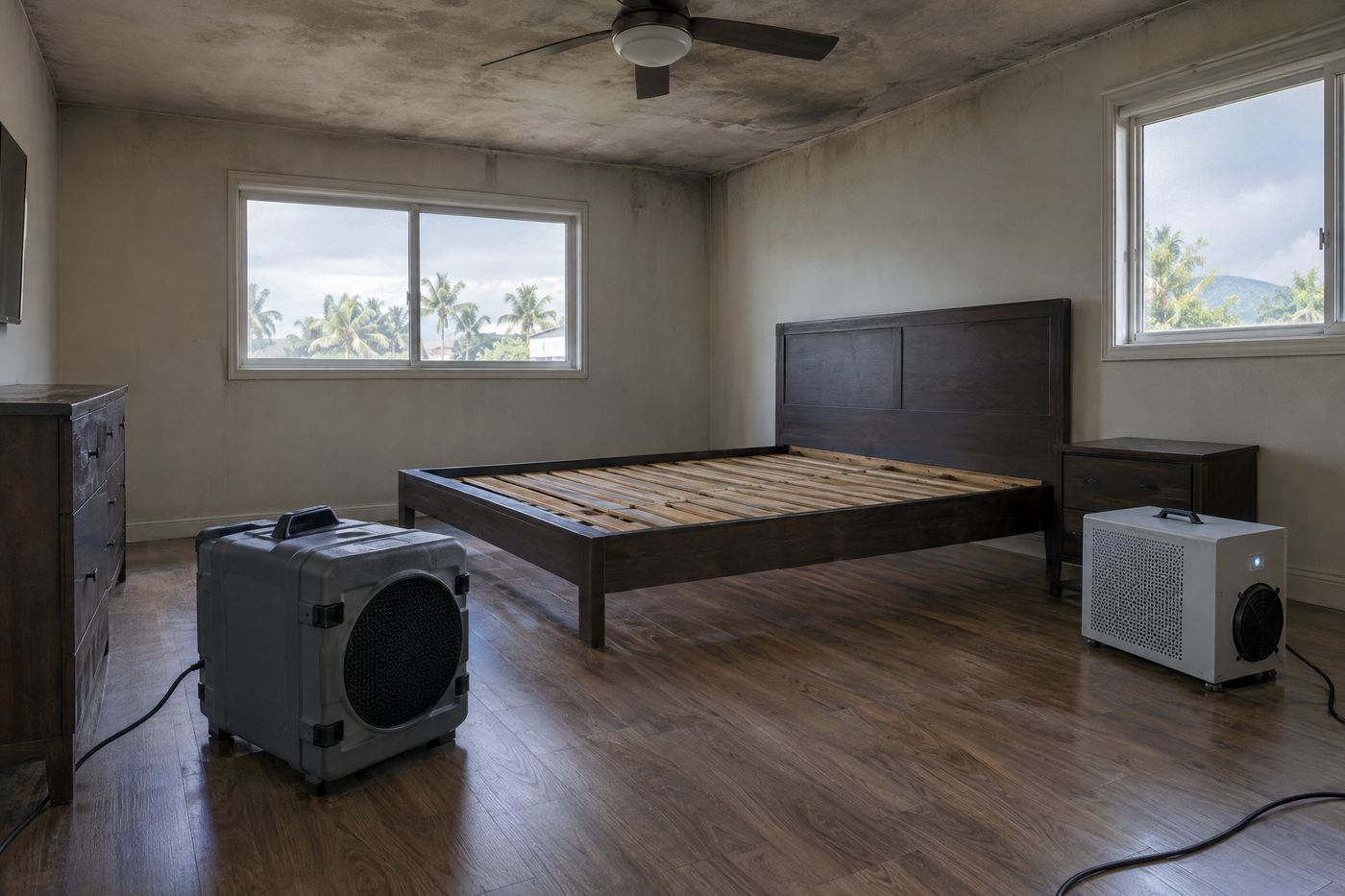
A roof tarp earns its place less for the ceiling below it than for what follows. Water entering through a compromised roof runs along framing and drops into wall cavities and insulation, out of sight, where island humidity keeps it there. That is the start of a water damage job and, if it sits, a mold remediation job stacked on top of the original loss. Closing the roof costs less than drying out what happens when it stays open, which is the calculation adjusters make too.
Fire damage
Your Policy’s Duty to Protect the Property
Most property policies contain a clause asking the insured to take reasonable steps to prevent further damage after a loss — the Insurance Information Institute’s guidance on filing a homeowners claim puts it plainly, advising owners to photograph the damage, make temporary repairs and keep the receipts. In practice that cuts two ways. Costs you incur securing the building are commonly reimbursable as mitigation, which is why carriers rarely argue about a board-up invoice. Damage that happens after the loss, through an opening left open, is a much harder conversation. We are not your adjuster and we do not decide coverage; we do the securing, document it, and give you the file.
Fire damage
Security, Theft and the Liability of an Open Structure
Most people call us worried about rain and are surprised how quickly the second problem shows up. An unsecured property attracts people — sometimes for copper, tools or whatever survived, sometimes just to look around. Beyond the contents, an open structure with fire damage, standing water and compromised framing is a place someone can be hurt, and the owner holds that exposure. A boarded building is not a vault, and we will not pretend otherwise; it is the difference between a property that reads as opportunistic and one that reads as closed and attended.
Fire damage
Documentation From the First Visit
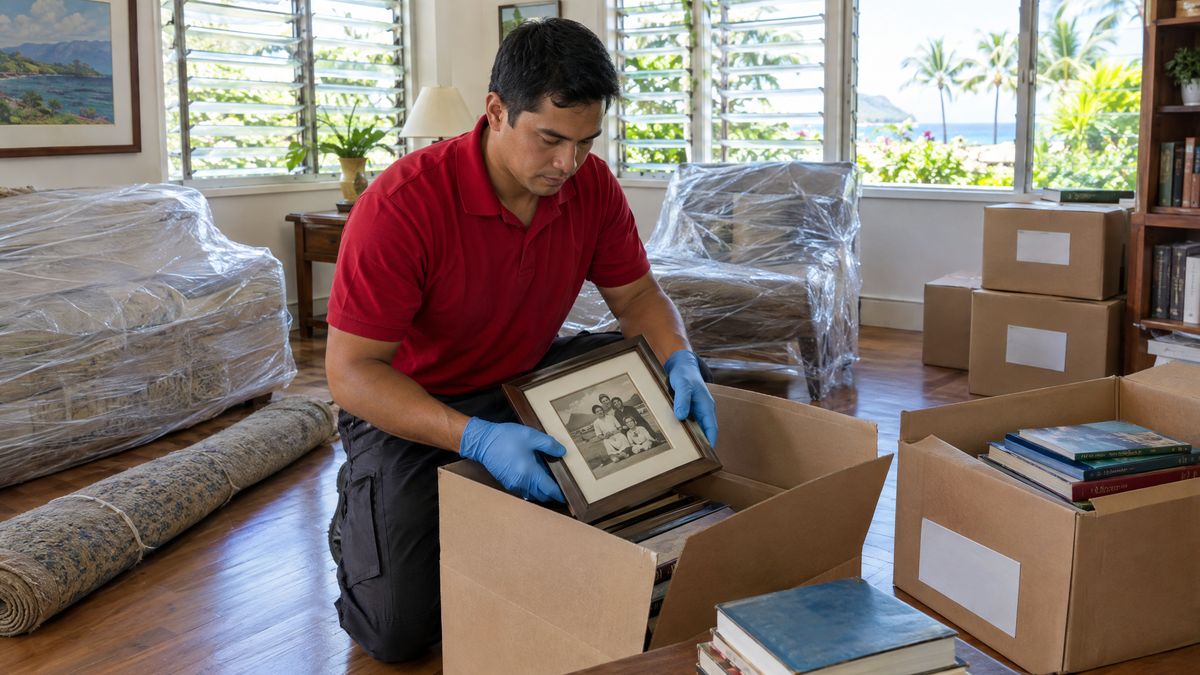
Everything we close gets photographed before and after, with the opening measured and the materials recorded. Once a building is boarded nobody can see the original damage any more — not your adjuster, not the estimator pricing the repair, not the contractor who eventually does the reconstruction. Our record from the securing visit becomes the evidence of what was there. It is also why we prefer to secure a property we are going to restore: the same file carries through to the smoke and odor and soot and residue scope instead of being rebuilt from memory.
Why Rescue One
Why Homeowners Trust Rescue One Restoration
- 01
Answered Around the Clock, Every Day of the Year
Damage does not wait for business hours, and neither does the decision about whether to close a building tonight or in the morning. Our line at (808) 745-1608 is answered at any hour by someone who can take the details and get a securing crew assigned.
We do not quote an arrival time before we know where the property is, what the weather is doing and what the opening looks like. What we will tell you on that first call is what to do in the meantime, what not to touch, and what to photograph before anything changes.
- 02
Securing Documented for Your Claim From the First Visit
We work claims regularly and write the securing the way adjusters read it: photographs of each opening before and after, measurements, materials used, and the board-up or tarp invoiced as its own mitigation line rather than buried inside a repair estimate. That separation matters because mitigation and repair are usually handled differently in a claim.
Presenting them apart, with evidence attached, keeps the emergency work from becoming an argument later. We coordinate directly with your carrier so you are not relaying technical detail between two parties who each want it in their own format.
- 03
Oahu Conditions Decide How a Tarp Gets Built
A roof tarp on this island is a wind problem before it is a water problem. Trade winds work any loose edge continuously, so we batten tarps along their full length and lap the seams with the prevailing direction rather than relying on weights or a handful of fasteners.
Salt air decides fastener choice on anything that may stay up for weeks, and older single-wall construction does not take fasteners the way modern framing does — something read on site rather than assumed. We have secured buildings from Waianae to Kailua since 2018, and these conditions sit inside the method rather than bolted on afterwards.
- 04
Our Own Crew and Our Own Materials on Every Job
The people who arrive to board your property are Rescue One employees carrying our own lumber, tarps, battens and fasteners. No part of the securing step is brokered out to whoever is available.
That matters most in the days after a widespread storm, when an owner’s real risk is not the damage but the queue behind it. It also means the crew who closed the building already know the site when the restoration scope is written, and the documentation does not change hands on the way.
- 05
IICRC Certified and Hawaii Licensed BC-38891
Rescue One Restoration is IICRC certified and holds Hawaii contractor license BC-38891. Emergency securing is temporary work, but it is still work performed on your structure and it should be done by a licensed contractor who carries insurance for it.
The practical consequence shows up at the end rather than the beginning. Temporary work done by a licensed restoration contractor sits inside the same claim file as the permanent repair, by the same company, under one scope. Work done by an unlicensed crew during the first night tends to surface later as a question nobody can answer.
One call starts it. We answer 24/7, anywhere on Oahu.
Reviews
What Our Customers Are Saying
When we had urgent moisture remediation service need Rescue One Restoration came to the rescue! I can’t say enough positive things about the company’s professionalism, especially from the team lead, Aaron.
When I first reached out, on a weekend, Aaron adjusted his personal schedule to come out and take a look at the issue that same day. Once work began, their work was high-quality and every team member was very professional, which was especially important to us as we are a school that had students and staff present on campus at times. Aaron did a wonderful job of being on-site daily, overseeing the project from start to finish, and keeping our administrative team updated every step of the way. Highly recommend!
We have worked extensively with Rescue One on many of the projects we manage and they are our "Go To". Paul is awesome on his communication, response and knowledge of how insurance works.
5 Stars.
Had the basement in our office flooded because of the storm, but these guys were such a HUGE HELP especially shout out to Amen and Chozyn for helping to get all the water out of the basement carefully and diligently as well as being warm, courteous and professional young adults!
During the March storms, our house took a beating. I called other places but they were all busy.
I was very lucky to have Rescue One come out to the home very quickly and leave machines to dry out the house. JJ was on top of it.
Excellent and timely service – would definitely use them again! Paul was very responsive and assisted us in our time of need.
Mahalo!
Paul and his team were professional, communicated well, worked with other contractors under strict time constraints. They were helpful & efficient in both the assessment and repair of damage.
Highly recommend.
Frequently asked questions
Frequently Asked Questions
Don’t see your question? Call us anytime.
01How quickly can you get our property secured?
It depends on where the property is, what the weather is doing and how much of the envelope is open — particularly after an island-wide storm, when every restoration company on Oahu is working through a queue, so we will not put a number on it before we know those things. Our line is answered around the clock, and when you call we will tell you honestly where you sit and what to do in the meantime. Securing is the work we schedule ahead of everything else, because leaving a building open costs more the longer it goes on.
02Does insurance pay for emergency board-up and roof tarping?
Commonly, yes — most property policies treat reasonable steps taken to prevent further damage as covered mitigation, and emergency securing is the textbook example. That is not a guarantee, because it depends on your policy, your deductible and the cause of the loss. Keep every receipt and photograph, and tell your carrier the securing has been done. The Hawaii Insurance Division publishes consumer resources for policyholders for an independent read on how claims are handled in this state.
03Will boarding up cause more damage to the house?
Not if it is done carefully, and avoiding that is most of the skill. The usual mistake is fastening plywood through finished trim, stucco or stone, which turns a window claim into a window and millwork claim. We fasten into structure rather than finishes wherever the framing allows, brace wide openings from the inside, and back panels off painted and masonry surfaces. Where some fastener damage is unavoidable on a given assembly, we say so first and record it, so it lands in the claim rather than as a surprise.
04Do you tarp roofs after storms, or only after fires?
Both. Roof tarping after wind and storm damage is the larger share of this work, and the method is the same either way — lapped, battened, carried well past the damage. Fire brings its own version, because ventilation cuts made by the fire department are deliberate holes in an otherwise sound roof and have to be closed before the next rain rather than left for the repair. If your loss is storm-related, our page on storm and flooding restoration in Honolulu covers what follows the securing step.
05How long can a board-up or tarp stay in place?
A tarp is a temporary measure with a real service life, not a substitute for a roof. On Oahu, sustained trade winds, UV and salt air work on it continuously, so it needs inspecting and often re-securing well before anyone expects to be back on the roof. Board-up on windows and doors lasts longer but has its own limit once rain starts finding the panel edges. We tell you roughly how long what we installed should hold, and we come back to check and re-secure it while the permanent repair waits on the claim — watching the forecast from the National Weather Service in Honolulu matters here more than most owners expect.
06Does leaving the house unsecured affect my claim or my liability?
It can affect both, which is why the decision is worth making quickly. On the claim side, damage occurring after the original loss through an opening left open is a much harder case to make than the original damage, because most policies ask the insured to take reasonable steps to prevent further loss. On the liability side, an open structure with compromised framing is a place a person can be injured, and the owner carries that exposure. We are not attorneys and this is not legal advice; it is what we watch owners and adjusters deal with.
07Do I need board-up after a small fire?
Sometimes not, and we will tell you if the answer is no. A contained kitchen fire that left windows and doors intact may need no securing at all — what it needs is smoke and odor work and residue cleanup. Where small fires do need securing is when the fire department vented a window or forced a door to get in, which happens more often than owners expect on losses that ended up minor. Describe what the openings look like when you call and we will give you a straight answer rather than a visit.
08Can we board it up ourselves before you get there?
You can, and for a single broken window it is often reasonable — keep the receipts, because materials bought to protect the property are commonly reimbursable. Two cautions. Do not go onto a roof after a storm or a fire, because decking can be compromised in ways that are invisible from below, and photograph the damage thoroughly before you cover it, since once an opening is boarded nobody can see what was behind it. Ready.gov’s hurricane preparedness guidance is worth reading before the season rather than during it, alongside our own notes on preparing a Hawaii home for hurricane season.
24/7 emergency response
Let’s bring your home back.
An open building gets worse on a schedule set by the weather rather than by the claim. Closing it is the cheapest work in the loss and the work that decides how much of the rest there will be, which is why it goes ahead of the inspection, the estimate and the approval.
Call Rescue One Restoration at (808) 745-1608. Our line is answered around the clock by someone who can take the details and get a securing crew assigned, not an answering service taking a message. Tell us what is open and where on the island the property is — Honolulu, windward, west side — and we will tell you what to do before we arrive.
We are IICRC certified, Hawaii licensed BC-38891, and locally owned since 2018. The securing gets photographed and invoiced as mitigation so your adjuster has it in the format carriers expect, and if we go on to handle the fire damage restoration, the flood and water damage work or the reconstruction, that file carries straight through.
24/7 emergencyAll of OahuIICRC certifiedLic. BC-38891Locally owned & operated