Water damage restoration
24/7 Emergency Service Available. Oahu Island-Wide Service.
Water damage in Honolulu doesn’t wait for a convenient time — it happens while you’re at work, while you’re asleep, in the middle of a birthday party. And in Hawaii’s climate, every hour of delay is an hour closer to mold in the walls. We built Rescue One Restoration because too many companies extract the water and leave, too many contractors disappear halfway through a job, and too many homeowners end up managing five different trades while already overwhelmed.
We set out to build something different: a restoration company that shows up, does the complete job, and treats your home the way we’d treat our own ohana’s.
Call us at (808) 745-1608 for emergency response or to schedule an assessment. Our site assessment carries a fee, and that fee is credited toward your job total if you move forward with us. You can also submit the “Request Service” form and a member of our team will get back to you.
When water damage hits your Honolulu property — a burst pipe, storm flooding, a leaking appliance — you need someone who answers the phone and gets moving. Not tomorrow. Not when it’s convenient. Because in Hawaii’s humidity, water damage becomes mold damage in under 48 hours, and once mold takes hold you are dealing with a much larger problem.
With us there is no need to hire and manage several companies. We handle every step — 24/7 emergency water extraction, structural drying, repairs, reconstruction, and working directly with your insurance company on the claim. Understanding your insurance coverage for damage restoration is confusing at the best of times, and this is not the best of times. Our job is to take that off your shoulders so you can look after your family while we look after your home.
We serve the entire island — Honolulu, Hawaii Kai, Kaneohe, Kailua, Mililani, and everywhere between. Day or night, weekday or weekend. Below you’ll find how water damage restoration actually works and what our process looks like. Mahalo.
Start with the source
Where the water came from
The source of the water decides more about the job than the size of the puddle. It tells us how clean the water is, where it has likely traveled, and which trade has to fix the cause. Here is what each common source changes, and where to read the detail for your situation.
- 01
Burst or leaking supply lines
A failed supply line keeps pushing water under pressure until the valve is shut, so volume is the first problem. The upside is that this is usually clean water, so more of the floor, drywall and contents can often be dried rather than removed. Our burst pipe water removal page covers the shutoff sequence.
- 02
Water coming from above
When water comes through a ceiling, the first question is what is still holding it up. Saturated drywall overhead can sag and give way, and the cause may belong to a plumber, a roofer or the unit upstairs. We cover all three on our ceiling water damage restoration page.
- 03
Kitchen and bathroom fixtures
Dishwashers, refrigerator lines, toilets and sink valves tend to leak slowly and out of sight, so the water has often reached cabinet bases and subfloor before anyone notices. That changes the drying plan more than the extraction. We explain why in kitchen and bathroom leaks, further down this page.
- 04
Sewage and backed-up drains
Water from a drain line or sewer is treated as contaminated, and the job shifts from drying to removal and sanitation. Porous materials it touched are often discarded rather than saved, and our crew works in protective gear. Our sewage backup cleanup page explains the water categories and what can be kept.
- 05
Rain, storms and floodwater
Water that enters from outside brings mud, debris and whatever it crossed on the way in, so cleaning comes before drying, and the entry point has to be closed before the next rain. For water that came in through doors, lanai openings or overwhelmed drainage, read about flood damage restoration.
- 06
When you cannot find it
A musty smell, a soft spot in the floor or a stain that keeps spreading are warning signs of hidden water damage: they can all point to water you cannot see. Then the first job is finding it, not drying it. Our water damage inspection is an assessment only, so you can decide what to do once you know what is there.
How it works
About Our Water Damage Restoration Process
What We’ll Ask When You Call
- Your first and last name
- Property street address and unit number
- Your phone number
- Landlord or tenant contact information, if applicable
- The water source that caused the damage
- Whether that source has been stopped or fixed
- The date and time the damage occurred
- Whether anyone on the property has health conditions
- Whether there are pets on the property
- Your insurance carrier, and whether you’ve contacted them
- Where our vehicles can park
- Anything else — directions, hazards, access notes — that helps us serve you better
Before We Arrive: Safety First
Your IICRC-certified Rescue One Restoration technicians will respond to minimize damage and keep your household safe. Until we get there:
- Don’t panic. Feeling anxious during a disaster is normal. If you’re overwhelmed, step outside and get some air.
- Do not walk into standing water. There may be an electrical shock hazard.
- Be extremely careful on wet flooring. Slips and falls are the most common injury in water damage events.
- Stop the water source if it is safe to do so — shut the supply valve, or the main line. If you can’t, or if any of the hazards above are present, stay safe and wait for us.
Eliminating the Source
Our first priority on arrival is stopping the water. Common sources we find:
- Plumbing failures and burst pipes
- Water heater failures
- Kitchen appliance leaks
- Bathroom fixture leaks
- Failed sump pumps
- Clogged drains
- Sprinkler system discharge
- Severe weather and storm flooding
- Leaking roofs
Eliminating Hazards
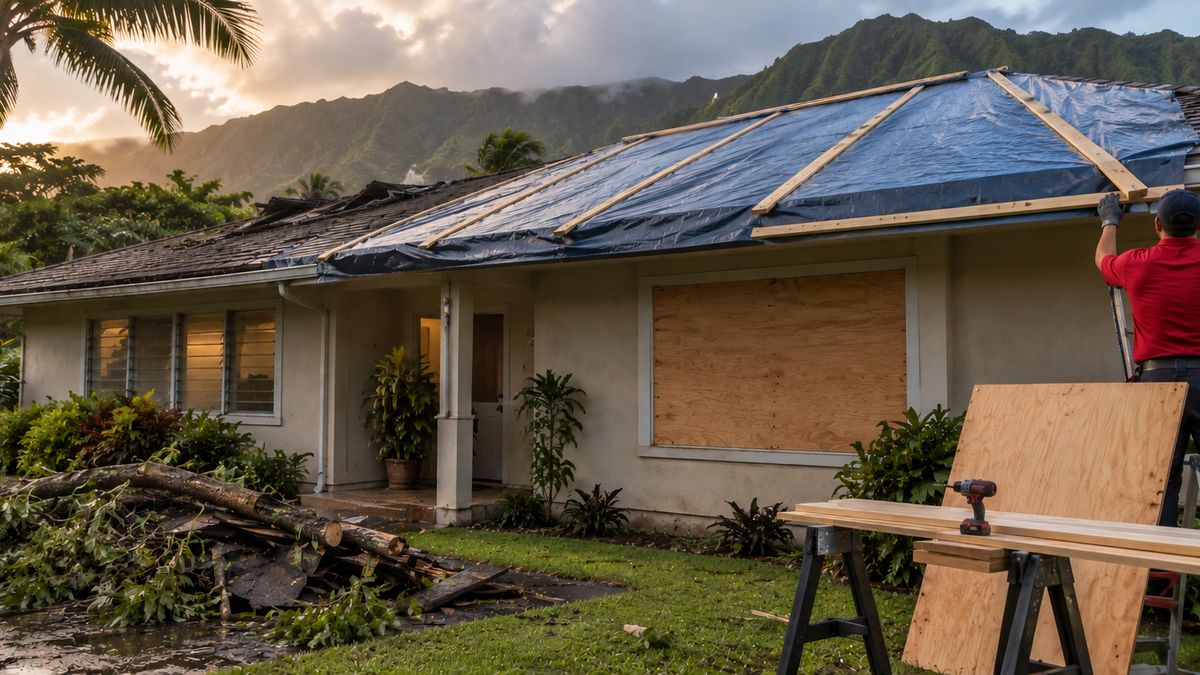
Stopping the water is the first step, not the whole of it. Alongside the source, we assess and neutralize the other risks a water event creates — the ones that turn a contained problem into a second emergency. Depending on what we find, that can include:
- Powering down electrical breakers serving affected areas, before anyone walks through standing water
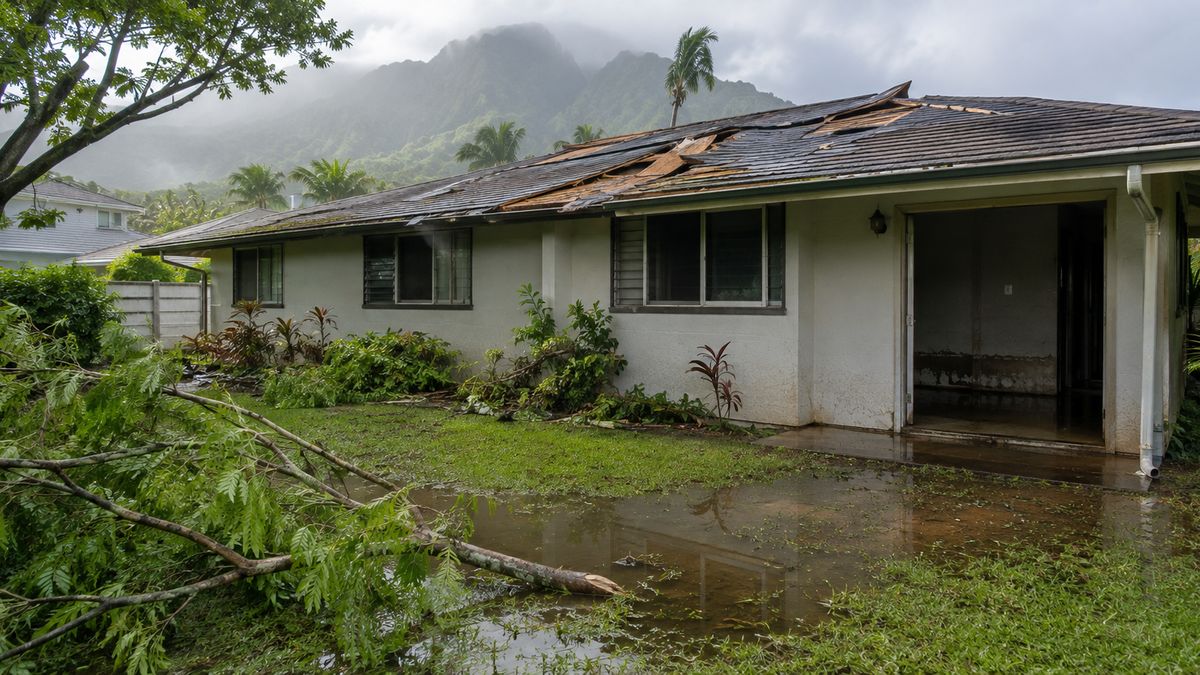
- Roof tarping and board-ups, where the water came in through the building envelope and the next rain will bring more
- Content pack-outs — moving furniture, documents, and belongings out of the affected area so they can be dried separately rather than sitting in it
- Temporary structural reinforcement, where saturated framing or subfloor has lost load-bearing capacity
- Containment of the affected area, so the drying environment we create doesn’t fight the humidity in the rest of the house
We document each of these as we go. Emergency mitigation is a distinct line on an insurance claim, and it is frequently the portion adjusters question most closely — so the photographs and readings we take in the first hours matter later.
Water Extraction
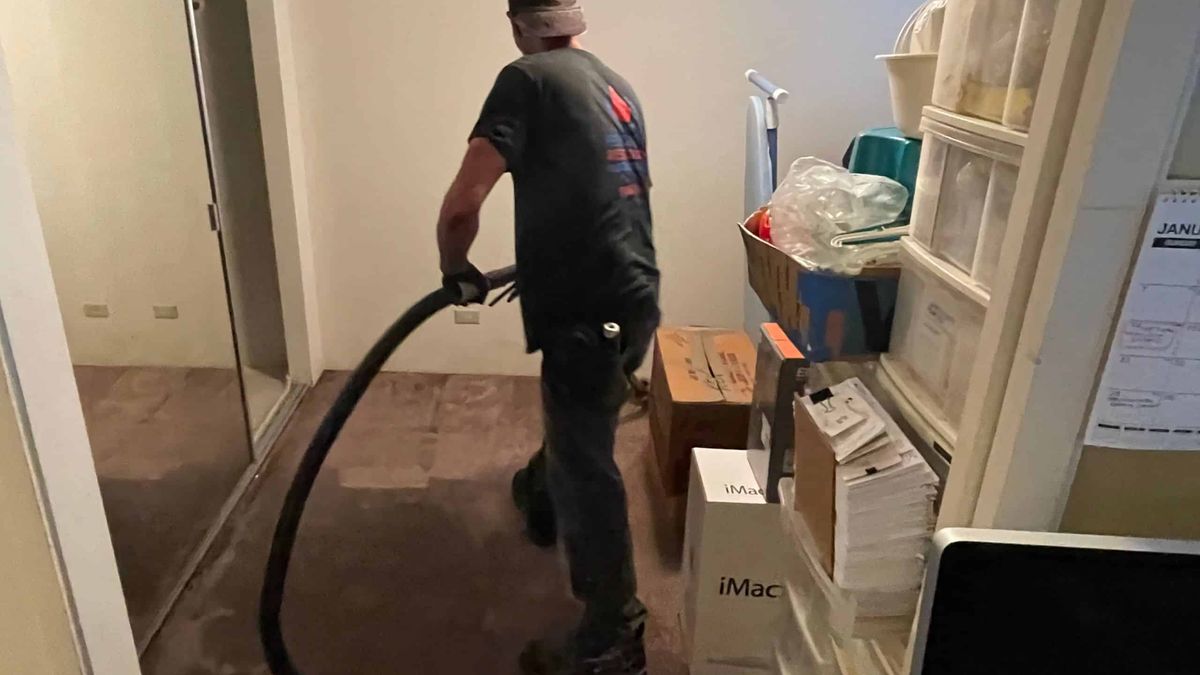
Real job · Rescue One crew Once the property is safe, we extract standing water with truck-mounted and portable extraction equipment. Extraction is the fastest part of the job and the part people notice — but it is not the part that determines whether your home is actually dry.
Structural Drying
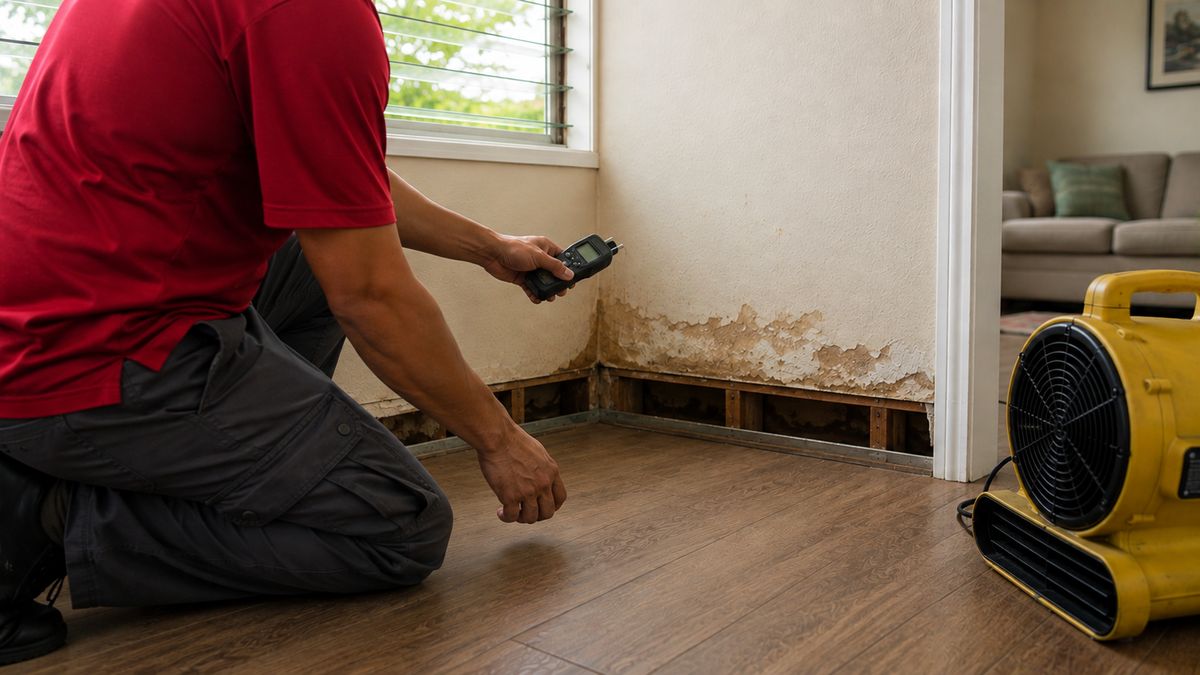
Drying a home in Hawaii is not the same problem it is on the mainland, and it is not a problem a box fan solves. Outdoor relative humidity on Oahu sits between 60 and 80 percent most of the year. Opening the windows to “air it out” frequently introduces more moisture into the structure than it removes. Effective drying here means creating a controlled environment inside the affected area — not moving humid air around inside it.
Water Damage Assessment
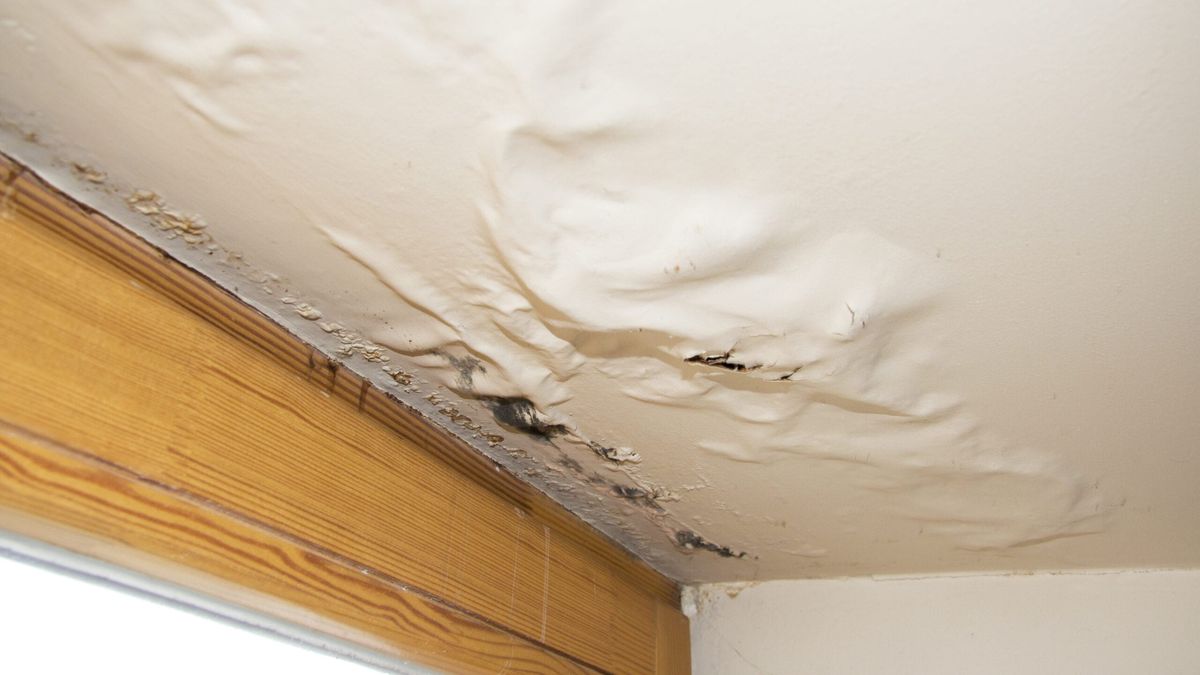
Once moisture has been removed from the affected areas, we complete a full inspection of the damage — structural impact, mold inspection, and any other hazards created by the water. Understanding the hidden dangers of home water damage matters for the long-term safety of the home, not just the immediate repair.
Repair and Reconstruction
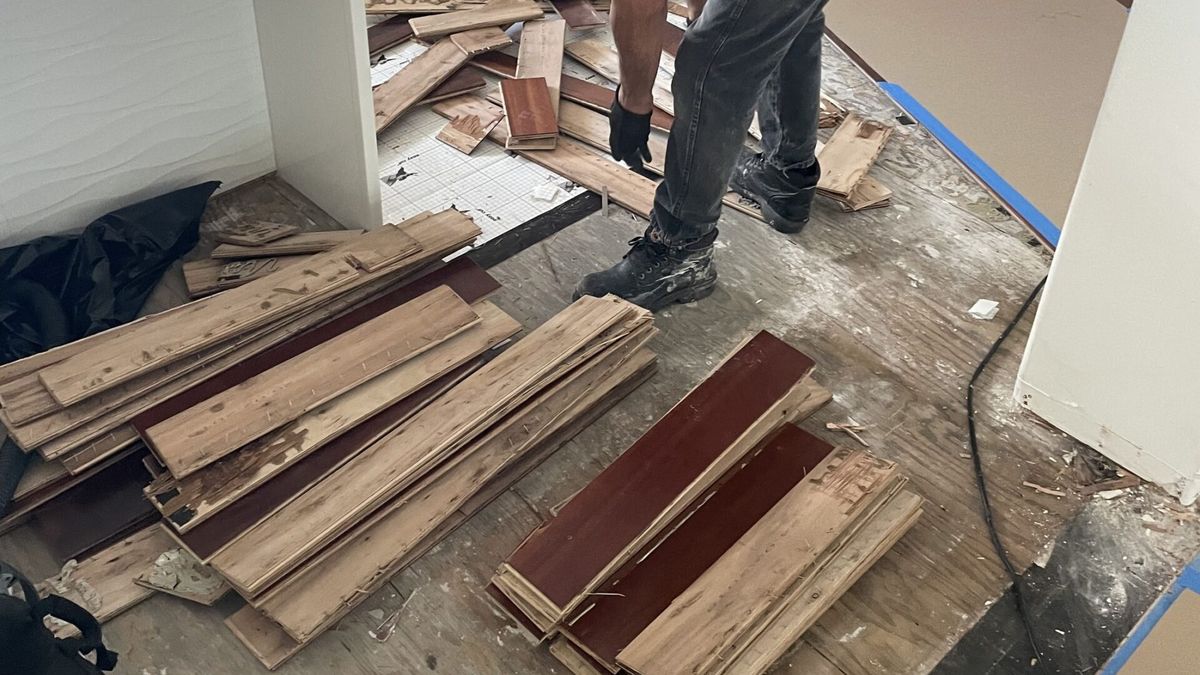
Real job · Rescue One crew Many companies extract the water and leave you to find your own contractor. We don’t. We hold Hawaii Contractor License BC-38891, and we carry the job from the first call through the final repair — drywall, painting, cabinetry, flooring, structural reconstruction, and full home rebuilds. Large or small, it’s the same team and the same contract.
This matters more than it sounds like it should. When restoration and reconstruction are split between two companies, the seam between them is where homeowners get stranded — the restoration crew says the structure is dry and leaves, the contractor arrives weeks later and finds something the first crew missed, and the two of them argue about it while you live in it. Because we do both, there’s no seam and no one to point at.
If you’re wondering whether you need to replace wet drywall, we make that determination with a meter rather than a guess. Sometimes the answer is that it comes out. Often it doesn’t have to, and we’d rather dry your wall than sell you a new one.
Final Cleanup and Sanitation
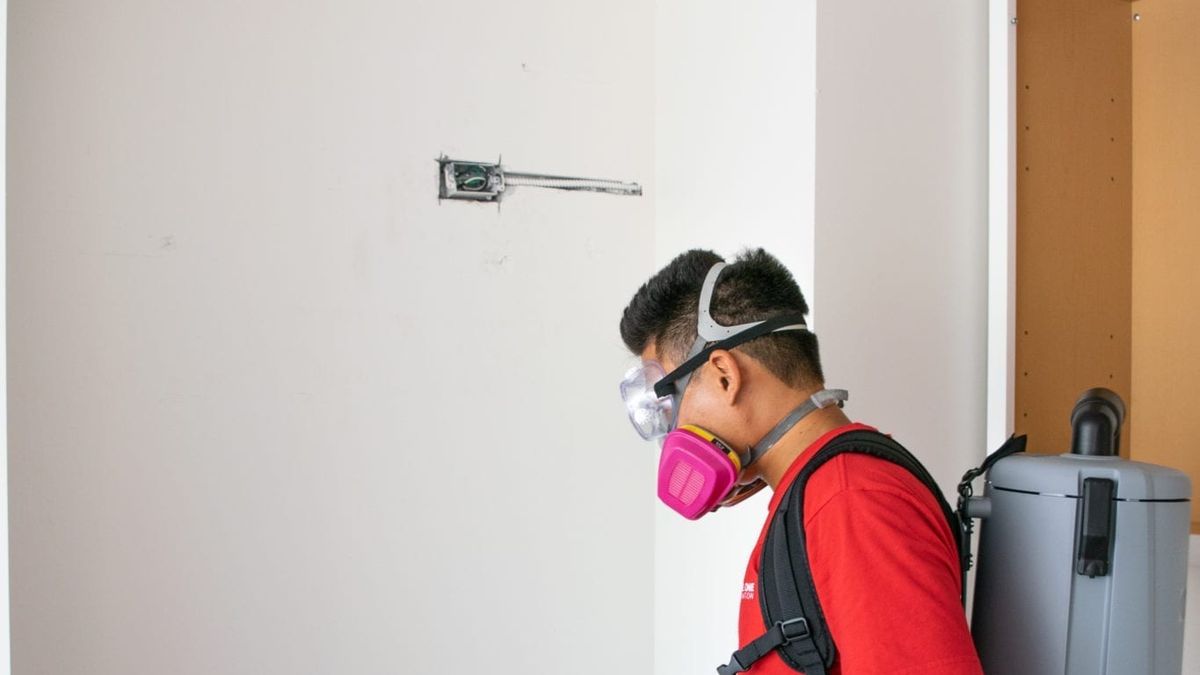
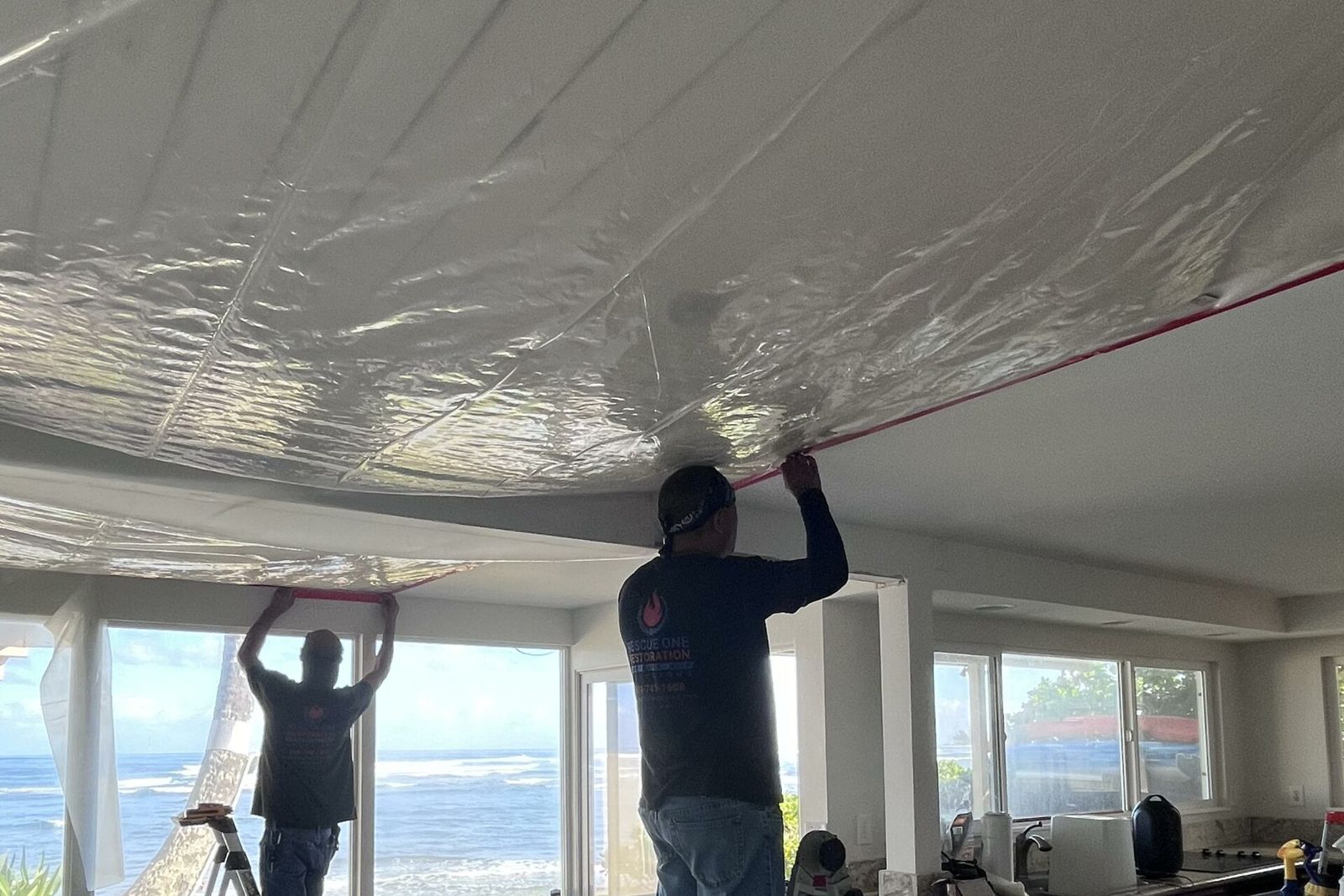
Real job · Rescue One crew Leaving your home better than we found it is the standard we hold ourselves to. When the structure is dry and repairs are complete, we carry out final cleaning and sanitation across the affected areas — including antimicrobial treatment of surfaces the water reached, HEPA vacuuming where airborne particulate is a concern, and removal of all equipment, containment materials, and debris.
You should not be cleaning up after your restoration company. When we leave, the room should be one you can put your family back into.
Structural drying
How We Dry an Oahu Home — And How We Know When It’s Actually Dry
Finding the water before we dry it
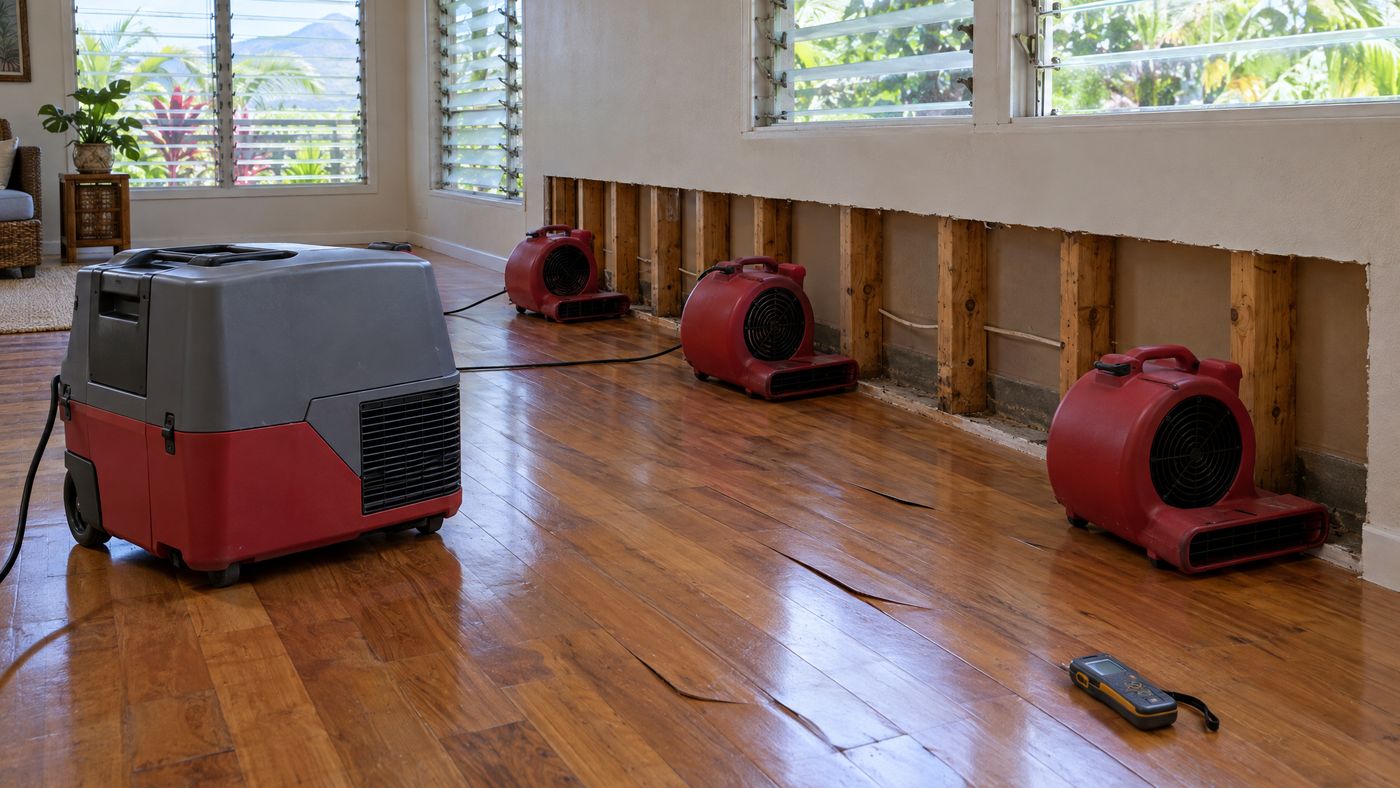
Water rarely stays where you found it. It travels through wall cavities, wicks upward into drywall, and migrates under flooring, often well past the visible wet area and into rooms the homeowner assumed were untouched. Before any equipment is placed, we map the affected area with calibrated moisture meters and thermal imaging cameras, documenting readings room by room. That map determines where equipment goes. It also becomes the baseline your insurance adjuster will compare our final readings against.
The equipment, and why the type matters
Commercial drying equipment is not a larger version of a retail dehumidifier. It’s a different class of machine, and different jobs call for different units:
- Low-Grain Refrigerant (LGR) dehumidifiers bring the air low enough in humidity to draw moisture out of materials — wood framing, subfloor, hardwood. This is the unit that saves a floor instead of replacing it.
- Desiccant dehumidifiers handle enclosed or cooler spaces where refrigerant units lose efficiency — crawl spaces, sealed cabinetry, under-slab areas.
- Refrigerant dehumidifiers carry the general moisture load in occupied rooms.
- High-velocity air movers create the airflow that lifts moisture off surfaces so the dehumidifiers can capture it.
A commercial unit removes upward of 150 pints of water per day. A retail unit is rated for 30 to 50, and often falls short of that in Hawaii’s ambient conditions.
Materials behave differently
Not everything dries at the same rate, and some things don’t dry at all:
- Hardwood cups and buckles as it absorbs moisture and needs the deep, sustained low-humidity conditions only LGR equipment produces. Caught early it usually recovers. Caught late it’s a replacement.
- Carpet can often be saved; the pad underneath usually can’t, and is removed rather than dried.
- Drywall wicks moisture well above the visible water line. We cut to the moisture reading, not to the stain.
- Concrete and tile dry quickly on the surface but hold moisture underneath, particularly in Oahu’s slab-on-grade construction.
How we decide the job is finished
We don’t pull equipment on a schedule. We pull it when the meters confirm materials have returned to normal moisture content — generally below 15 percent in structural materials — measured against the readings we took on day one. How long that takes depends on the scope of the intrusion, the materials involved, and how long the water sat before we arrived; no two jobs are the same, which is why we won’t quote you a duration before we’ve seen the property. The endpoint isn’t a date on a calendar. It’s a number on a meter. You receive the before-and-after readings in writing, for your records and for your claim.
Kitchens and bathrooms
When the Water Starts in the Kitchen or Bathroom
Most of the water damage we see on Oahu begins in one of two rooms, and both create problems that an open floor plan doesn’t.
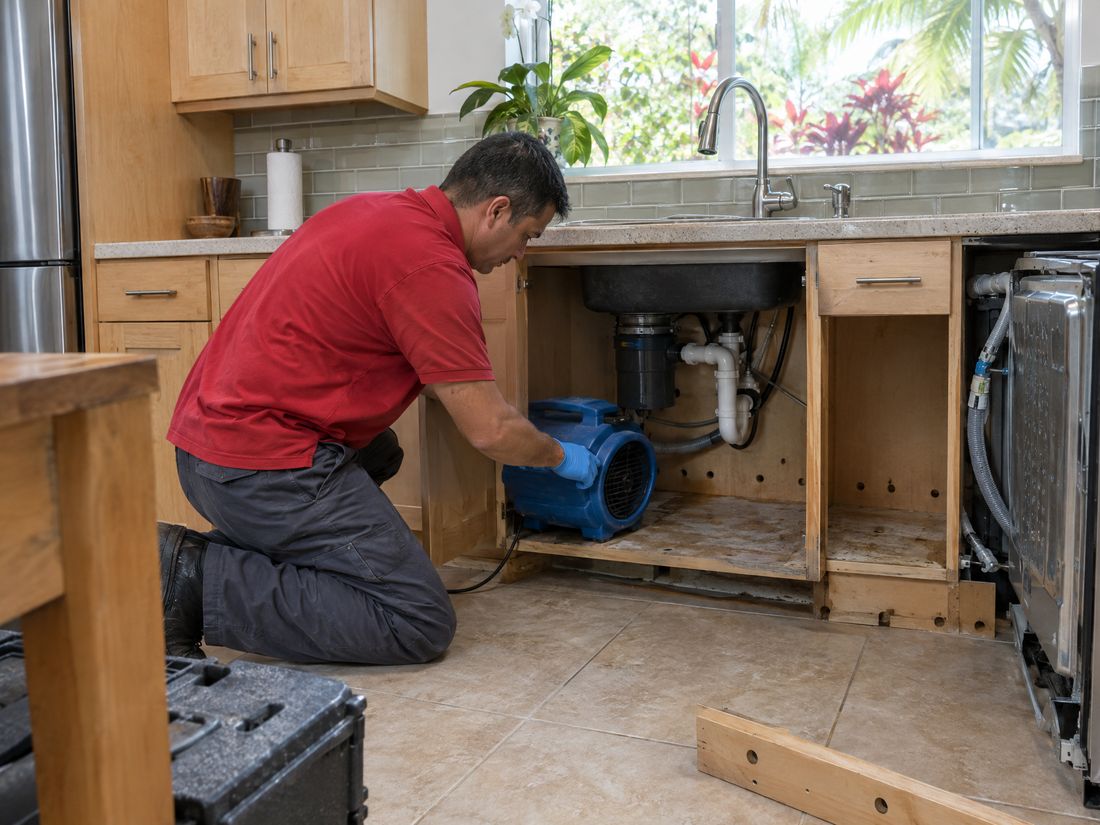
Kitchens and bathrooms concentrate every pressurized supply line in the house into a small footprint, most of it hidden. Dishwasher and refrigerator supply lines, ice maker tubing, angle stops under the sink, toilet supply lines, and failed wax rings are the failure points we return to again and again. Many of them sit behind or beneath an appliance, which means the leak runs unseen — sometimes for weeks — before anyone notices a soft spot in the floor or a smell that won’t clear.
The cabinetry is what makes these rooms different. Base cabinets sit directly on the subfloor and are usually built from particleboard or MDF, which absorbs water quickly and loses structural integrity as it swells. Toe-kick spaces trap water underneath where no towel reaches and no air moves. Water that reaches the cabinet interior can travel the full run of cabinetry and into the adjoining room’s wall cavity before it ever becomes visible.
These rooms also trap moisture. They’re enclosed, they’re often the least ventilated spaces in the house, and they already run humid from daily use. In Hawaii’s climate that combination shortens the window before mold establishes. Drying a kitchen or bathroom properly usually means removing toe-kicks, drilling cabinet bases for airflow, and drying the subfloor from below where access allows — not simply pointing air movers at the floor and waiting.
We assess whether cabinetry can be dried in place or has to come out, and we document that decision with moisture readings so your insurer sees the reasoning rather than just the invoice. Where reconstruction is needed, we handle it — including upgrading to more water-resistant materials if you want to take the opportunity.
Insurance
Insurance Claim Documentation and Reporting
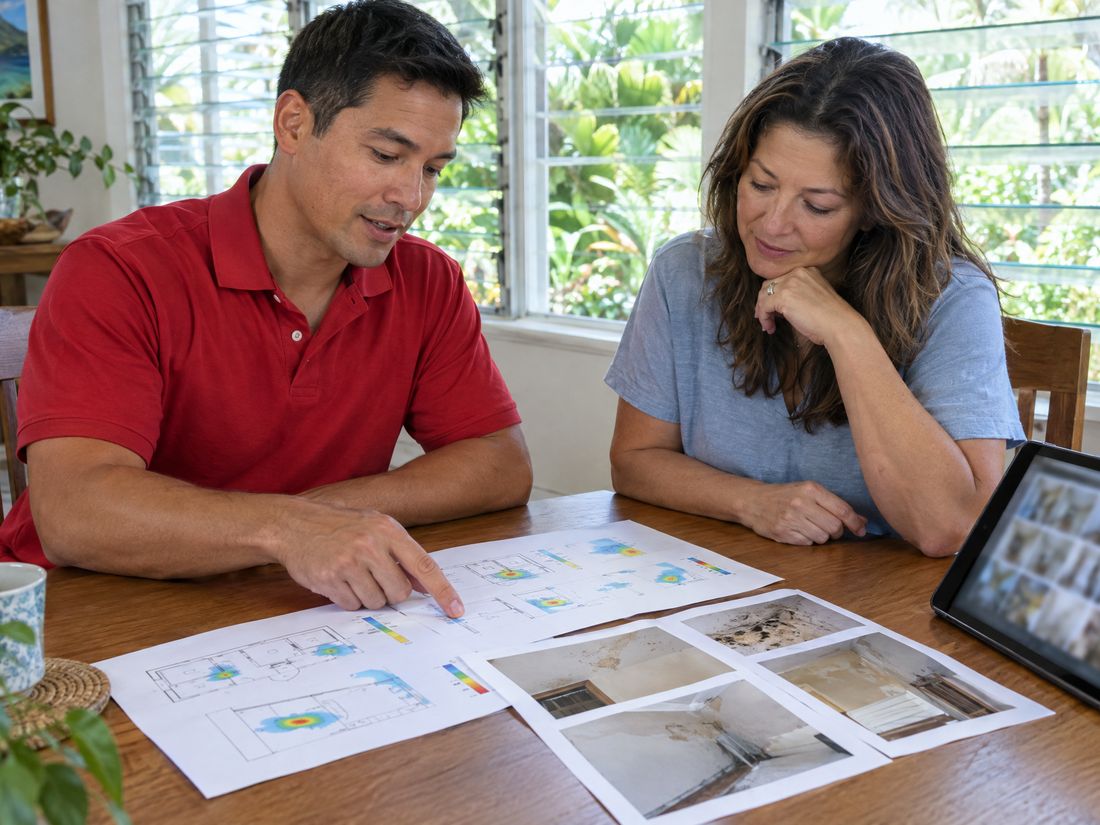
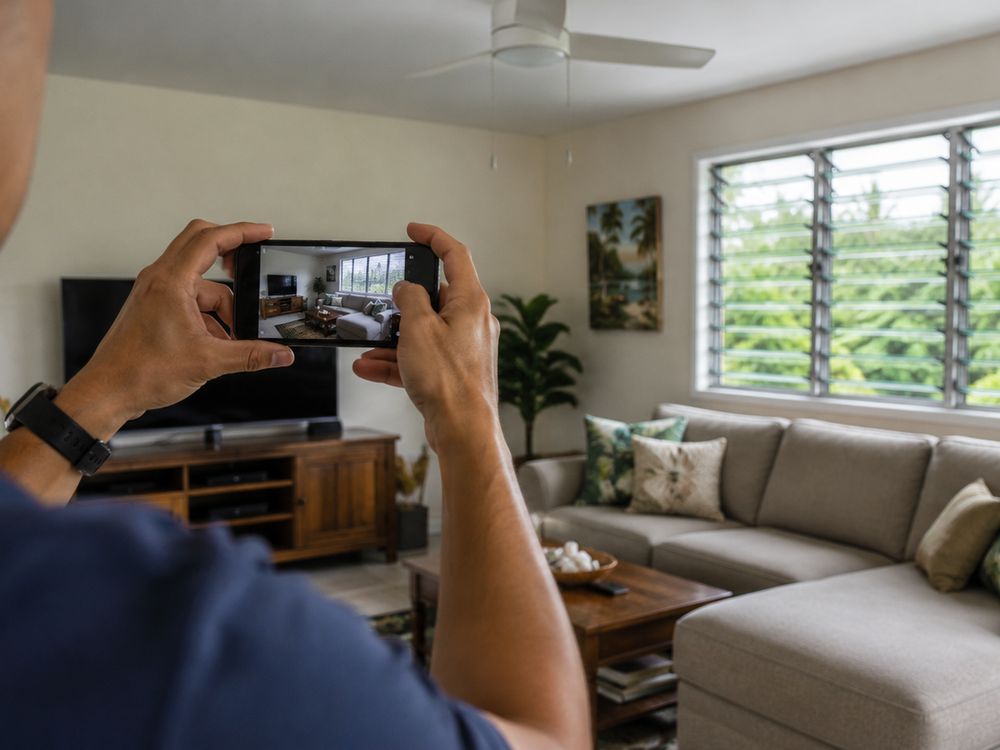
We handle the documentation and the communication with your insurance company. From the first assessment through final verification, the file we build includes moisture readings taken at every stage, equipment placement records, daily progress logs, photographs of the affected areas before and after, and a written scope of work.
That file is prepared in the format adjusters expect, and it is the reason claims get approved at the full scope rather than trimmed. Most disputes we see aren’t about whether damage occurred — they’re about whether the work performed was necessary. Contemporaneous readings answer that question before it’s asked.
We coordinate directly with your adjuster, including being present for the property inspection so that nothing in the affected area gets overlooked or misattributed. You are welcome to be involved as much or as little as you want to be. Many homeowners want to understand every step; others are dealing with work, children, and temporary housing and simply want it handled. Either is fine.
Cost
What Determines the Cost of Water Damage Repair on Oahu
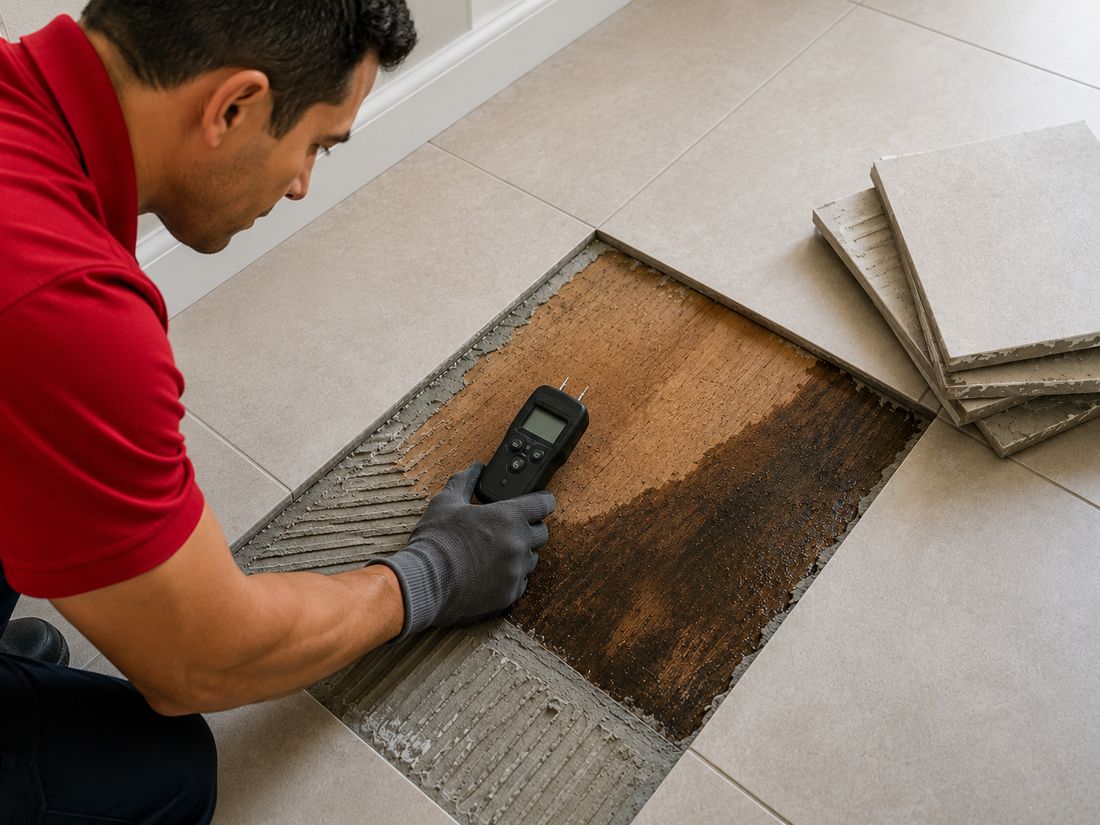
The question we hear most once the water is out is what the repair will cost. There is no single figure, because the cost of water damage restoration tracks the specifics of the loss: the category of water involved (clean supply-line water, gray water, or contaminated black water), how far it traveled, how long it sat before drying began, and which materials it reached. Drywall and carpet dry differently than a saturated subfloor sealed under tile. Oahu’s humidity is its own factor, because materials that might air-dry on the mainland often need controlled drying here before mold takes hold.
For most homeowners the more useful question is what insurance covers, and that is where we spend much of our time. A sudden, accidental loss such as a burst supply line is typically covered under a standard Oahu HO-3 policy, while gradual leaks and ground flooding are treated differently, with ground flooding usually requiring separate NFIP coverage. We document the full scope of the damage to the standard adjusters work from, with moisture readings, drying logs, and photographs, so the claim reflects the actual loss. We bill the insurer directly where the policy allows.
We restore water damage across Oahu, from Kapolei and Ewa on the leeward side to Kailua, Olomana, and the windward coast, and offer restoration services throughout Honolulu. Wherever the property sits on the island, the work starts the same way: we identify the source, map how far the moisture spread, and give you a clear picture of the scope before it begins.
Why Rescue One
Why Work With Us
We built Rescue One Restoration to make a genuinely stressful process as manageable as it can be. What that means in practice:
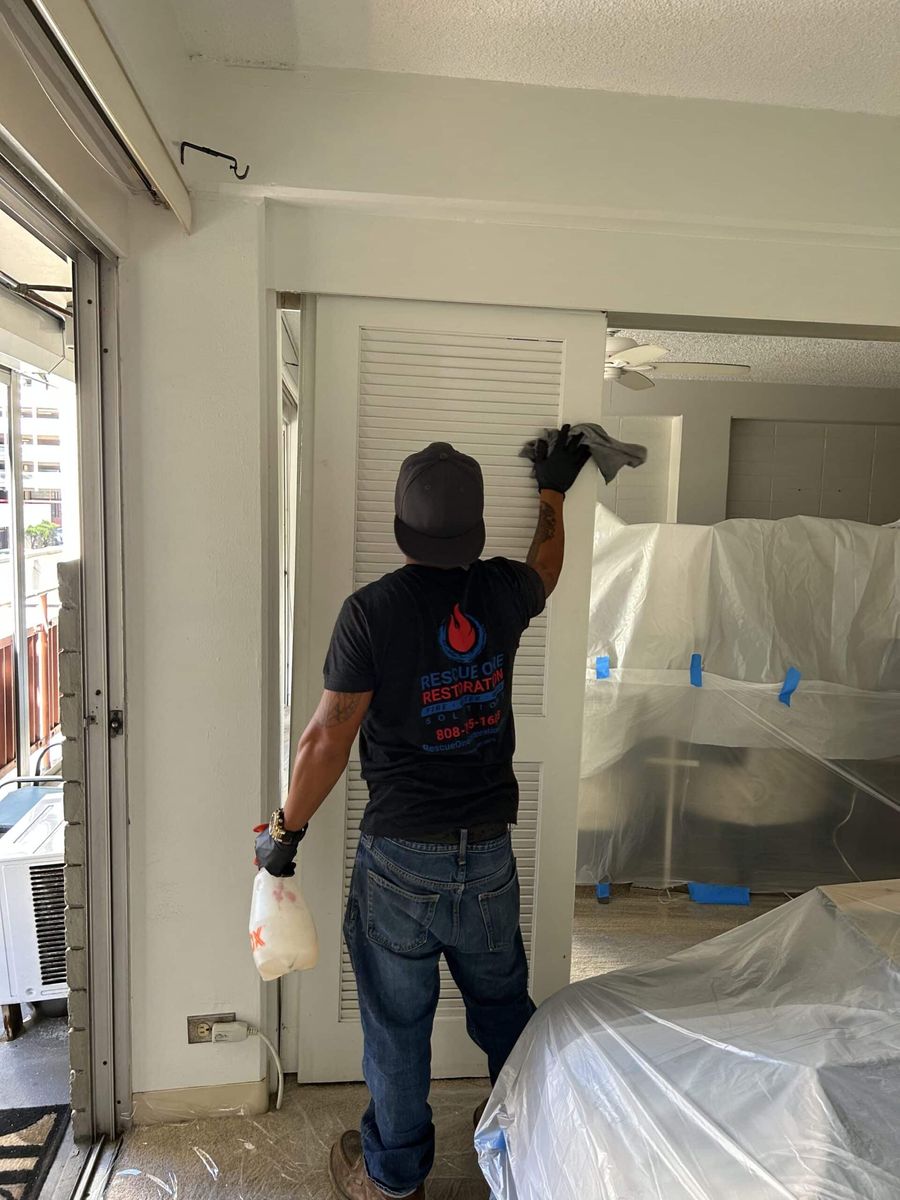
Real job · Rescue One crew - 01
One team, one contract, one point of contact
From emergency mitigation through final reconstruction
- 02
IICRC-certified technicians
Working to recognized industry standards, with documentation to match
- 03
Hawaii Contractor License BC-38891
Fully licensed and insured for the structural work that follows the drying
- 04
Locally owned and operating on Oahu since 2018
We know how island construction holds moisture, because it’s the only construction we work on
- 05
24/7 answering
You reach a member of our team, not a message service
We also offer mold removal and remediation services. For prevention, see our guide on home appliances to check to prevent mold growth.
Restore Your Home, Recover Your Life.
Reviews
What Our Customers Are Saying
When we had urgent moisture remediation service need Rescue One Restoration came to the rescue! I can’t say enough positive things about the company’s professionalism, especially from the team lead, Aaron.
When I first reached out, on a weekend, Aaron adjusted his personal schedule to come out and take a look at the issue that same day. Once work began, their work was high-quality and every team member was very professional, which was especially important to us as we are a school that had students and staff present on campus at times. Aaron did a wonderful job of being on-site daily, overseeing the project from start to finish, and keeping our administrative team updated every step of the way. Highly recommend!
We have worked extensively with Rescue One on many of the projects we manage and they are our "Go To". Paul is awesome on his communication, response and knowledge of how insurance works.
5 Stars.
Had the basement in our office flooded because of the storm, but these guys were such a HUGE HELP especially shout out to Amen and Chozyn for helping to get all the water out of the basement carefully and diligently as well as being warm, courteous and professional young adults!
During the March storms, our house took a beating. I called other places but they were all busy.
I was very lucky to have Rescue One come out to the home very quickly and leave machines to dry out the house. JJ was on top of it.
Excellent and timely service – would definitely use them again! Paul was very responsive and assisted us in our time of need.
Mahalo!
Paul and his team were professional, communicated well, worked with other contractors under strict time constraints. They were helpful & efficient in both the assessment and repair of damage.
Highly recommend.
Frequently asked questions
Frequently Asked Questions About Water Damage Restoration
Don’t see your question? Call us anytime.
01Can I stay in my home during water damage restoration?
Often yes, and it depends on how much of the home is affected and which rooms they are. A single affected room usually does not require anyone to leave. If the kitchen or the only bathroom is out of use, if flooring is being removed across multiple rooms, or if the water was contaminated, staying may not be practical or advisable. We give you an honest recommendation after the assessment rather than after the work has started, so you can make arrangements with time to do it.
02Will my homeowner’s insurance cover the water damage?
Most standard policies respond to water damage that is sudden and accidental, such as a burst supply line or an appliance failure. Damage attributed to gradual seepage or deferred maintenance is frequently reduced or denied, and flood is excluded from standard policies entirely, requiring separate NFIP or private flood coverage. Only your carrier can tell you what your specific policy covers, and we will not guess at it. What we can do is document the loss thoroughly enough that the decision is made on the facts.
03What does water damage restoration cost?
We do not quote a price before seeing the property, because the honest answer depends on how far the water travelled, which materials it reached, and how long it sat. Our site assessment carries a fee, and that fee is credited toward your job total if you proceed with us. After the assessment you receive a written scope of work with real numbers in it, whether the job is going through insurance or you are paying directly. Call us at (808) 745-1608 to arrange one. We serve the whole island, including Honolulu, Mililani, Kailua, Kaneohe, Hawaii Kai, Pearl City, Ewa Beach and Kapolei.
04What happens if I wait a few days before calling?
The damage stops being about water and starts being about what the water did. In Hawaii’s humidity, materials that could have been dried in place often cannot be after sitting saturated, so drywall, cabinetry and flooring that were salvageable become removal and replacement. Mold growth becomes a factor within days rather than weeks here. Delay also complicates the claim, because gradual damage is treated differently from sudden damage by most policies.
05Do I need to move furniture or pack anything before you arrive?
No. Move only what is light, valuable and easy to carry out of the affected area, and only if it is safe to walk there. Do not lift heavy furniture off wet flooring on your own, and do not stack items in a room you are not sure is dry. We handle moving, blocking and content pack-outs as part of the job, and we document what we move for your claim.
06What if the water damage is behind a wall or under the flooring?
That is the usual case rather than the exception, which is why the assessment uses moisture meters and thermal imaging rather than visual inspection alone. Water travels through wall cavities and wicks upward into drywall well above the visible line, and it migrates under flooring into rooms that look untouched. We map the full affected area before any equipment is placed, and we cut and remove to the moisture reading rather than to the stain.
07How do you know when my home is actually dry?
We measure it. Drying is complete when meter readings confirm materials have returned to normal moisture content, compared against the baseline readings taken on the first day, not when a set number of days has passed. You receive those before-and-after readings in writing. A company that pulls equipment on a schedule rather than on a reading is guessing.
08Do you handle the repairs, or only the drying?
Both, under one contract. Many companies extract the water, dry the structure and then leave you to find a contractor for the rebuild, which is where homeowners most often get stranded between two firms. We hold Hawaii Contractor License BC-38891 and carry the job through drywall, flooring, cabinetry, painting and full reconstruction, with the same team and a single point of contact throughout.
Across the island
Water damage across Oahu
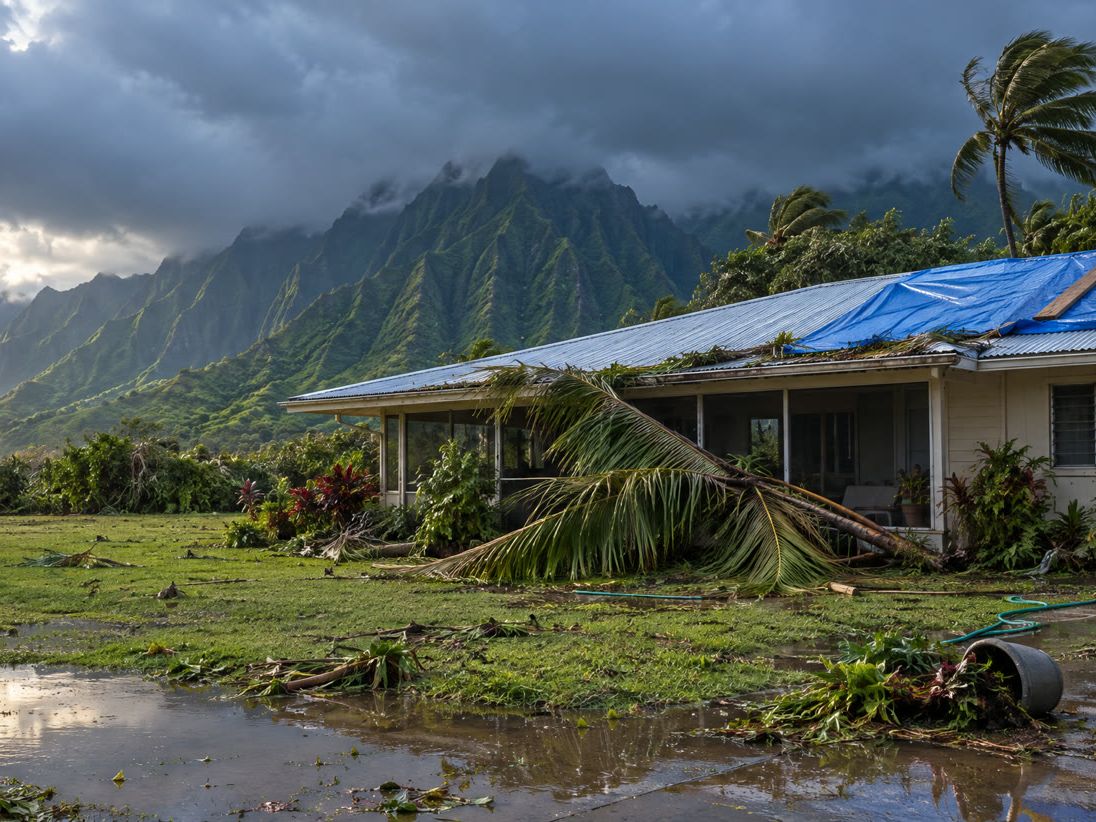
Oahu is a small island, but the weather and the housing change a great deal from one side to the other. The windward slopes take far more rain than the leeward plains, older neighborhoods often still run on aging plumbing, and homes near the shoreline live with salt air all year. Where your property sits shapes what we tend to find when we get there. We serve the whole island, 24/7.
Kaimuki and older Honolulu
Between Palolo and Kapahulu, many homes are older bungalows and plantation-style houses on aging plumbing, so we look closely at original supply and drain lines. When storms stall over the Ko’olau, runoff also comes down the valley corridors toward these streets. See Kaimuki property damage restoration.
Waipahu
Many Waipahu homes date from the plantation era, built before modern waterproofing and expanded in pieces over the years, and the seams where additions meet the original structure are common paths for water. Low-lying streets near Waikele Stream carry flood risk too, a different picture from newer construction in Kapolei and Ewa Beach. More on restoration in Waipahu.
Haleiwa and the North Shore
On the North Shore, ocean spray carries salt onto homes and corrodes metal fittings and connections. Houses here range from older plantation-style homes that hold moisture to modern beachfront builds, and the two dry very differently. Read about North Shore water damage in Haleiwa.
Hawaii Kai
Hawaii Kai is really two neighborhoods. Oceanfront homes around Portlock and Paiko Lagoon deal with salt-air corrosion and storm surge, while hillside homes in Kalama Valley sit well above the water, so the same neighborhood can need two different plans. See Hawaii Kai restoration services.
Kailua and the windward side
The windward side gets far more rain than leeward Oahu, and Kona storms can add heavy downpours on top of it. The outdoor air stays wetter here too, so opening windows to dry a room usually adds moisture rather than removing it. More on Kailua property damage restoration.
We also work in Kaneohe, Manoa, Mililani, Pearl City, Ewa Beach, Kapolei and everywhere else on Oahu, day or night. For homes in town, see our Honolulu property damage restoration page, or call us at (808) 745-1608.
24/7 emergency response
Let’s bring your home back.
We serve the entire island. Call us at (808) 745-1608 and we’ll get moving on restoring your home.
24/7 emergencyAll of OahuIICRC certifiedLic. BC-38891Locally owned & operated